Can the Constitutional Court Handle New Constitutional Complaints Against Court Rulings? Around 1,400 Cases Still Pending
- Input
- 2026-03-02 13:17:53
- Updated
- 2026-03-02 13:17:53
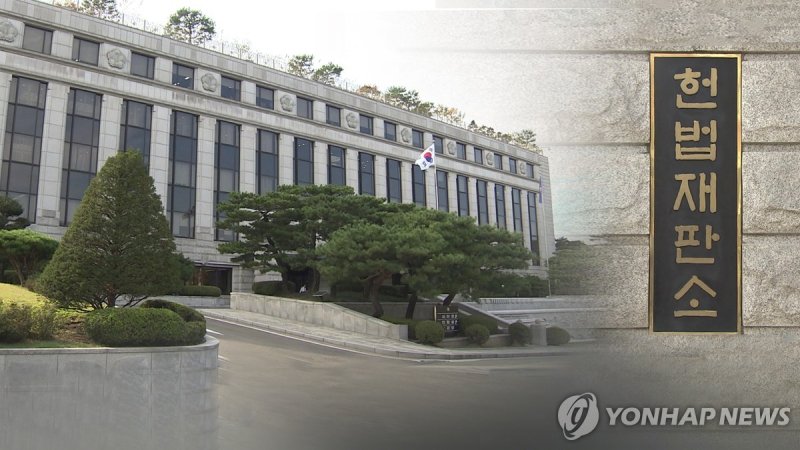
Although the system of filing a constitutional complaint against court rulings has passed the National Assembly’s plenary session under the leadership of the ruling bloc, debate continues over whether the Constitutional Court of Korea has sufficient capacity to handle the new workload. Every year, more than 1,000 cases remain unresolved, and the rate of successful complaints is low. Critics warn that if a large number of constitutional complaints against court rulings are added on top of this, disruptions to the court’s existing work will be unavoidable. The Constitutional Court of Korea, however, argues that once the initial phase passes, the system can be stabilized.
Concerns over case overload and possible paralysis of the court
According to the legal community on the 2nd, the amendment to the Constitutional Court Act that the National Assembly passed at its plenary session on the 27th of last month deletes the phrase "excluding court rulings" from Article 68(1). As a result, court judgments are now included among the decisions that can be challenged through a constitutional complaint. Eligible cases include rulings that contradict a decision of the Constitutional Court of Korea, cases where the court proceedings violated due process guaranteed by the Constitution or law, and cases where it is clear that the ruling violated the Constitution or law and thereby infringed a fundamental right. Some observers note that limiting applications to within 30 days after a judgment becomes final partially narrows the scope of review.
Despite the perceived need for the system, doubts remain about whether the Constitutional Court of Korea can handle the additional caseload. The Supreme Court of Korea has pointed out that the Constitutional Court of Korea has nine justices and about 70 constitutional researchers, yet receives roughly 2,500 cases a year, resulting in an average processing time of more than two years. The judiciary argues that even if only a portion of Supreme Court of Korea rulings are challenged through constitutional complaints against court rulings, an additional 15,000 cases could be filed annually. This would mean that each three-justice panel of the Constitutional Court of Korea would have to handle around 4,000 cases a year. The legal community therefore fears that existing cases, such as Adjudication on the Constitutionality of Law, could be adversely affected.
Statistics have also been cited to support these concerns. According to the Constitutional Court of Korea’s annual report, 3,092 cases were filed last year, the highest number since 3,241 cases in 2020. Of these, 2,445 were constitutional complaints, accounting for 79% of the total.
As of 2024, the average time to dispose of a case was 724.7 days, nearly two years. Among the cases resolved that year, 357, or 13.1%, had been pending for more than two years. The number of pending cases first exceeded 1,000 in 2019 with 1,113 cases, peaked at 1,672 in 2022, and then fell slightly to 1,401 in 2024, but has remained in the 1,000 range. There are still 1,335 unresolved cases at present.
A high proportion of cases also end without a ruling on the merits. The rate at which complaints were upheld stood at 3.3% in 2022 and 3.9% in both 2023 and 2024, but plunged to 1.4% last year. Looking at cumulative figures since the court’s establishment through 2024, 35,056 of 50,983 cases, or 68.8%, were dismissed without a merits decision, while only 14,690 cases, or 28.8%, resulted in substantive rulings such as upholding the complaint, dismissing it on the merits, or finding a law unconstitutional, constitutionally incompatible, or constitutional.
Stabilization expected as in Taiwan; staffing levels will be crucial
The Constitutional Court of Korea, however, cites Taiwan, which introduced constitutional complaints against court rulings in 2022, to argue that even if there is an initial surge in cases, the system can gradually stabilize. In Taiwan, the number of constitutional complaints jumped from 747 in 2021 to 4,371 in 2022, but then fell to 1,359 in 2023. The court’s position is that once the initial turbulence passes, the judiciary will not face the kind of prolonged paralysis that critics fear.
The Constitutional Court of Korea believes it can manage the workload by focusing on cases that truly fit the purpose of constitutional complaints against court rulings and dismissing a significant number of applications that do not meet the requirements. Frivolous or abusive filings would be screened out through preliminary review, and only cases with constitutional significance would proceed to a full hearing on the merits. In addition, the court expects that substantially increasing the number of constitutional researchers and support staff, and creating dedicated divisions, will make it fully capable of operating the new system. It also argues that the positive effect of meaningfully expanding the protection of citizens’ fundamental rights will outweigh the concerns.
In response to questions from the National Assembly Legislation and Judiciary Committee, the Constitutional Court of Korea stated, "If the introduction of constitutional complaints against court rulings is accompanied by securing additional personnel, we will be fully able to handle the workload," adding, "By increasing the number of constitutional researchers and strengthening preliminary screening procedures, such as review by designated panels to prevent excessive or abusive filings, we can improve the efficiency of case handling."
[email protected] Choi Eun-sol Reporter