[Editorial] Strong Export Tailwinds and Record Trade Surplus, Tackling Polarization Is an Urgent Task
- Input
- 2026-03-01 18:57:47
- Updated
- 2026-03-01 18:57:47
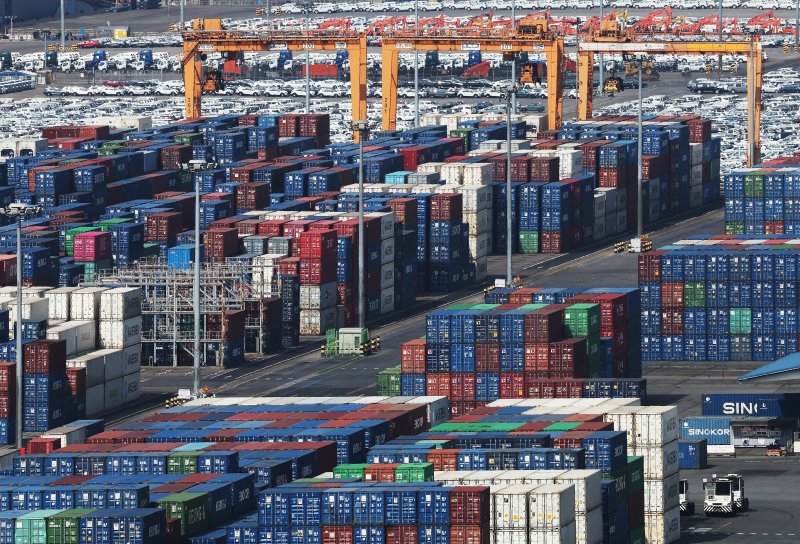
The explosive surge in semiconductors continued unabated last month. Semiconductor exports alone reached 25.1 billion dollars, a jump of 160% from a year earlier. Global big tech companies show no sign of slowing their investments in artificial intelligence (AI). Demand is still rising steeply, and memory prices have soared in tandem. The price of DDR4 8Gb DRAM, a mainstream DRAM product, has skyrocketed 863% over the past year, while 128Gb NAND flash memory has climbed more than 450%. With both demand and prices surging, export values have increased explosively.
The improvement in government tax revenues driven by the continued semiconductor boom is also noteworthy. Corporate taxes collected last year from Samsung Electronics and SK Hynix alone amounted to 8.5 trillion won, more than five times the previous year. Samsung Electronics paid 2.8 trillion won, up 1.7 times, while SK Hynix paid 5.6 trillion won, 19 times more than a year earlier. Their operating profits last year exceeded 43 trillion won and 47 trillion won, respectively. Forecasts now suggest that the two companies could each earn around 200 trillion won in operating profit this year. If that happens, their corporate tax payments could be two to three times higher than last year. When companies thrive, they not only boost exports and growth but also fill government coffers. Creating an environment where businesses can operate dynamically on all fronts is crucial for this reason as well.
Even as exports soar on the back of a super-boom in semiconductors, we must not overlook the stark reality once semiconductors are excluded. Among the 15 key export items in February, 10 categories other than semiconductors and five electronics-related items all recorded declines. Automobiles, petrochemicals, and steel all retreated. Volatile conditions in the Middle East, lingering uncertainty over U.S. tariffs, and supply gluts originating from China are weighing on multiple sectors.
Sluggish domestic demand remains a serious problem. With consumption failing to recover, the situation for the self-employed and small business owners is becoming increasingly precarious. Restaurants and rental businesses have been in a near-constant state of closures for almost two years. Retail sales appeared to rebound last year thanks to government-issued coupons, but the effect was short-lived. According to the National Tax Statistics Portal of the National Tax Service, the number of restaurant business operators in February fell by nearly 2% from a year earlier, marking 21 consecutive months of decline. The number of credit delinquents, concentrated among the self-employed and small business owners, has also risen to the highest level in seven years.
It is welcome that semiconductors are breathing life into exports and the stock market, but growth driven by semiconductors alone has clear limits. The country needs to foster second and third growth engines on the scale of semiconductors and strengthen the overall resilience of its industries. Reviving domestic demand is equally urgent. Rather than leaning on fiscal expansion, more effort must go into improving the structure of the economy. Addressing K-shaped polarization has become an urgent national task.