Corporate Alarm Bells Ring as Middle East Plunges into Chaos, With Fears of Tens of Trillions of Won in Losses and a Scramble for Safety Measures
- Input
- 2026-03-01 16:12:59
- Updated
- 2026-03-01 16:12:59
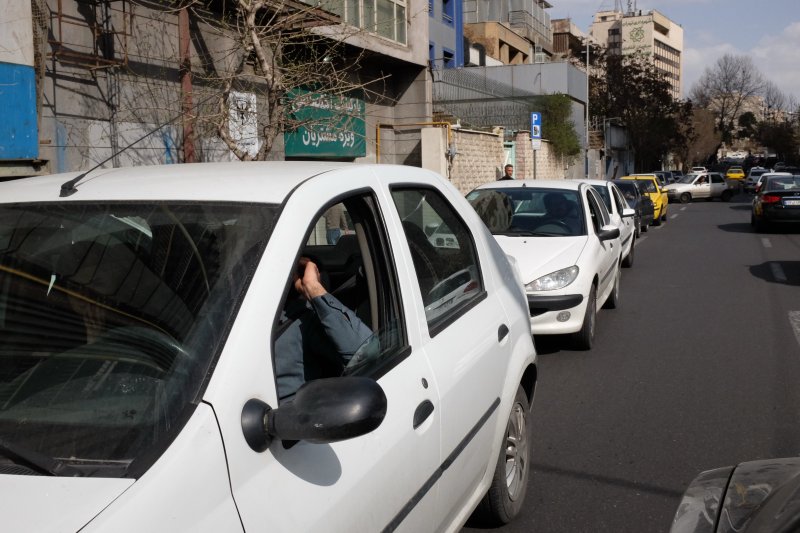
[Financial News] As airstrikes by the US and Israel on the Islamic Republic of Iran have plunged the Middle East into turmoil, including the killing of Iran’s supreme leader, the impact on Korean companies is expected to become increasingly visible after Iran moved to close the Strait of Hormuz, one of the world’s key oil shipping lanes.
In addition to up to 80% extra costs on top of existing ocean freight rates, the surge in oil prices alone is projected to inevitably worsen Korea’s trade balance by tens of trillions of won. According to an analysis by the International Trade Research Institute, a 10% rise in oil prices is estimated to reduce Korean exports by 0.39% and increase imports by 2.68%. Companies’ production costs are expected to climb by 0.38%, with manufacturing costs rising by an average of 0.68% and service-sector costs by 0.16%. Industry estimates suggest that, in such a scenario, the trade balance could deteriorate by about 20 billion dollars (roughly 28 trillion won), while companies could suffer annual losses of around 15 to 20 trillion won.
With alarm bells now ringing across Korean industry, companies are working to secure the safety of employees stationed in the Middle East near Iran, while domestic shipping and airline operators are racing to establish alternative routes and devise countermeasures against high oil prices.
■ Ocean freight up as much as 80%... fears of losses in the tens of trillions of won
On the 1st, the Korea International Trade Association (KITA) held an "Emergency Meeting on Export-Import Logistics Regarding the US–Iran Situation" at Trade Tower in Gangnam District, Seoul, chaired by KITA Chairman Jin-Shik Yun, to review export-import logistics risks and discuss response measures.
With Iranian authorities closing the Strait of Hormuz, through which 20% of the world’s seaborne crude oil passes, assessments indicate that ocean freight rates could rise by an additional 50–80%. In response, KITA decided to focus on requesting budget allocations for logistics cost vouchers and on securing dedicated cargo space on vessels for small and medium-sized enterprises.
KITA also proposed alternative routes in the event of a full closure of the strait, such as unloading at major ports in Oman, including Salalah and Duqm, and then using inland transport or small coastal vessels. However, it noted that given the current atmosphere of a potential full-scale war, it remains uncertain whether such detour routes can be practically operated.
If ships are rerouted, additional costs are expected to reach as high as 50–80% compared with existing ocean freight rates. KITA stated, "Due to overland transport and border customs procedures, shipping delays of around three to five days will also be unavoidable."
The shipping industry, which typically spends about 16% of its total revenue on fuel, is concerned that the burden from the closure will grow significantly. The Ministry of Oceans and Fisheries (MOF) held meetings with SK Shipping, Pan Ocean and other carriers with a high proportion of bulk carriers to explore response measures to the closure of the Strait of Hormuz. A shipping industry official said, "In the short term, rerouting vessels will inevitably push up freight rates, and the burden of costs could surge due to higher international oil prices and insurance premiums."
Beyond the likelihood of higher ocean freight rates driven by rising insurance and fuel costs, concerns are also mounting over potential shocks to the supply of crude oil and natural gas.
Airlines likewise are finding it difficult to offset higher jet fuel prices—one of their major operating expenses—solely through fuel surcharges, making a decline in operating profit virtually unavoidable.
■ Industry scrambles to craft responses to the ‘Iran crisis’
Korean companies are convening emergency response meetings to devise ways to ensure the safety of employees stationed in the Middle East, while also putting in place contingency plans to minimize disruptions to their local operations.Samsung Electronics said it has confirmed that there have been no casualties so far among its expatriate staff in the Middle East, including those in the Islamic Republic of Iran.
LG Electronics also reported that, to date, there have been no injuries among its employees in the Middle East. One Korean employee who had been dispatched to work in Iran left the country last week, and Korean staff and their families at the Israeli branch office plan to evacuate in accordance with embassy guidelines.
Hyundai Motor Group does not conduct business in Iran or Iraq, but it is closely monitoring developments because it operates a joint-venture plant in the neighboring Kingdom of Saudi Arabia (KSA).
Hanwha Group is also taking active steps to protect its expatriate employees in the Middle East. The group is currently engaged in defense, finance and machinery exports and local operations in KSA, the United Arab Emirates (UAE), Qatar and Kuwait. In Iraq, it is participating in the Bismayah New City construction project, and the number of employees stationed there is reported to exceed 120.
Kim Seung-yeon, Chairman of Hanwha Group, urged, "Place the safety of our employees on the ground in the Middle East above all else, and the company must take every measure necessary to ensure thorough safety."
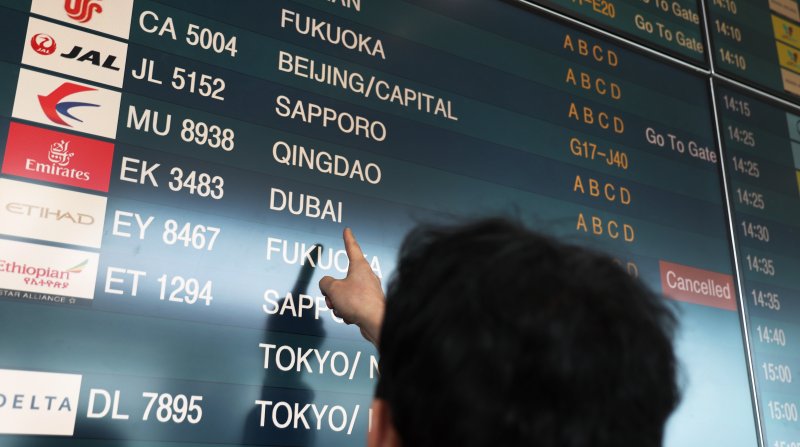
Korean Air announced in a notice on February 28 that "due to airspace restrictions related to the war between the US and Israel on one side and the Islamic Republic of Iran on the other in the Middle East, disruptions are expected in the operation of flights to and from Dubai." The measures apply until midnight on the 7th, and cover Dubai in the United Arab Emirates (UAE). A Korean Air official said, "We will closely monitor how the situation develops and adjust subsequent schedules accordingly."
[email protected] Hak-jae Kim, Dong-ho Kim, Su-bin Lim Reporter