US strike on Iran blocks key strait, adds up to 80% to freight rates... fears of tens of trillions of won in annual losses from higher oil prices
- Input
- 2026-03-01 15:13:47
- Updated
- 2026-03-01 15:13:47
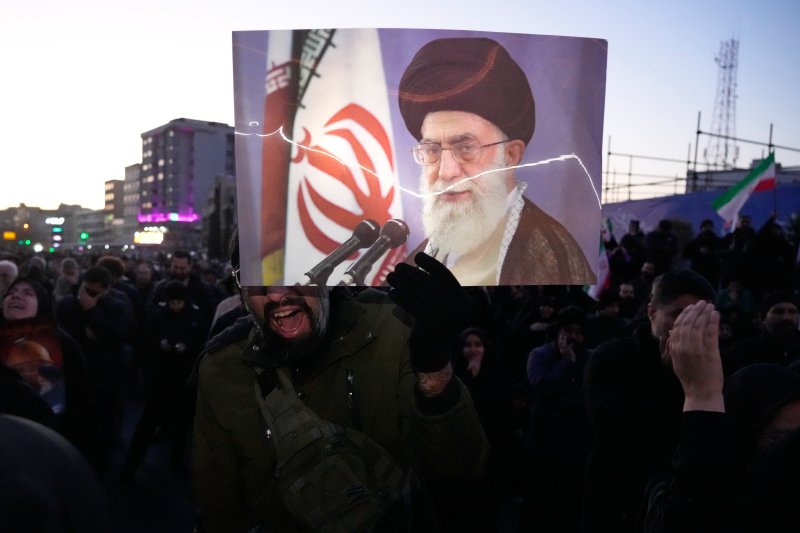
[The Financial News] The security situation in the Middle East has plunged into turmoil after airstrikes by the United States of America (US) and Israel on the Islamic Republic of Iran killed Supreme Leader Ali Hosseini Khamenei. As Iran moves to close the Strait of Hormuz, one of the world’s most important oil shipping lanes, Korean companies are expected to start feeling the impact immediately.
Because Korea’s export volume to the Islamic Republic of Iran is relatively small, the direct impact of the latest US strike on Iran on Korean exports is expected to be limited. However, concerns are mounting that if the Strait of Hormuz remains closed, sea freight costs could rise by up to 80% compared with current rates, and a roughly 10% increase in oil prices could inflict tens of trillions of won in trade balance losses while pushing up companies’ annual costs by nearly 20 trillion won.
On the 1st, the Korea International Trade Association (KITA) held an "Emergency Meeting on Export-Import Logistics Related to the US–Iran Situation" at the Trade Tower in Gangnam District, Seoul, chaired by KITA President Jin-Shik Yun. Participants reviewed risks related to export-import logistics and discussed possible response measures.
The most urgent issue is Iran’s closure of the Strait of Hormuz, the key maritime export-import route for major Middle Eastern countries such as the United Arab Emirates (UAE), Saudi Arabia, and Iraq.
Of the Strait of Hormuz’s total width of 55 kilometers, the navigable channel for oil tankers is less than 10 kilometers wide and lies entirely within Iranian territorial waters. As about 20% of the world’s seaborne crude oil passes through the Strait of Hormuz, any closure by Iranian authorities could deliver a severe shock to global supplies of crude oil and natural gas.
KITA noted that if the strait is closed, it may be possible to use alternative routes by unloading cargo at major ports in Oman, such as Salalah and Duqm, and then transporting it inland or via small coastal vessels. However, it pointed out that with tensions between the US and the Islamic Republic of Iran escalating toward a possible full-scale conflict, it remains uncertain whether such detour routes can be operated in practice.
KITA stated, "If we reroute, additional costs will arise compared with existing sea freight rates, potentially reaching 50–80%," adding, "Due to overland transport and border customs clearance, shipping delays of about three to five days have also become unavoidable."
Beyond the likelihood of higher sea freight rates driven by rising insurance premiums and fuel costs, KITA also voiced concern over the potential shock to crude oil and natural gas supplies.
According to an analysis by the International Trade Research Institute, a 10% increase in oil prices is estimated to reduce Korea’s exports by 0.39% while increasing imports by 2.68%. It also projects that Korean companies’ production costs would rise by 0.38% overall, with manufacturing costs increasing by an average of 0.68% and service sector costs by 0.16%, thereby adding to the burden on businesses.
Although it is difficult to convert this directly into specific cost figures, industry estimates suggest that under such a scenario Korea’s trade balance could deteriorate by about 20 billion dollars (approximately 28 trillion won), and companies could suffer annual losses of around 15 to 20 trillion won.
KITA said, "For small and medium-sized exporters likely to be affected by the closure of the Strait of Hormuz, we will provide practical information on using Oman as an effective detour route," adding, "We will ask the government to create emergency items within existing logistics voucher programs and will also seek measures to cover additional freight costs incurred when using alternative routes, such as securing dedicated cargo space on vessels for small and medium-sized enterprises."
[email protected] Hak-jae Kim Reporter