Government activates 24-hour emergency response team over Iran situation... Lee orders "constant updates during overseas trip"
- Input
- 2026-03-01 14:59:05
- Updated
- 2026-03-01 14:59:05
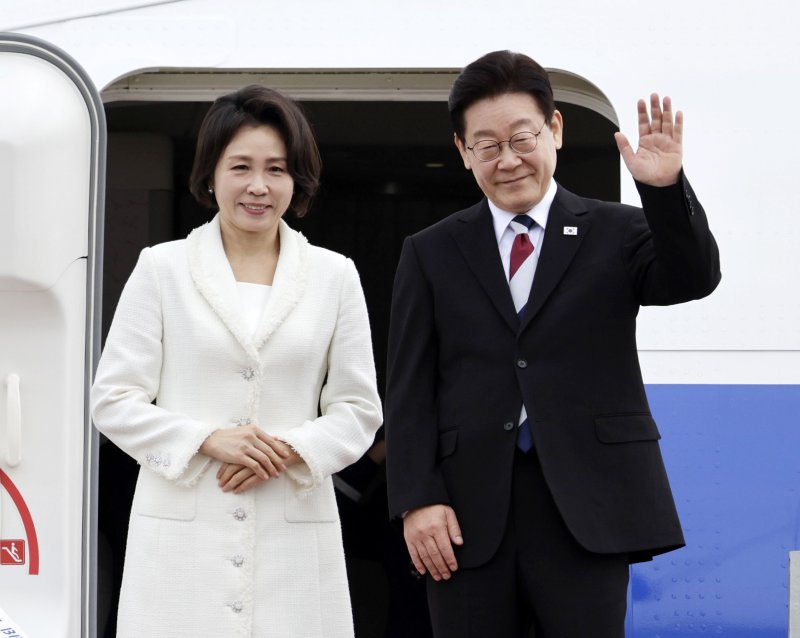
[The Financial News] The government has activated a joint emergency response team with relevant agencies to assess the rapidly evolving situation in the Middle East following developments in Iran and to gauge the impact on the Korean economy, monitoring real-economy effects around the clock. President Lee Jae-myung, who departed for state visits to the Republic of Singapore and the Republic of the Philippines, also ordered that he be briefed frequently on Middle East developments and their economic repercussions.
On the 1st, the government reviewed recent trends in the Middle East and discussed the impact on domestic and global financial markets and the real economy, as well as possible policy responses.
Deputy Prime Minister and Minister of Finance and Economy Koo Yun-cheol convened an emergency joint meeting on the Middle East situation with relevant agencies at Government Complex Seoul. He stated, "Given the high level of uncertainty over how the situation in the Middle East will unfold, relevant agencies must respond with heightened vigilance." He went on to stress, "In particular, as the Middle East is a region on which we are highly dependent for energy, we need to respond swiftly to volatility in international energy prices stemming from potential instability in the Strait of Hormuz."
Participants at the meeting noted that Korea currently has sufficient strategic oil reserves and the capacity to cope with supply disruptions. However, they expressed concern that continued military tensions in the Middle East could lead to heightened volatility in international financial and energy markets for some time.
Accordingly, the government, under the leadership of Deputy Prime Minister Koo, plans to operate a joint emergency response team on the Middle East situation, covering the real economy, energy, financial markets and regional developments. The team will monitor conditions on the ground in the Middle East and the impact on the real economy—including domestic and global financial markets, energy, exports, shipping, aviation and supply chains—24 hours a day.
The Ministry of Trade, Industry and Resources also held a second meeting to review real-economy conditions, chaired by Vice Minister Mun Sin-hak. At the meeting, officials agreed that if the Iran situation drags on and a supply crisis worsens—for example, if private crude oil inventories fall below a certain threshold—they will decide to release strategic oil reserves and supply oil stored at nine reserve bases, including those in Yeosu, South Jeolla Province, and Geoje, South Gyeongsang Province, to the domestic market.
In addition, following instructions from Minister Kim Jeong-kwan of the Ministry of Trade, Industry and Resources at the first meeting, the Korea National Oil Corporation (KNOC) has begun an urgent review of measures set out in its emergency manual. These include bringing in additional volumes from overseas production, exercising priority purchase rights for jointly stored oil, and checking its readiness to release strategic reserves.
An official at the ministry said, "We have launched an emergency task force led by Yang Ki-uk, Director-General for Industrial and Resource Security, with participation from relevant departments and related agencies." The official added, "We plan to closely coordinate with other ministries and agencies while monitoring in real time how the situation develops, domestic price movements, and the status of vessel operations." The official continued, "We will carefully review emergency measures such as the release of reserves and rigorously manage the situation so that fluctuations in oil prices do not translate excessively into consumer prices, including gasoline and gas rates."
President Lee, currently on his overseas tour, instructed, "During my trip, relevant ministries, led by the Prime Minister of the Republic of Korea, should maintain an emergency response posture and provide frequent reports on the government's response to developments in the Middle East and their impact on the economy." He further ordered, "Particular care must be taken to ensure the safety of our Korean nationals residing abroad." These remarks were conveyed in a press notice by Spokesperson Kang Yu-jeong of Cheong Wa Dae (the Blue House).
Earlier, Cheong Wa Dae stated, in response to the death of Iran's Supreme Leader Ali Hosseini Khamenei, that it is "closely monitoring related developments and taking a range of measures to ensure the safety of Korean nationals residing abroad." It added, "We hope that stability and peace in the Middle East will be restored as soon as possible."
[email protected] Seo Young-jun, Sung Seok-woo and Lee Yu-beom Reporter