Bombs Instead of Talks: Trump Reasserts Power-Based Diplomacy
- Input
- 2026-03-01 13:30:39
- Updated
- 2026-03-01 13:30:39
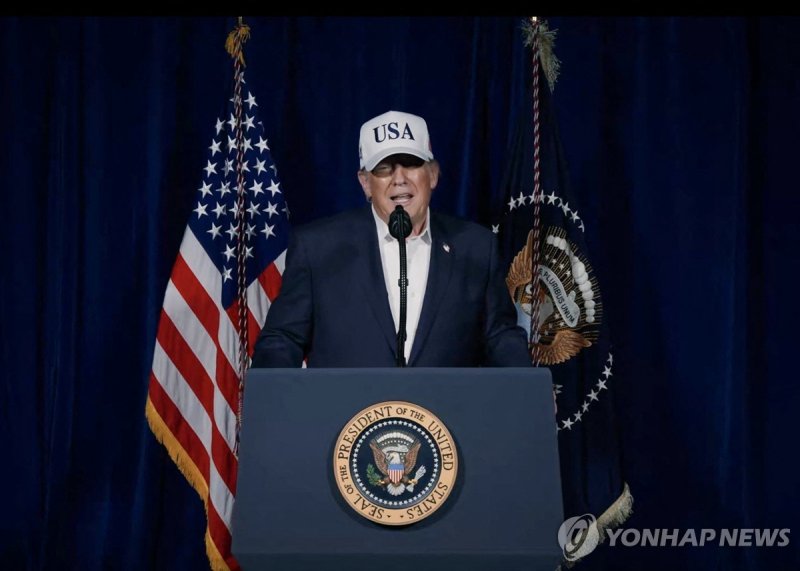
When he ran in the 2024 presidential election, President Trump vowed that he would "not start new wars," signaling that he would not launch wars of conquest against foreign regimes. Recently, however, his actions are being read as a clear message that he is willing to resort to limited but decisive use of force when he deems it necessary for U.S. national interests.
Still, analysts caution that it remains to be seen whether a pro-U.S. government can be installed in a short period of time, as Washington intends, depending on how the situation in the Islamic Republic of Iran unfolds after the death of the Supreme Leader of Iran. With the United States midterm elections coming up in November, a prolonged conflict would inevitably increase the political burden on President Trump.
Nuclear Talks Collapse, Washington Turns to Military Option
The United States held three rounds of nuclear negotiations with the Islamic Republic of Iran this month. Washington demanded that Tehran reduce its uranium enrichment level to zero and proposed that roughly 300 kilograms of already enriched uranium be transferred to the United States. It also called for permanent abandonment of nuclear weapons development and the dismantling of three key nuclear facilities at Fordow, Natanz, and Isfahan.
Tehran countered that its uranium enrichment program serves peaceful purposes such as energy and medicine. It rejected the demand to abandon what it has built up through investment and domestic scientific and technological advances, calling it an infringement on its sovereignty.
When the two sides ultimately failed to find common ground, the United States abruptly launched airstrikes. It was the first large-scale military operation in eight months, following the bombing of an underground Iranian nuclear facility last June. Anticipating the possible collapse of talks, Washington had already moved two aircraft carriers to waters near Iran and deployed substantial air power to bases around the region.
What Was Trump Aiming For?
The large-scale attack on the Islamic Republic of Iran, which resulted in the death of Supreme Leader of Iran Ayatollah Ali Khamenei, has once again drawn attention to President Trump’s "peace through strength" strategy. Earlier this year, the United States invaded the Bolivarian Republic of Venezuela, captured President Nicolás Maduro, and brought him before a U.S. court. That operation imprinted on the world that Washington is prepared to wield overwhelming military force in defense of its interests.
Analysts say the latest airstrikes on Iran fall into the same pattern. On Iran, President Trump has long portrayed himself as "the only president with the resolve and courage" to act. After the attack, he addressed Iranians on Truth Social, saying, "For years, you have asked the United States for help and never received it," and, "No American president was willing to do what I am going to do tonight. Now you have a president who can give you what you want, and I will be watching to see how you respond."
Some observers also argue that a strategic judgment lay behind the decision: that negotiations alone cannot fundamentally block Iran’s nuclear technology and its development of intercontinental ballistic missiles. In a declassified report released last year, the Defense Intelligence Agency (DIA) assessed that Tehran "could reach a militarily viable level by 2035 if it decides to develop an intercontinental ballistic missile (ICBM)." The New York Times (NYT) also reported that Washington likely concluded Iran’s capacity for retaliation was limited, which emboldened it to carry out such a bold strike.
The timing of this year’s United States midterm elections is also believed to have been a factor. The U.S. Supreme Court recently ruled that the reciprocal tariffs imposed on countries around the world were unlawful, leaving President Trump in need of a visible achievement. A hard-line foreign policy, analysts say, can highlight America’s global leadership, give voters a sense of "psychological satisfaction," and help rally the Republican Party’s traditional base.
However, Trump’s core base—the MAGA movement supporters—have consistently expressed skepticism about overseas military interventions. For that reason, some predict that if the conflict drags on, it could instead become a political liability for the president.
Limited War Without Ground Troops?
Experts generally believe the crisis is unlikely to escalate into a large-scale ground war. Elliott Abrams, who served as a special envoy on Iran and Venezuela during Trump’s first term, drew a clear line, saying the president would not deploy ground forces.
Abrams remarked that he found it striking when President Trump told Iranians, "Now it is up to you." The president effectively urged regime change, saying, "When we are finished, it will be your time. Take back your government."
Commenting on this, Abrams said, "That statement should be understood as, 'I will inflict serious damage on the Iranian regime, but I will not send U.S. troops. What happens afterward is the responsibility of the Iranian people.'"
[email protected] Reporter Lee Byung-chul Reporter