Iran Forms Interim Leadership...Trump Says There Are "Good Candidates" for Next Leader
- Input
- 2026-03-01 14:37:33
- Updated
- 2026-03-01 14:37:33
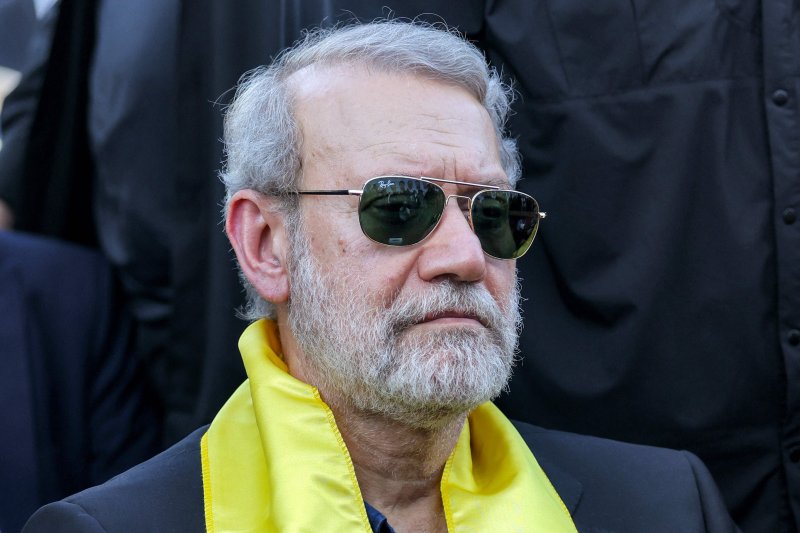
According to The Financial News, the Islamic Republic of Iran, now facing its gravest crisis in roughly half a century, has set up an interim leadership to act in place of its Supreme Leader, who was killed in airstrikes by the United States of America (US) and the State of Israel. US President Donald John Trump said he has several preferred candidates to succeed Iran’s leader, but he did not reveal any names.
Three-person interim leadership launched, focus on Khamenei’s successor
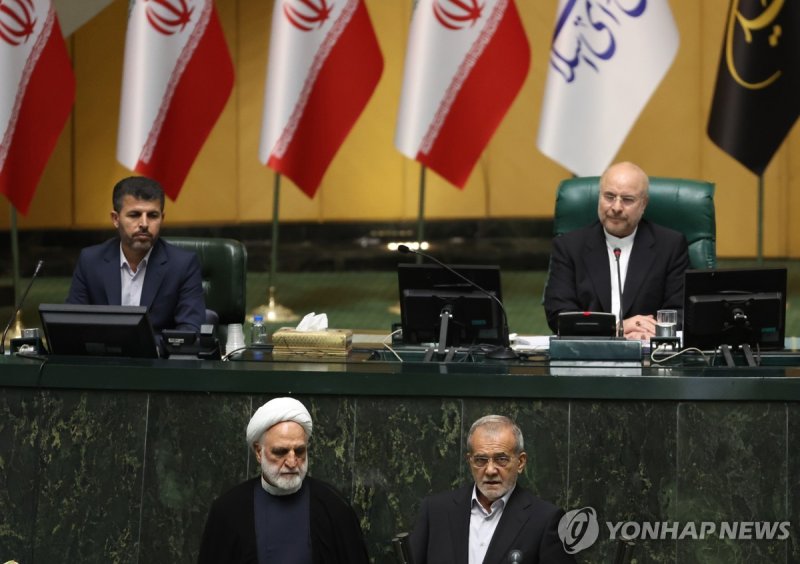
Islamic Republic News Agency (IRNA) reported on the 1st (local time) that, under Article 111 of the constitution, an Interim Leadership Council has been formed to temporarily assume the duties and powers of the Supreme Leader of Iran. The council consists of Iran’s President Masoud Pezeshkian, Chief Justice Gholam-Hossein Mohseni-Eje'i, and one Islamic jurist selected from the Guardian Council. The 12-member Guardian Council is a powerful governing body that conducts final review of laws passed by Iran’s parliament and oversees elections.Iran operates as a theocracy in which the Supreme Leader of Iran, who stands above the president elected by popular vote, ultimately controls the executive, legislative, and judicial branches. The position held by the late Supreme Leader Ali Hosseini Khamenei, who died the previous day, does not automatically pass to the president. The Supreme Leader is chosen by the Assembly of Experts, a body of 88 clerics, and no concrete schedule for the selection has yet been announced.
Earlier, The New York Times (NYT) reported that in June last year, during the 12-day war with the State of Israel, Khamenei mentioned three figures as potential successors should he become incapacitated. According to officials, the candidates were Chief Justice Gholam-Hossein Mohseni-Eje'i; Ali Asghar Hejazi, chief of staff to the Supreme Leader; and Hassan Khomeini, a moderate reformist cleric and grandson of Ayatollah Ruhollah Khomeini, the first Supreme Leader of the Islamic Republic of Iran. Among them, Hejazi was killed in the airstrikes on the 28th of last month.
NYT also reported that, prior to the strikes, Khamenei had delegated his state-management duties to Ali Larijani, secretary of the Supreme National Security Council (SNSC). The Economist noted that the Supreme Leader of Iran can delegate his authority to another figure, and it named Masoud Pezeshkian and Ali Larijani as such possibilities. The magazine pointed out that in recent negotiations with Russia, China, and Middle Eastern countries, Khamenei more often entrusted Larijani, rather than Pezeshkian, with representing his authority. Larijani, a former philosophy professor at the University of Tehran, has served as a minister in four different ministries and was speaker of parliament from 2008 to 2020. He was labeled a pragmatic conservative for promoting the 2015 nuclear deal, drawing criticism from hardline conservatives. Among hardliners, parliamentary speaker Mohammad-Bagher Ghalibaf enjoys strong support.
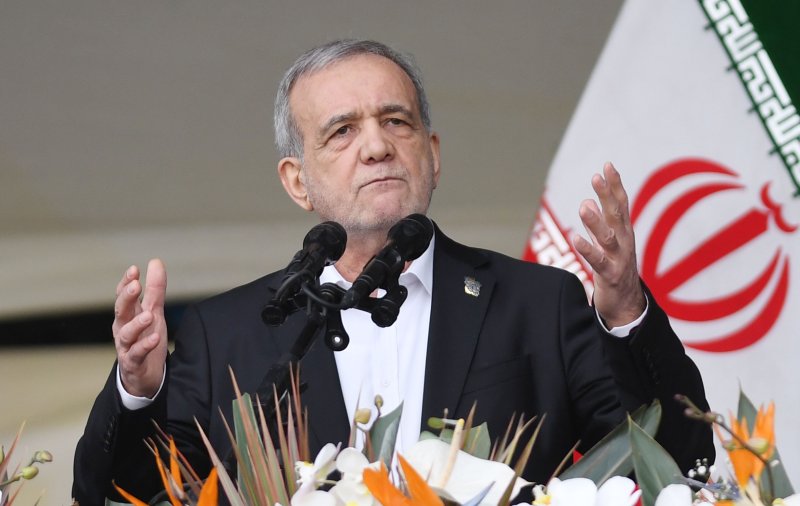
Will Trump try to shape Iran’s succession?
On the 28th of last month, Donald Trump spoke by phone with CBS Broadcasting Inc. (CBS) and commented on Iran’s political future. Asked whether he has a preferred leader for Iran, he replied, "I think so," adding, "There are some good candidates." When asked who holds real power in Iran after Khamenei’s death, Trump said, "I know exactly who it is, but I can’t say."That same day, Ali Larijani posted on the social media platform X, formerly Twitter, writing, "We will make the Zionist (Israeli) criminals and shameless Americans regret their actions." He added, "The brave soldiers and great people of Iran will teach the oppressive international devils an unforgettable lesson."
Citing intelligence officials, NYT reported that a scenario in which Iran’s government is completely overturned following Khamenei’s death is effectively impossible. The officials predicted that hardline conservatives are highly likely to take power after his passing, and that uncertainty surrounding Iran’s nuclear armament will grow. Mark Warner, a senator from the Commonwealth of Virginia (Virginia) who serves as the top Democrat on the Senate Intelligence Committee, told NYT, "Regime change in Iran would be an extraordinarily complex undertaking, and I have not seen any new intelligence that would alter that assessment." He added, "I support regime change in Iran, but I don’t understand why now," noting that "Khamenei invested in the nuclear program but stopped short of full nuclear weaponization."
In response, the British Broadcasting Corporation (BBC) pointed to the Islamic Revolutionary Guard Corps (IRGC), a political-military force under the direct command of the Supreme Leader of Iran that exists separately from the regular army, navy, and air force. The outlet said pessimism prevails regarding a scenario in which the Iranian regime collapses and Western-style democracy takes root. Instead, it assessed that a hardline military regime led by the IRGC is the more likely outcome.
On the 28th of last month, shortly after the airstrikes, Trump posted on Truth Social announcing Khamenei’s death and calling it "a single great opportunity for the people of Iran to take back their country." He wrote, "I hear that many within the IRGC, the military, and the security and police forces no longer want to fight and are seeking immunity from us," warning, "They can receive immunity now, but later they will face only death."
[email protected] Reporter Park Jong-won Reporter