Samsung Electronics to Transform All Plants into AI Autonomous Factories by 2030, Phased Introduction of Humanoid Robots
- Input
- 2026-03-01 12:18:11
- Updated
- 2026-03-01 12:18:11
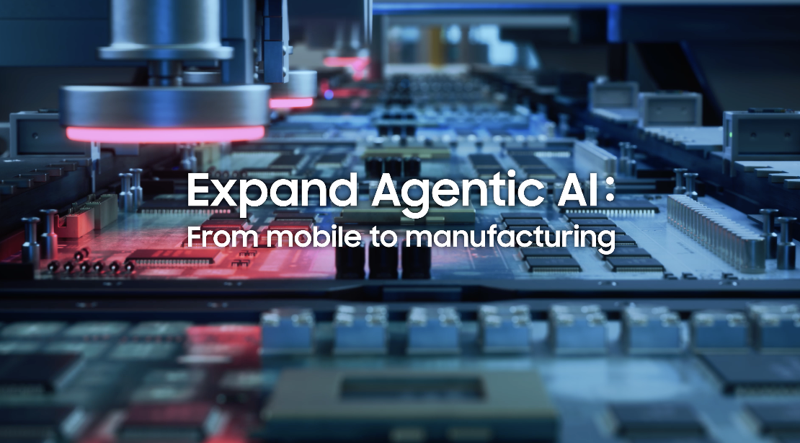
[Financial News] Samsung Electronics has declared that it will transform its production plants at home and abroad into "AI autonomous factories" by 2030. An AI autonomous factory is a facility where artificial intelligence is actively applied across all manufacturing processes.
Samsung Electronics plans to introduce simulations based on Digital Twin technology across the entire process, from material input to production and shipment. By using quality, production, and logistics AI agents, the company aims to strengthen data-driven analysis and pre-verification, thereby innovating quality and productivity across its global manufacturing sites. The company will also expand AI applications to environmental and safety areas to detect potential risk factors in advance and prevent accidents, raising safety levels on the manufacturing floor.
Lee Young-soo, head of the Production Technology Research Center and vice president at Samsung Electronics, said on the 1st, "The future of manufacturing innovation goes beyond simple automation. The key is to build autonomous manufacturing sites where AI understands the field and independently executes optimal decisions," adding, "We will reestablish ourselves as a global hub of manufacturing innovation powered by AI."
Building on the AI experience and technologies accumulated in its mobile business, Samsung Electronics will apply the "Agentic AI" introduced with the Samsung Galaxy S26 to manufacturing innovation as well. Agentic AI refers to AI that can set its own plans and carry them out to achieve a given goal.
Through AI agents, Samsung Electronics intends to make production, equipment, maintenance, and logistics more intelligent, thereby strengthening the foundation for autonomy on the shop floor.
To move beyond automation toward full autonomy, Samsung Electronics is also gradually introducing humanoid manufacturing robots across all manufacturing processes.
Going forward, Samsung Electronics plans to combine AI with various types of robots, including Operating Bots that manage production lines and equipment, logistics robots that handle material transport, and assembly robots that perform assembly processes, in order to create an optimized manufacturing environment.
In particular, the company will deploy Environmental Safety Bots based on Digital Twin technology at infrastructure facilities where it is difficult for people to work, such as high-temperature or high-noise environments. This is intended to strengthen workplace safety and systematically reduce on-site risks.
Meanwhile, at MWC Barcelona 2026 in Barcelona, Spain, the world's largest mobile communications industry exhibition, Samsung Electronics will unveil its strategy for applying industrial AI and present its vision for manufacturing innovation based on Digital Twin technology.
During MWC Barcelona 2026, the Samsung Mobile Business Summit (SMBS) will present a "governance enhancement strategy in response to expanding AI autonomy," in line with the growing use of Agentic AI across various industrial sectors, including manufacturing sites.
Samsung Electronics believes that as industrial AI is applied more broadly, autonomy—where AI understands the field and independently executes optimal decisions—will become the core. Alongside technological innovation, the company plans to embed safeguards from the design stage to promote the spread of industrial AI that customers and partners can trust.
Marking its 10th anniversary this year, SMBS is a closed-door event for major business-to-business (B2B) customers and partners. It serves as a venue to share Samsung Electronics' B2B strategy and latest technology roadmap, and to explore collaboration and business opportunities in real-world industrial settings.
[email protected] Lim Su-bin Reporter