Support for Japan's ruling LDP rebounds to 40% range for first time in 3 years and 4 months
- Input
- 2026-03-01 09:10:56
- Updated
- 2026-03-01 09:10:56
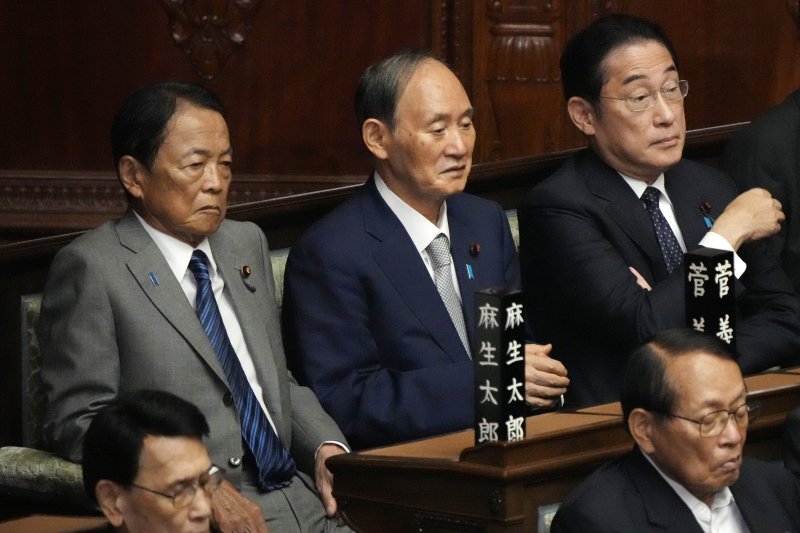
The Financial News Tokyo correspondent Seo Hye-jin reported that support for Japan's ruling Liberal Democratic Party (LDP) has climbed back into the 40% range for the first time in three years and four months. This marks a return to levels seen before the political funds scandal broke, and the high approval ratings for the Takaichi Cabinet now appear to be spilling over into party support.
In an emergency nationwide opinion poll conducted on January 18–19 and released on February 1, The Yomiuri Shimbun found that support for the LDP stood at 43%. In a separate survey on January 9–10, it was 40%. It is the first time since October 2022, under the Fumio Kishida Cabinet, that LDP support has reached the 40% range.
Since returning to power in 2012, support for the LDP had generally stayed in the 30–40% range. However, at the end of 2023 it fell into the 20% range after revelations that some LDP factions had been creating slush funds through political fundraising events. Under the Shigeru Ishiba Cabinet, support dropped as low as 19% in July last year.
When the Takaichi Cabinet was launched in October last year, its approval rating of around 70% helped lift party support back into the 30% range. After the vote count in the House of Representatives election (Japan) on February 8, in which the LDP scored a historic landslide, party support climbed further into the 40% range.
A senior LDP official analyzed, "As policies such as 'responsible, proactive fiscal spending' gained traction during the House of Representatives election, rising expectations for Prime Minister Sanae Takaichi translated into an improved image for the party."
Among opposition parties, Team Mirai, which made strong gains in the House of Representatives election, recorded a 6% support rate in the February 18–19 poll. This was higher than both the Centrist Reform Alliance (CRA) and the Democratic Party for the People (DPFP), which each stood at 5%.
Team Mirai has been on an upward trajectory, with support at 1% in the January 23–25 survey and 4% in the February 9–10 poll. Its leader Takahiro Anno said, "Our name recognition has grown, and once people learned what kind of party we are, I think many felt, 'This is actually better than I expected.'"
Meanwhile, within the LDP, which is now recovering its support, there are signs that factions—most of which had been dissolved—are moving toward a revival.
According to The Asahi Shimbun on February 27, about 20 lawmakers who formerly belonged to the Abe faction, once the largest faction in the LDP, met at a restaurant in Tokyo on the evening of February 25. The gathering was attended by Koichi Hagiuda, acting secretary-general of the LDP and a former Abe faction executive, and Yasutoshi Nishimura, the party's election strategy chief.
Hagiuda was quoted as urging them, "The faction may be gone, but let us act in a way that keeps us from scattering."
On the same day, former prime minister Fumio Kishida, who once led the Kishida faction, also hosted a meeting attended by about 30 lawmakers, including 12 first-term members.
The meeting also included Seiji Kihara and Hideki Murai, who both served as deputy chief cabinet secretaries under the Kishida Cabinet. They are known to have close ties with Defense Minister Shinjirō Koizumi, a leading contender to become the next prime minister.
Participants at the gathering hosted by Kishida agreed to continue meeting for policy study sessions and information exchanges.
In addition, lawmakers who previously belonged to the Motegi faction and the Shisuikai faction of the Liberal Democratic Party (Nikai faction) have recently held their own dinner meetings. Some first-term lawmakers also took part.
The Aso faction of Japan's Liberal Democratic Party has seen a sharp increase in membership, rising to 60 members after 18 lawmakers, including 11 first-termers, newly joined.
The Asahi Shimbun commented, "Because LDP factions have fueled public distrust of politics, there had been a mood among lawmakers to refrain from political activity organized along factional lines. But that trend shifted as Prime Minister Takaichi repeatedly appointed lawmakers involved in the slush fund scandal to key party posts."
The paper added that existing factions have begun moving to secure a "numerical advantage," and predicted that if their cohesion strengthens, their influence will grow in contests such as the party presidential election.
However, there are reportedly skeptical views about a full-scale revival of factions as power blocs that shape personnel appointments and policy-making.
One former cabinet member told The Asahi Shimbun, "If factions are revived, they will inevitably become hotbeds for problems," adding, "The LDP has repeated this pattern over and over again."
[email protected] Seo Hye-jin Reporter