U.S. and Israel say Khamenei killed 15 hours after airstrikes began [U.S. strikes Iran]
- Input
- 2026-03-01 08:54:34
- Updated
- 2026-03-01 08:54:34
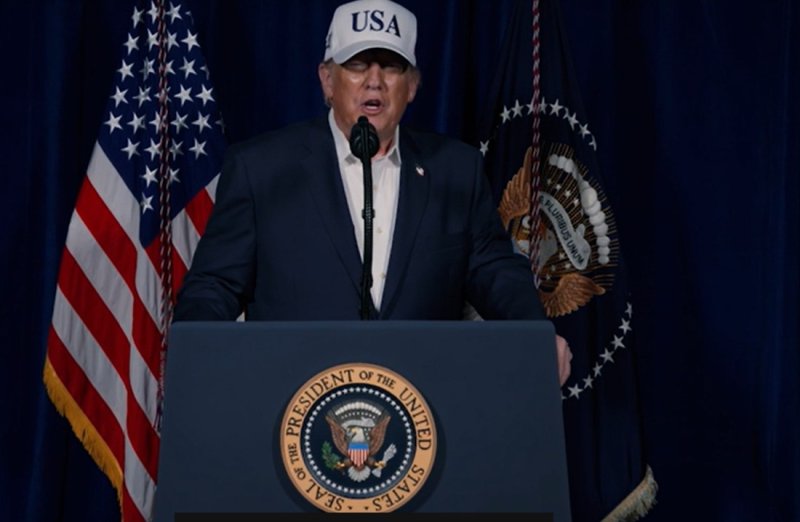
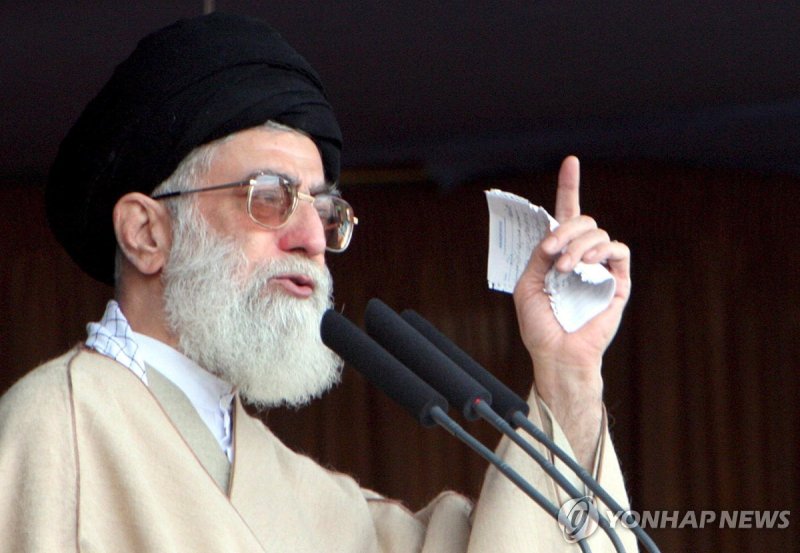
The Financial News reported that on the 28th (local time), the United States of America (U.S.) and Israel launched a large-scale military operation against the Islamic Republic of Iran and announced that Supreme Leader Ali Hosseini Khamenei had been killed. As Iran moved to retaliate immediately, reactions in Tehran mixed between jubilation and anxiety, putting the broader Middle East at a critical crossroads.
U.S. and Israel: "Khamenei killed 15 hours after airstrikes began"
At 4:40 p.m. Eastern Time that day, President Donald Trump stated on social media that "Ali Hosseini Khamenei, one of the most evil men in history, is dead." His announcement came roughly 15 hours after the U.S. and Israel began their attack on the Islamic Republic of Iran at 1:15 a.m. U.S. time, 9:45 a.m. in Iran.
According to the Islamic Republic News Agency (IRNA), around 10 a.m. local time a large explosion rocked the capital, Tehran, sending plumes of smoke into the sky. The blast reportedly occurred near Ali Hosseini Khamenei’s official offices.
Israel has described the operation as a "decapitation strike," saying it carried out precision attacks on Ali Hosseini Khamenei, commanders of the Islamic Revolutionary Guard Corps (IRGC), and senior officials linked to the nuclear program. Israeli Prime Minister Benjamin Netanyahu declared, "We destroyed Khamenei’s residence and eliminated senior commanders," and signaled that further strikes could follow.
The U.S. military said it prioritized strikes on IRGC command-and-control centers, air defense systems, missile and drone bases, and military airfields. Precision-guided munitions were deployed from the air, land, and sea, and suicide drone units were used in combat for the first time. Analysts say the scope of this operation is far broader than last year’s airstrikes on Iran’s nuclear facilities.
Surprise attack amid negotiations: Iran denounces "aggression" and strikes back immediately
The United States Department of Defense (DoD) has named the operation "Operation Epic Fury." Israel has given its part of the campaign the name "Roar of the Lion."
President Donald Trump described the strikes as "measures to eliminate the Iranian threat," pointing to the rebuilding of its nuclear program and the strengthening of its missile forces. The U.S. had been engaged in nuclear talks with the Islamic Republic of Iran until recently, but appears to have concluded that Tehran had no intention of abandoning nuclear weapons, prompting the decision to resort to military action.
Iranian authorities said the strikes caused damage in 24 of the country’s 31 provinces, leaving at least 201 people dead and more than 700 injured.
The government of the Islamic Republic of Iran condemned the U.S. and Israeli attacks as a violation of international law and an act of aggression, and moved to retaliate immediately.
The IRGC announced that it had launched missiles and drones at major Israeli cities and U.S. military bases across the Middle East. The U.S. said it intercepted hundreds of incoming attacks, reporting no American casualties and only limited damage to its facilities. Iran, however, has claimed that U.S. personnel were killed, leaving the two sides offering conflicting accounts.
Ali Larijani, secretary of the Supreme National Security Council of Iran (SNSC), wrote on X (formerly Twitter) that afternoon, declaring, "We will make the Zionist criminals of Israel and the shameless Americans regret their actions."
Tehran torn between "cheers and fear" as hope and dread collide
Foreign media also reported that news of Ali Hosseini Khamenei’s death sparked cheers in parts of Tehran. As the reports spread through opposition outlets abroad, some residents were said to have responded with applause, whistles, and fireworks.
Ali Hosseini Khamenei, 86, the Supreme Leader of the Islamic Republic of Iran who is reported to have been killed in an explosion at his Tehran residence during the sudden airstrikes by Israel and the U.S., had ruled the country with an iron fist for 37 years at the apex of its theocratic system.
Given years of economic hardship and tight political and social controls, analysts say there are tentative signs of hope among some Iranians for possible regime change. Some residents were quoted as saying there was "no other way," reflecting a mix of relief and unease.
Immediately after the airstrikes, however, the atmosphere was very different. Residents rushed to grocery stores and gas stations to stock up on water and food, and traffic jams quickly formed on major roads. With internet access almost completely cut off, public anxiety deepened.
Calls for regime change are rising alongside fears of a wider war. It remains unclear whether the Islamic Republic of Iran will descend into turmoil after Ali Hosseini Khamenei’s death or maintain the existing system and continue on a hardline path.
[email protected] Shin Jin-a Reporter