Japan Says No Immediate Impact on Oil Supply... Vows to Ensure Stable Energy Supplies
- Input
- 2026-03-01 08:48:56
- Updated
- 2026-03-01 08:48:56
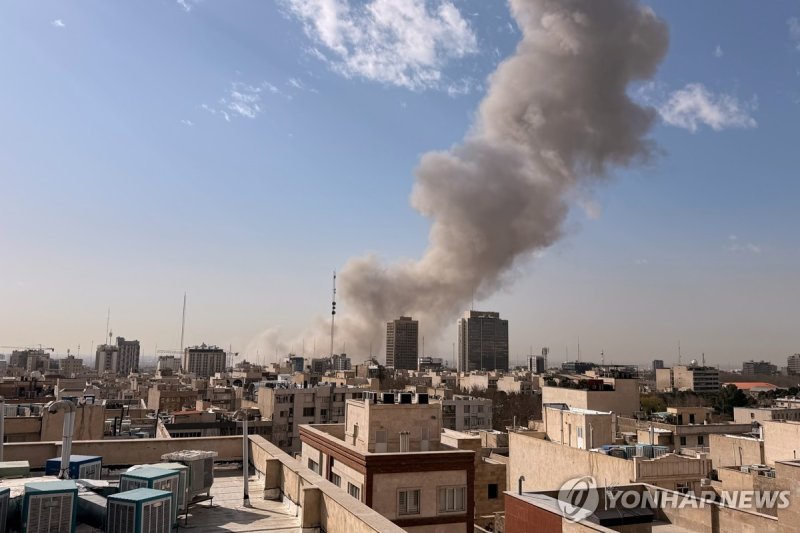
TOKYO, Financial News — At a dawn press conference on the 1st, Chief Cabinet Secretary Minoru Kihara addressed the recent attacks on the Islamic Republic of Iran by the United States and Israel. He stated, "I have not received any reports that there has been an immediate impact on Japan's oil supply and demand." He added that Japan would "make every effort to ensure a stable energy supply."
Kihara, the Chief Cabinet Secretary, commented on crude oil supply and prices, explaining that they are "ultimately determined by the market, based on a comprehensive assessment of various factors such as the situation in the Middle East, the global economy, and energy supply and demand trends." He went on to say, "We should refrain from making comments based on assumptions or speculation."
However, market participants are concerned that the risk of disruptions to crude oil supplies from the Middle East could come to the fore early this week.
According to the Yomiuri Shimbun, prices of West Texas Intermediate crude oil (WTI) on the New York futures market have risen about 17% over the past two months since the beginning of the year. There is also a possibility that upward pressure on prices will strengthen further.
On February 27 (local time), before the U.S. military and others attacked Iran, April WTI futures briefly climbed to $67.83 per barrel, the highest level since August 2025. If tankers carrying crude from oil-producing countries along the Persian Gulf are unable to safely pass through the Strait of Hormuz, a key maritime chokepoint, global crude supplies could be thrown into turmoil. When the U.S. military struck three nuclear facilities in Iran last June, oil prices surged into the $78 range.
Japan relies on oil-producing countries in the Middle East—such as the Kingdom of Saudi Arabia (KSA), the United Arab Emirates (UAE), and the State of Kuwait—for 90% of its crude oil imports. For this reason, the Yomiuri Shimbun noted that Japan is unlikely to escape the impact of heightened tensions surrounding Iran. This could easily translate into higher prices for petroleum products such as gasoline.
Even so, the Yomiuri Shimbun reported that, even if crude shipments are temporarily delayed, it is unlikely that a shortage of petroleum products would immediately have a major impact on economic activity or people’s daily lives. The government and private companies have built up domestic oil reserves in preparation for possible supply disruptions.
According to the "petroleum stockpile status" released last month by the Ministry of Economy, Trade and Industry (METI), Japan’s oil reserves at the end of December last year amounted to the equivalent of 254 days of consumption, or about eight months.
Meanwhile, on the 28th (local time), the United States and Israel launched a military operation targeting the Islamic Republic of Iran and announced that they had eliminated Ali Hosseini Khamenei, the Supreme Leader of Iran and the apex of the country’s Islamic theocratic system.
U.S. President Donald Trump posted on the social media platform Truth Social at around 4:40 p.m. Eastern Time that day, declaring, "Khamenei, one of the most evil people in history, is dead." This announcement came roughly 15 hours after the United States and Israel began their attack on Iran at 1:15 a.m. that day, or 9:45 a.m. Iran time.
This is the first direct U.S. military strike on Iran in about eight months, since it hit three nuclear facilities in Iran last June. Observers say the latest operation was a far more extensive military action than the one carried out at that time.
President Trump argued that Iran had tried to rebuild Iran's nuclear program and had "rejected every opportunity to abandon its nuclear ambitions." He declared, "We will tolerate this no longer," and identified Iran’s missiles and missile industry, as well as its navy, as key targets of the operation.
Trump had repeatedly said that diplomacy was his first priority and continued nuclear talks with Iran, while at the same time deploying large-scale military forces to the Middle East and keeping open the possibility of military action against Iran.
The United States resumed nuclear negotiations on the 6th of this month after an eight-month hiatus and held three rounds of talks through the 26th in Switzerland and Oman. However, it appears Washington ultimately concluded that Iran had no intention of abandoning nuclear weapons and proceeded with the attack.
According to the Iranian Red Crescent Society, the attack caused damage in 24 of Iran’s 31 provinces, leaving at least 201 people dead and 747 injured.
Iran condemned the U.S. and Israel’s strike as an act of aggression in violation of international law and launched an immediate counterattack. When Israel bombed Iran last June, the Islamic Revolutionary Guard Corps (IRGC) responded about 20 hours later, but this time Iran retaliated in roughly an hour.
The Ministry of Interior of Iran said in a statement, "The criminal enemy has once again violated international law and committed an act of aggression against our precious territory while negotiations were underway."
The Ministry of Foreign Affairs of Iran also issued a statement saying, "The new military attacks by the United States and the Israeli regime occurred while diplomatic procedures between Iran and the United States were in progress," and asserted that "retaliation for this act of aggression is Iran’s legitimate right under Article 51 of the Charter of the United Nations."
[email protected] Seo Hye-jin Reporter