The man who gripped Iran for 36 years: Who is Khamenei?
- Input
- 2026-03-01 08:23:16
- Updated
- 2026-03-01 08:23:16
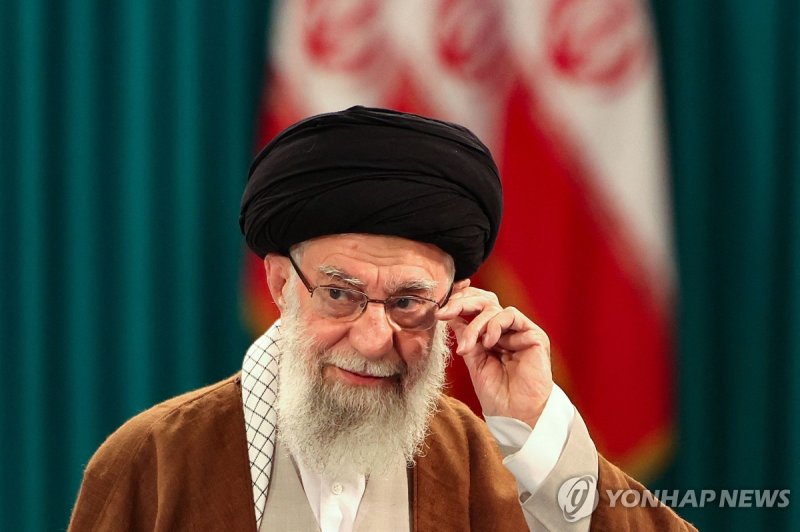
On the 28th (local time), United States of America (USA) President Donald Trump declared that "Khamenei died amid the conflict," and a senior State of Israel official also stated that his body was found after joint US–Israeli airstrikes. However, the Iranian authorities have not issued any official confirmation.
If his death is officially confirmed, it would mark the exit of the figure who has symbolized the Islamic Republic system since 1989, and would therefore represent a major political shock.
Ayatollah Ali Khamenei rose rapidly after the 1979 Islamic Revolution and became Supreme Leader in 1989. He consistently distrusted the USA and the West, cracked down harshly on domestic opposition, and expanded his influence by supporting regional proxy forces such as Hezbollah in Lebanon and armed groups in the State of Palestine.
In practice, the foreign and security policies of the Islamic Republic of Iran did not move without his approval. The country has an elected president and parliament, but final authority over nuclear and missile policy, as well as relations with the USA, rested with the Supreme Leader. He was the figure who fully dominated a complex power structure that combines clerical rule with limited democracy.
In recent years, his rule has faced serious challenges. Nationwide protests spread amid soaring prices and economic hardship, and at the beginning of this year the harshest crackdown since the 1979 revolution took place. Security forces opened fire on demonstrators chanting "Death to the dictator," leading to bloodshed.
The external environment also deteriorated. After Hamas attacked the State of Israel in October 2023, the war in the Gaza Strip erupted, and the State of Israel began exerting comprehensive pressure on Iran’s regional proxies. Hezbollah in Lebanon was weakened, and the regime of Bashar al-Assad in Syria collapsed. The Islamic Republic of Iran’s influence in the Middle East has visibly diminished.
The USA demanded that Iran abandon its ballistic missiles, but Ayatollah Ali Khamenei rejected this, calling them "the ultimate deterrent." Some analysts argue that this hard-line stance ultimately triggered the latest airstrikes.
In the early years of his rule, he was seen as an inadequate successor to the charismatic Ayatollah Ruhollah Khomeini. At the time of his appointment, his religious rank was considered insufficient, which made it difficult for him to exercise authority.
However, he consolidated power by building a highly loyal security apparatus centered on the Islamic Revolutionary Guard Corps (IRGC) and the Basij militia. During every major crisis, including the protests over alleged election fraud in 2009 and the mass demonstrations after the death of Mahsa Amini in 2022, he mobilized military and paramilitary forces to defend the regime.
His power base is also rooted in a vast quasi-state asset network known as Setad. Having grown to be worth tens of billions of dollars, this organization has financed power institutions, including the IRGC, and has helped prop up the system.
If Ayatollah Ali Khamenei’s death is confirmed, the line of succession and the stability of the system will emerge as the key variables. Under the constitution, the Assembly of Experts elects the Supreme Leader, but the actual balance of power depends on the dynamics between the IRGC and the clerical elite.
The main concern lies in the external environment. If a power vacuum occurs while the USA and the State of Israel are exerting military pressure, tensions over the nuclear program are ongoing, and the domestic economy is in crisis, the regime’s instability could intensify. Conversely, hard-liners could close ranks and choose an even more closed and aggressive course.
If the departure of the man who has symbolized the Islamic Republic of Iran for 36 years is indeed a fact, it may signal not just a change of leadership but the beginning of a reordering of the Middle East.
[email protected] Reporter Lee Byung-chul Reporter