"Honey, did we buy a cram school or something?"... Tuition bills for English kindergartens and academies that are scarier than a paycheck [How Much Does It Cost?]
- Input
- 2026-03-01 09:00:00
- Updated
- 2026-03-01 09:00:00
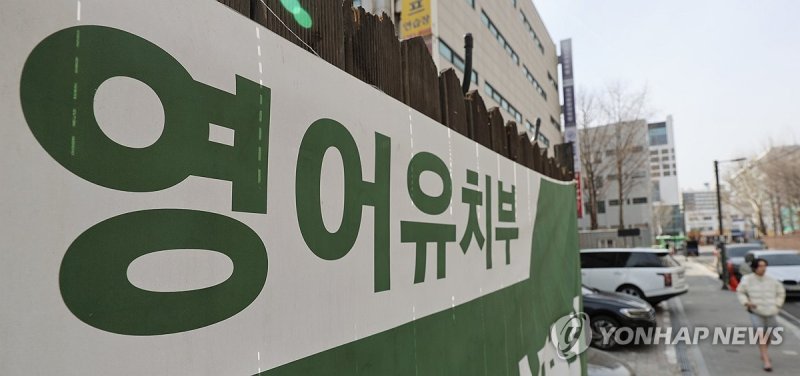
[Financial News] "Honey, they say Min-jun's English kindergarten tuition is going up starting this month. And we should sign him up early for an elementary prep math academy too."
Sunday morning, February 8. Office worker Mr. A (43) almost spat out his coffee at his wife's announcement. Another massive bill had arrived before he had even recovered from last month's "credit card bomb." With a trembling voice, he asked again.
"Honey, we're paying more than 2.5 million won a month just for academies... Did we buy a cram school or something? Are we major shareholders now?"
It sounds like a joke, but this is the chilling reality facing parents in their 30s and 40s in the Republic of Korea (ROK). In this fifth installment, we look into the sad self-portrait of the so-called "shadow education republic," where people may give up on owning a home but refuse to give up on their children's education.
◇ Fact check: Is it really true that "English kindergarten is more expensive than medical school"?
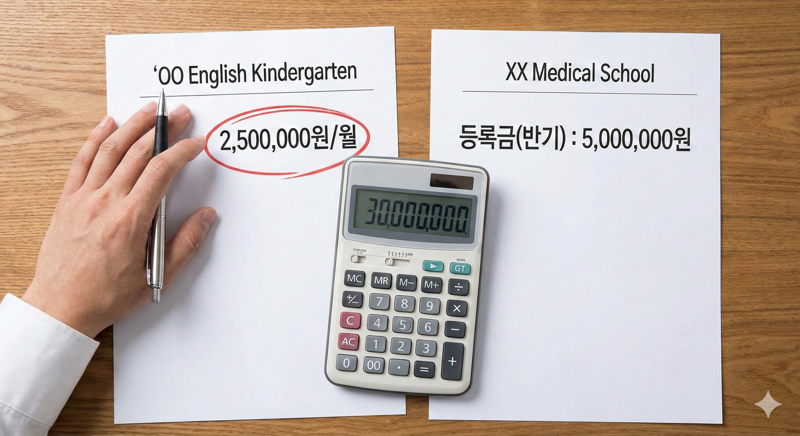
Statistics show that Mr. A's outcry is no exaggeration. When the reporter analyzed data from the Ministry of Education and the University Information Disclosure system, the reality turned out to be even harsher than expected.
In major school districts in Seoul, the average monthly cost of an English kindergarten (English-language academies for preschoolers) is around 1.5 to 1.7 million won. Once you add shuttle fees, textbook costs, meal fees and other "hidden costs," the actual burden on parents climbs to between 2 million won and, in many cases, close to 3 million won per month.
Converted to an annual figure, that comes to roughly 25 to 30 million won. This is more than three times the average annual tuition at a four-year private university in Korea (about 7.62 million won), and more than twice the annual tuition at a domestic medical school (a little over 10 million won). In other words, it now costs more to raise a kindergartener than a medical student—a "normalization of the abnormal."
◇ Reality in numbers: "My salary goes straight to the academy director"
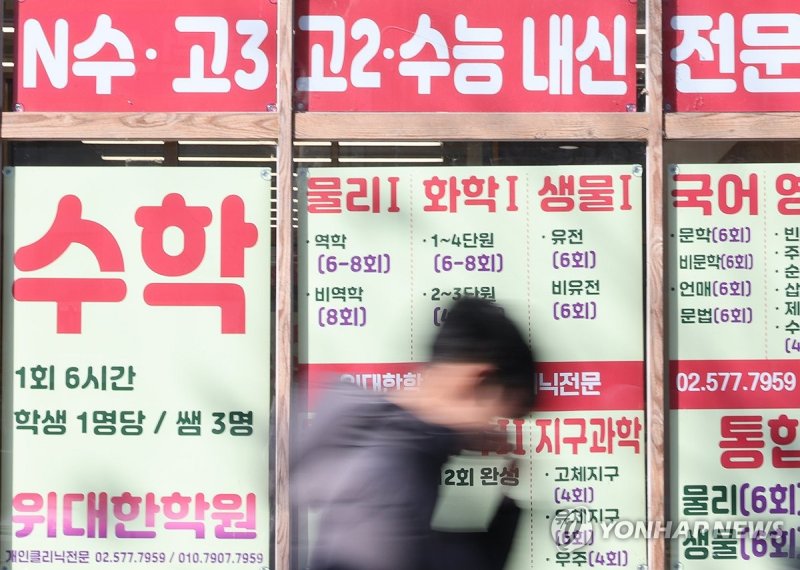
This pain is not Mr. A's alone. According to Statistics Korea's 2023 "Private Education Expenditures Survey of Elementary, Middle and High School Students," total private education spending in the ROK reached 27.1 trillion won, the highest level ever recorded. The number of students is falling, yet spending on academies is soaring—a paradoxical phenomenon.
Office worker Mr. B (40) said, "I take home a little over 4 million won, and 2 million of that goes just to academies for my two kids," adding bitterly, "At this point I don't know if I'm working for my family or just to pay the academy directors' salaries." Statistics Korea's Household Income and Expenditure Survey likewise shows that for households in their 40s, the largest spending category is not food, but education.
◇ Mothers' defense and experts' diagnosis
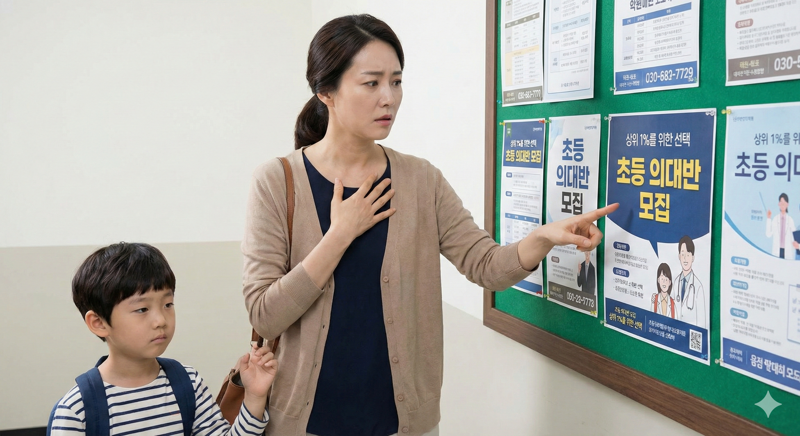
So why are mothers willing to shoulder such unrealistic costs? What they feel is not vanity, but an existential fear.
Ms. C (39), a homemaker with an elementary school child, confessed, "I want to save money by not buying clothes or cosmetics for myself. But this constant 'anxiety' keeps dragging me back to the academies." She went on, "Kids around us chat in English and have already finished advanced math courses. I'm afraid mine will be the only one left behind, so I have no choice but to borrow money if I have to. This is about survival."
On this point, education experts point to a uniquely Korean version of the "prisoner's dilemma." One education specialist explained, "In a society where university hierarchies and a dual labor market are firmly entrenched, aggressive private education marketing preys on parents' anxiety," and analyzed the situation as "a structural tragedy that goes beyond individual effort."
◇ "Still, what can I do? They're my kids"
In the end, Mr. A grumbles but still taps the transfer button. He may not have the means to actually "acquire" a cram school, but he decides to think of it as "buying" the smiling face of his child who will proudly say tonight, "Dad, I memorized all my English words!" From an economics standpoint, it is clearly a "negative investment."
And yet, what choice does he have? The instinct to do whatever he can for his children outweighs the cold calculations of a calculator.
"Honey, I'll just cut back on my drinking money instead."
Amid the massive 27 trillion won wave of private education in the ROK, this article wishes strength to all the "edu-poor" breadwinners who keep rowing in silence.
[email protected] Reporter Jeon Sang-il Reporter