"If It Can't Win Creditor Consent, It's Over"...Will Homeplus Ultimately Disappear from History? [One Year Under Court Receivership]
- Input
- 2026-03-01 16:07:48
- Updated
- 2026-03-01 16:07:48
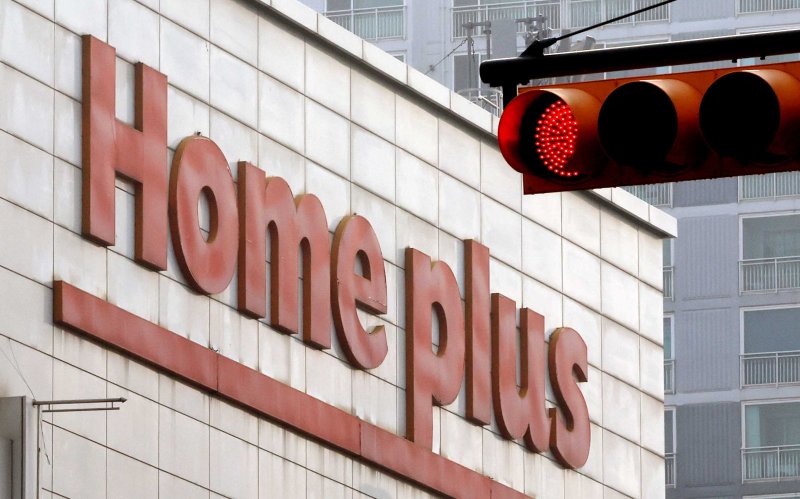
[The Financial News] Homeplus, which once formed a "two-strong" system in Korea's hypermarket sector together with Emart Inc., is now facing the risk of disappearing after 27 years in business. A year has passed since the start of its corporate rehabilitation proceedings (court receivership), but repeated setbacks in asset sales and fundraising have brought the company to a crossroads. By the legal deadline of the 4th for court approval of its rehabilitation plan, it will be decided whether Homeplus is headed for "disintegration" through liquidation or can "survive" through rehabilitation. In the end, the company's fate is expected to hinge on whether creditors can reach a last-minute dramatic agreement and whether effective financing can be secured. If the court deadline is not extended or no breakthrough is found, Homeplus is effectively expected to enter bankruptcy proceedings.
Struggles to raise 300 billion won...All eyes on the court
According to the retail industry and legal circles on the 1st, expectations are generally pessimistic regarding court approval of the Homeplus rehabilitation plan. The company has requested 300 billion won in emergency debtor-in-possession (DIP) financing to normalize operations, but the funding has been delayed. On top of that, additional support from creditors beyond capital injections by the largest shareholder, MBK Partners, remains uncertain. Analysts therefore say it will be difficult to secure creditor consent and finalize the rehabilitation plan.
Some observers also raise the possibility that the court may issue an "exclusion decision," rejecting the plan without even convening a meeting of interested parties if it concludes that implementation is unlikely. Kim Bong-gyu, an attorney at Moon & Kim Law Office, said, "The interests of creditors are sharply at odds, so it will not be easy to obtain their consent," adding, "If consent is not obtained, the rehabilitation proceedings will be terminated and the case is highly likely to move into bankruptcy proceedings."
If the rehabilitation proceedings are terminated, a liquidation process will begin in which assets such as stores and logistics centers are sold off and distributed to creditors. In that case, the business of Homeplus, which was once the No. 2 player in the hypermarket industry, would effectively come to an end.
There is also talk of extending the approval deadline once by six months, but many in the legal community argue this would not be a fundamental solution. Even if the rehabilitation process is extended, it will be difficult to turn the situation around unless a realistic buyer emerges in the current retail environment. An industry official noted, "There is the option of a 'cramdown,' where the court approves rehabilitation ex officio without creditor consent, but experts generally view the chances of that being applied as extremely slim."
Downturn deepens amid worsening market conditions and regulations
Homeplus began in 1997 as the discount store business of the distribution division of Samsung C&T Corporation and went on to build a "two-strong" structure in the retail sector together with Emart Inc. However, after private equity firm MBK Partners acquired the company in 2015 for the hefty price of 7.2 trillion won, it entered a downward spiral as the burden of excessive acquisition financing interest combined with declining sales. Behind its decline, in addition to the rapidly changing market environment, lie tightly designed legal regulations. The Act on Fair Transactions in Large Retail Business and the Distribution Industry Development Act, both enacted in 2011, dealt a decisive blow to its growth. In particular, mandatory twice-monthly store closures and restrictions on operating hours not only weakened its sales base, but also effectively blocked early-morning delivery services that use stores as logistics hubs, leaving the company lagging behind in competition with e-commerce players. Homeplus posted a profit of 93.3 billion won in 2021, but then recorded operating losses for three consecutive years, with profitability deteriorating sharply.
Amid this worsening business environment, Homeplus began experiencing a liquidity crisis from late 2024, including delays in payments to suppliers. On March 4 last year, it abruptly filed for corporate rehabilitation proceedings and obtained a court decision to commence the process in about 11 hours. As part of its rehabilitation plan, Homeplus also sought to spin off and sell Homeplus Express, its corporate supermarket (SSM) business considered a core asset, but so far it has failed to find a suitable buyer, pushing the situation to the brink. The number of stores, which stood at 126 in 2024, had fallen to 107 as of the end of last month.
Concerns over collapse of the Homeplus ecosystem...Will there be a dramatic agreement?
If Homeplus faces the worst-case scenario of liquidation, the impact on the domestic retail ecosystem is also expected to be significant. Small and midsized partner companies could suffer cash crunches and a chain of bankruptcies, and the disappearance of Homeplus and Homeplus Express, which have served as neighborhood shopping hubs, would inevitably cause inconvenience for consumers. An industry official warned, "The bankruptcy of Homeplus would not simply mean the disappearance of a single company, but the collapse of one pillar of the domestic retail ecosystem," adding, "Unless a dramatic agreement is reached between the majority shareholder MBK Partners and the creditor group, the likelihood is growing that this will mark the end of its 27-year history."
clean@fnnews.com Lee Jeong-hwa Reporter