"You Won’t Be Able to Eat This in Two Weeks"... MZ Shoppers Rush to Supermarkets for This Instead of Lining Up at Dawn [Trend Recipe]
- Input
- 2026-02-28 09:00:00
- Updated
- 2026-02-28 09:00:00

[Financial News]# Office worker Kim (28) recently stopped by a supermarket on the way home from work to buy spring cabbage (bomdong) and wild chives (dallae). She wanted to make the "spring cabbage bibimbap" that is trending on social media. Kim said, "I used to think spring greens were just bitter and a hassle to prepare, but seeing all these neat, seasonal tables on social media made me want to feel the change of seasons myself."Among the MZ generation, a so‐called "Seasonal-core" consumption trend is emerging, where people enjoy dishes made with seasonal ingredients. As more consumers seek out ingredients that are only available for a short time and share their experiences, menus using spring cabbage, a herald of spring, have moved to the center of attention.
Spring cabbage bibimbap heats up social media... "A hip experience rather than just healthy"
According to industry sources on the 28th, recipes and reviews for spring cabbage bibimbap have been spreading rapidly on Instagram, blogs and online video platforms. Most recipes simply blanch spring cabbage, then mix it with sesame oil and gochujang. It is easy to make, yet lets people enjoy the fresh flavor of seasonal vegetables, which is cited as a key reason for its popularity. It also feels less burdensome than eating out and can be prepared quickly at home, drawing in younger consumers.
The phenomenon of specific seasonal ingredients going viral through social media has become even more pronounced in recent years. In winter, amberjack sashimi and strawberry desserts were popular items to show off online. As the seasons change, attention is shifting to spring greens such as spring cabbage, shepherd’s purse (naengi) and wild chives (dallae). Analysts say that trying ingredients that are hard to find once the season passes, and sharing those experiences, has become a distinct consumption trend.
The craze for spring cabbage bibimbap has also been fueled by an old TV clip that has resurfaced. On online communities and social media, a scene from the 2008 KBS entertainment program "2 Days & 1 Night" has been making the rounds again, showing the cast picking spring cabbage in a field and making freshly seasoned spring cabbage bibimbap. The line "The cabbage tastes better than meat" turned that scene into a meme among young people, and in its wake, posts and videos of people making their own spring cabbage bibimbap at home have been pouring in.
Industry observers note that more and more past content is being rediscovered online and evolving into new consumption trends.
Spring cabbage flying off the shelves at big-box stores... special promotions follow
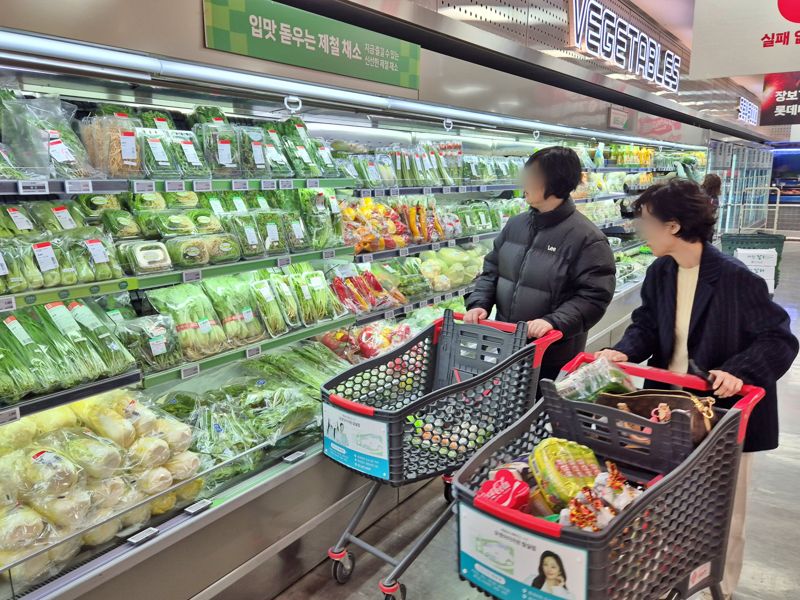
In the retail sector, demand for spring greens, including spring cabbage, is also rising quickly. According to Emart, sales of spring cabbage from the 1st to the 27th of this month jumped about 121.5% year-on-year. During the same period, sales of shepherd’s purse increased 117.6%, while minari (water dropwort) and wild chives rose 74.9% and 75.6%, respectively, indicating a sharp overall increase in sales of spring greens. At Lotte Mart, sales of spring cabbage from the 1st to the 26th of this month were up about 10% from a year earlier. As spring cabbage bibimbap recipes go viral, more consumers are buying related ingredients together. Over the same period, egg sales climbed about 15%, and gochujang sales about 30%, with sales of other bibimbap ingredients rising in tandem.
Retailers are rolling out discount events to tap into growing seasonal demand. Emart is holding a "Spring Greens Battle" promotion through April 4, offering discounts on spring cabbage, wild chives, shepherd’s purse and other spring vegetables. With Shinsegae Point, spring cabbage is 2,980 won, 40% off, while wild chives and shepherd’s purse are 3,980 won each. Mountain greens (sanchoi) and minari are also included in the promotion.
A retail industry official explained, "Compared with the past, the share of seasonal vegetable purchases among younger consumers has increased noticeably," adding, "In line with the social media ‘proof shot’ culture, when a particular ingredient becomes a hot topic, sales of related products now rise almost immediately."
Seasonal consumption takes root as a lifestyle

Some observers say this phenomenon is no longer just a passing fad, but is settling in as a distinct way of consuming. Consumers are moving away from past patterns that focused only on efficiency and value for money. Instead, they increasingly seek psychological satisfaction from tables that change with the seasons.
An industry insider noted, "For the MZ generation, seasonal ingredients are great content for expressing their own sensibilities and tastes," and predicted, "Given how much they value scarcity, their 'Seasonal-core' habit of seeking out new ingredients each season will become more sophisticated and diversify in the future."
[email protected] Lee Jeong-hwa Reporter