"193–254 Trillion Won in Tariff Refunds at Risk"...Trump Weighs Delay Tactics
- Input
- 2026-02-27 08:09:43
- Updated
- 2026-02-27 08:09:43
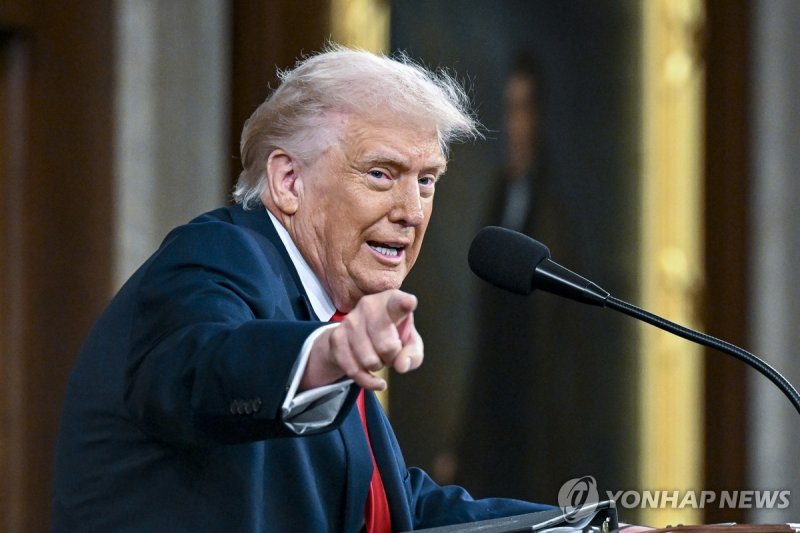
[The Financial News] The Trump administration is reportedly considering what amounts to a delay strategy in response to refund demands for reciprocal tariffs that were invalidated by an unlawful ruling from the Supreme Court of the United States (U.S. Supreme Court). Observers say the goal is to minimize the fiscal shock if large-scale refunds become a reality.
Politico reported on the 26th (local time) that the Trump administration is devising legal strategies that could allow it to ultimately retain some or even most of the reciprocal tariffs already collected, instead of refunding them.
The potential size of the refund claims is estimated at between 133.5 billion and 175 billion dollars, or roughly 193 trillion to 254 trillion won. U.S. media report that at least 1,800 companies have already filed lawsuits seeking refunds.
During litigation over the legality of tariffs imposed under the International Emergency Economic Powers Act (IEEPA), the Trump administration had submitted a written response pledging to refund the amounts with interest if it lost the case. However, after the U.S. Supreme Court declined to provide clear guidance on the method and scope of refunds, the administration is now said to have shifted its stance.
One option under discussion is to invoke the "global tariff" imposed under Section 122 of the Trade Act of 1974 to argue that the existing tariff collections were lawful. The global tariff is currently set at 10%, and President Trump has announced plans to raise it to the statutory ceiling of 15%. The administration appears to be arguing that this measure can substantially replace the reciprocal tariffs that were struck down. It remains unclear, however, whether the global tariff can be applied retroactively to duties that have already been paid.
Another idea is to give priority in refunds to companies that agree to forgo part of the amount they are owed. This is seen as an attempt to induce voluntary settlements by leveraging the fact that the litigation process is lengthy and complex.
Right after the Supreme Court ruling on the 20th, President Trump told reporters that tariff refunds would "probably have to be fought over in court for the next two years." Later, he went further, saying, "We will be in court for the next five years."
Legal experts say that if United States Customs and Border Protection (CBP) has already transferred collected tariffs to U.S. Department of the Treasury (Treasury Department) accounts after 330 days, the refund process could be delayed even further. Even under optimistic assumptions, they estimate it will take at least one to two years. There is also speculation that the U.S. Department of Justice (Justice Department), representing the government, could appeal any first-instance losses or litigate shipment by shipment to postpone refunds as long as possible.
The administration’s reluctance to issue refunds is rooted in concerns about fiscal burdens. President Trump has previously said he would use tariff revenues to fund refunds or distributions through what he called the "Trump tariff refund program" ahead of this year’s midterm elections. When a major tax cut bill passed last July, he also argued that projected tariff revenues of up to 4 trillion dollars over the next decade would help offset the resulting revenue shortfall.
According to the Congressional Budget Office (CBO), last year’s tax cuts would increase federal debt by 3.4 trillion dollars if there were no tariff revenues. Analysts warn that once tariff refunds begin in earnest, significant fiscal and political repercussions will be unavoidable.
#TrumpTariffs #ReciprocalTariffRefunds #Section122TradeAct #IEEPA #USFiscalPolicy
[email protected] Kim Kyung-min Reporter