Kim Byung-ki Appears Before Police for Second Day Over 13 Allegations, Attention on Possible Detention
- Input
- 2026-02-26 18:47:30
- Updated
- 2026-02-26 18:47:30
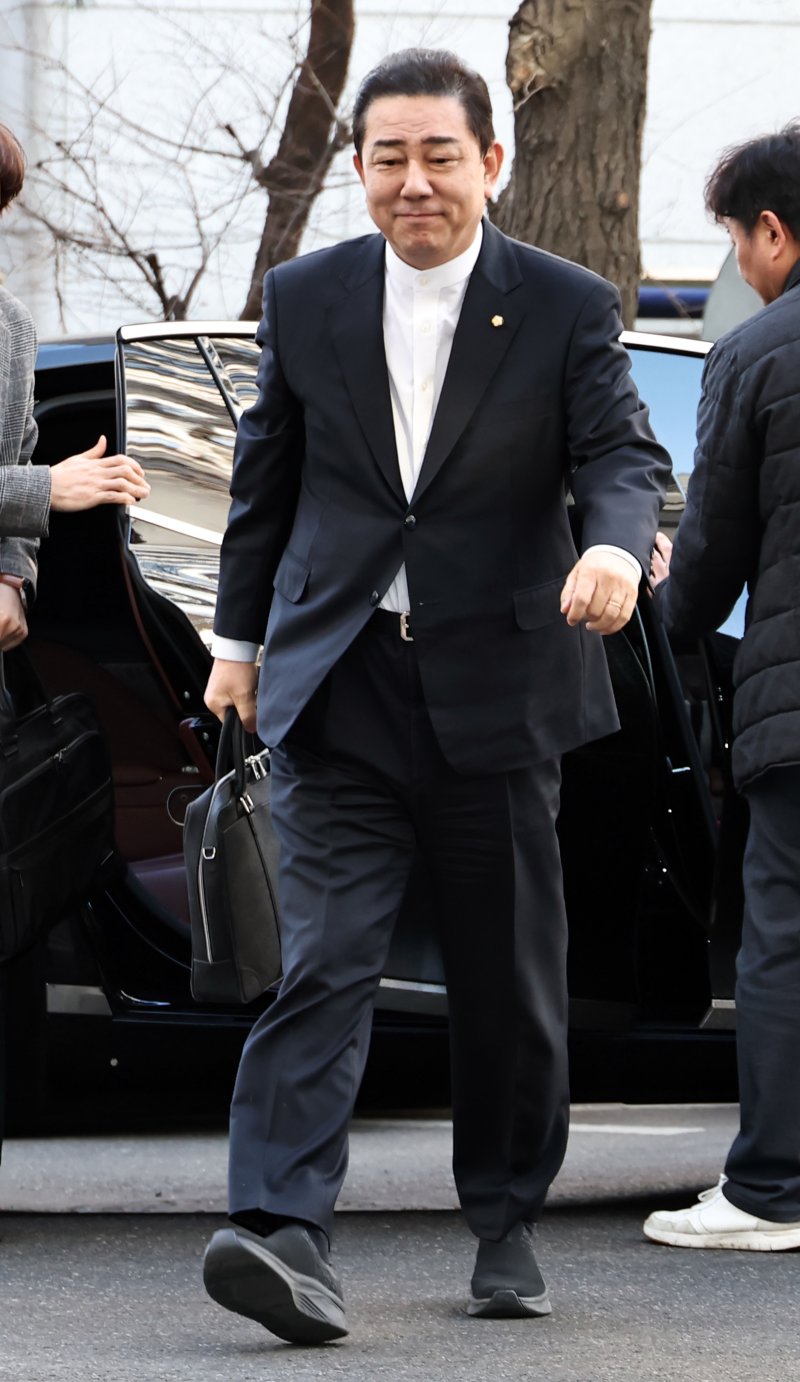
Arriving at the SMPA Metropolitan Investigation Unit building in Mapo District at around 8:57 a.m. that day, Kim told reporters, "I am sorry to be investigated over this matter," adding, "I will completely dispel all suspicions and smear campaigns raised against me and will surely restore my honor."
Asked whether he denies all 13 allegations, Kim replied, "I will faithfully undergo the investigation." Regarding suspicions that a safe was kept at his second son's home, he said, "There was no safe." He did not give a specific answer when asked whether the money he received from district council members was in exchange for nominations. He also remained silent when questioned about whether he would exercise his parliamentary immunity from arrest if prosecutors seek an arrest warrant, and then entered the building.
Kim is under investigation over 13 matters, including allegations that ahead of the 2020 general election he received a total of 30 million won in nomination bribes from two former Dongjak District council members and later returned the money. Nearly 30 criminal complaints related to these issues have reportedly been filed with police.
At the center of the case is the alleged receipt of nomination bribes. Investigators suspect the money was not a simple political donation, but was given in return for a promise of a party nomination with a strong chance of winning. Kim, however, maintains that the allegations are "groundless and a political smear."
There are also indications that Kim turned a blind eye even after learning from lawmaker Kang Sun-woo that she and former Seoul Metropolitan Council member Kim Kyung had exchanged nomination bribes. Additional suspicions have emerged that he intervened in his second son's transfer to Soongsil University and his employment at a mid-sized company and at Bithumb, and that he tried to quash an investigation into his wife's alleged misuse of a corporate credit card at the Dongjak District Council. Further allegations include that he or his family received preferential treatment from SMG-SNU Boramae Medical Center and Korean Air, and that he pressured Coupang, where some of his former aides suspected of exposing his alleged misconduct work, to disadvantage them in personnel decisions. Kim has consistently and categorically denied the accusations, including the nomination bribery claim, saying he would "quit politics if even one of the allegations raised leads to legal responsibility."
It was only at the end of December last year, three months after the first allegations surfaced, that police transferred the scattered related cases from various precincts to the SMPA Public Crime Investigation Unit. Investigators then carried out searches and seizures at Kim's home and other locations, and summoned for questioning his wife, second son, close associate Lee Ji-hee, who is Vice Chairperson of the Dongjak District Council, former Dongjak District council members, and former aides, among other people connected to the case.
However, full-fledged investigative steps were taken only after Kim resigned as parliamentary leader of the Democratic Party of Korea (DPK) and left the party, prompting criticism that police were "watching the political winds." It also took nearly three months from the transfer to the Public Crime Investigation Unit until Kim was summoned. Police explain that the large number of allegations has made the process time-consuming. They say they plan to determine how to handle his custody after using the two days of questioning to address all 13 allegations, and they are leaving open the possibility of summoning him again.
If police decide to seek his detention, they will request an arrest warrant from prosecutors. Prosecutors will then decide whether to ask a court for the warrant after an internal review. Because Kim is a sitting lawmaker, the court will not immediately rule on the need for detention, but will first send a "request for consent to arrest" to the government.
[email protected] Reporter Choi Seung-han Reporter