Robots Effortlessly Handle Boiling Soup and Deep-Frying: Cooking Hundreds of Servings with Ease [On-site]
- Input
- 2026-02-26 18:29:51
- Updated
- 2026-02-26 18:29:51
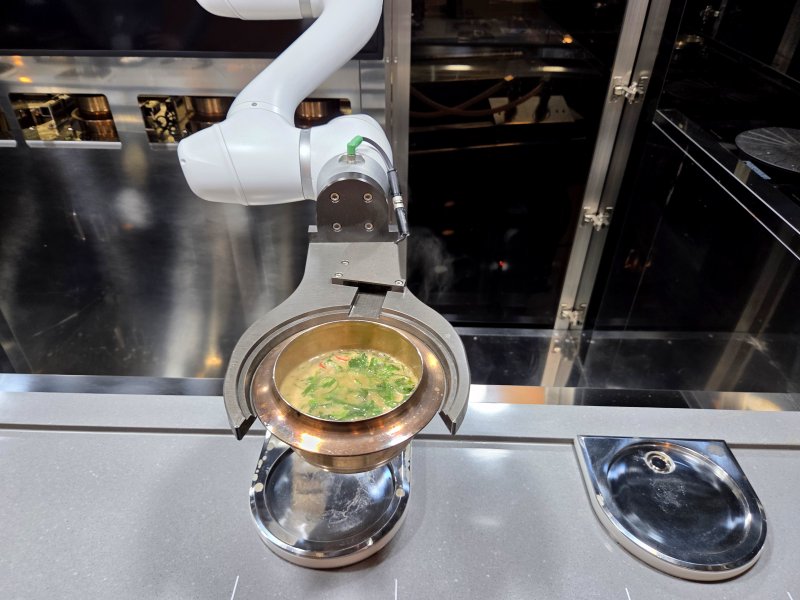
On the 26th, the employee cafeteria at Samsung Welstory’s headquarters in Seongnam, Gyeonggi Province, was being run as a Smart Kitchen, a next-generation meal service model. Samsung Welstory is presenting this as a future-oriented food service concept, building a Smart Kitchen where the entire meal service process is automated, personalized, and intelligent.
The first thing that stands out upon entering the cafeteria is, without question, the cooking robots that prepare the food themselves. The site currently uses a range of equipment, from dispensers that sanitize and provide trays and tableware, to Wellibot, a robot dedicated to soups and stews, as well as robots specialized for noodles and fried dishes, and automatic cup and vegetable washing and sanitizing machines. Robots now handle most of the cooking process. A Samsung Welstory representative stated, "By having robots take charge of the cooking itself, we can maintain consistent taste and quality while greatly enhancing worker safety."
Watching the cooking robots in action, they boiled broth according to preset amounts of stock and heating times every time an order came in. Because the robots take on the dangerous work of lifting heavy pots and handling vigorously boiling water, kitchen staff appear far less exposed to the risk of burns or musculoskeletal disorders.
A Samsung Welstory representative noted, "No matter how skilled a chef is, mistakes are inevitable when cooking large quantities for hundreds of people in succession," adding, "The greatest strength of cooking robots is their ability to deliver uniform quality and deep flavor." When this reporter personally tasted a stew prepared by the robot, it was as good as something served at a professional restaurant.
Automation technology has also raised the hygiene standards of the cafeteria. In a busy employee cafeteria, many people inevitably touch shared items, but here, diners simply hover a hand over the utensil holder and spoons are dispensed one by one. An on-site manager explained, "There are sensors on the utensil holder that detect hand movements," and described it as "a representative contactless technology that minimizes unnecessary contact." Robot cooking and the contactless serving system, where food is not touched by bare hands or exposed to people’s breath, have increased trust in the safety of eating on-site.
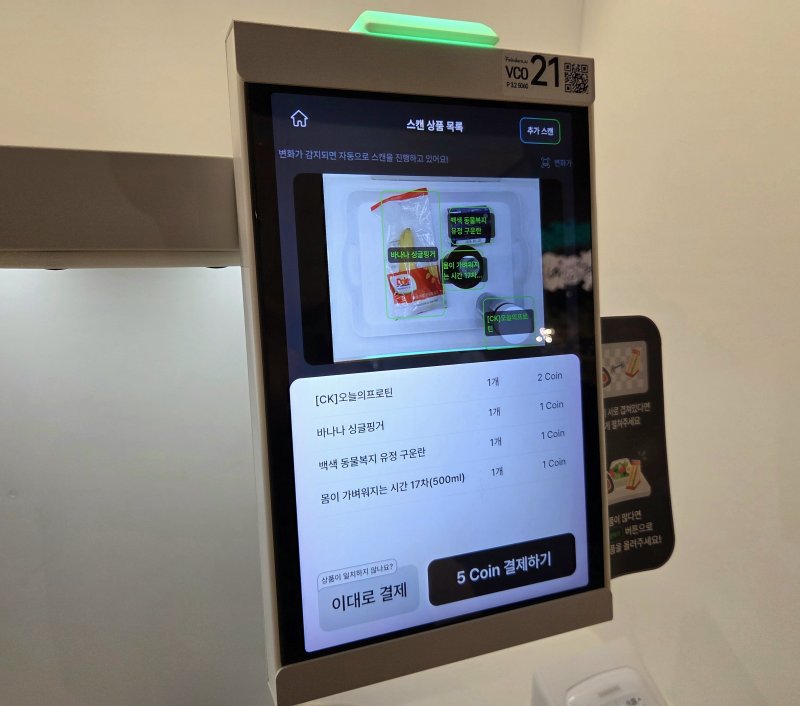
The store is easy to use. Employees select drinks and ready meals up to their allotted meal allowance, then simply place them on a checkout counter equipped with an artificial intelligence (AI) scanner. Cameras recognize the products at once and complete payment in an instant.
Samsung Welstory plans to continue actively incorporating various advanced technologies, including food tech. A Samsung Welstory representative said, "We have already deployed more than 300 automated devices across our sites," and added, "We are making multifaceted efforts to expand these technologies, including pursuing Open Innovation with foodtech startups."
[email protected] Reporter Park Kyung-ho Reporter