‘TK Integration Act’ Also Expected to Pass... Overwhelming Support from People Power Party TK Lawmakers
- Input
- 2026-02-26 18:24:04
- Updated
- 2026-02-26 18:24:04
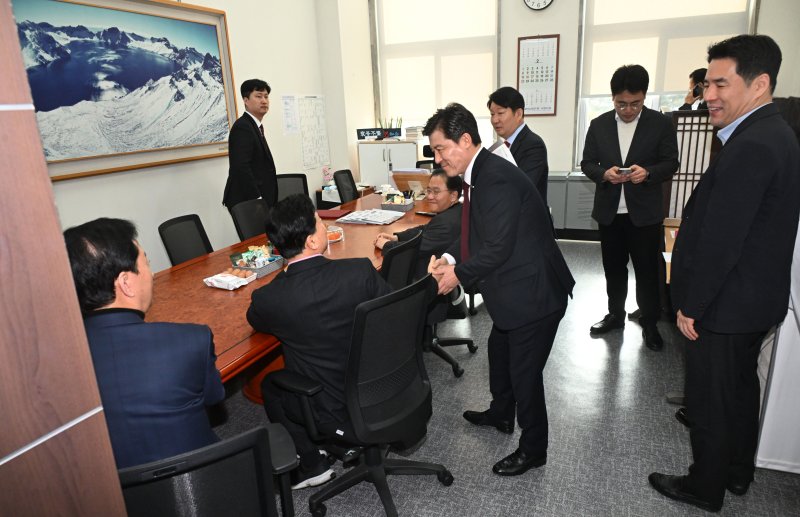
According to political sources on the 26th, TK lawmakers asked the party leadership that day to handle the TK Integration Special Act together with the Jeonnam–Gwangju Integrated Special Act. Some lawmakers from North Gyeongsang Province were reportedly opposed, but support for the bill was found to be dominant.
Earlier, on the 24th, the Legislation and Judiciary Committee held a full session and passed the Jeonnam–Gwangju Integrated Special Act and an amendment to the Local Autonomy Act that provides the legal basis for administrative integration. However, it put on hold the TK Integration Special Act and the Special Act on the Administrative Integration of South Chungcheong Province and Daejeon Metropolitan City, which had been deliberated together. This was because the People Power Party opposed them. In response, some TK lawmakers protested that the TK Integration Special Act should also have been approved. Lawmakers from Daegu and North Gyeongsang Province each held separate meetings on the 26th to discuss their positions on the TK Integration Special Act. Kwon Young-jin, a lawmaker and former Daegu mayor, told reporters after the meeting, "We resolved to urge the party leadership to actively engage in negotiations with the Democratic Party on the TK Integration Special Act," adding, "There were some lawmakers with concerns, but we agreed that the request would be made in the name of all of us." Of the 12 Daegu-area lawmakers, 11 attended the meeting, and they effectively expressed unanimous support.
Choo Kyung-ho, who has officially declared his candidacy for Daegu mayor, argued, "We must remove the shackles on the Daegu–Gyeongbuk Administrative Integration Special Act, which has been held back by the Legislation and Judiciary Committee dominated by the Democratic Party, and pass it immediately together with the Jeonnam–Gwangju Administrative Integration Act." He stressed, "The administrative integration of Daegu and Gyeongbuk is a desperate survival strategy to respond to the crisis of local extinction and to create a breakthrough for the region’s stagnant development." In line with this, the party leadership plans to demand that the Legislation and Judiciary Committee resume deliberations on the TK Integration Special Act. A key official in the People Power Party’s floor leadership said, "Since all Daegu–Gyeongbuk lawmakers support integration, we will convey to Chairperson Choo Mi-ae of the Legislation and Judiciary Committee and to the ruling and opposition party coordinators on the committee that the bill should be processed." Once the party leadership formally calls for passage, the bill is expected to gain rapid momentum.
Joo Ho-young, who has strongly advocated for the TK Integration Special Act, previously said, "I received a reply from Chairperson Choo that if opposition within the TK delegation subsides and support becomes overwhelming, the bill will be processed within this parliamentary session." The February extraordinary session of the National Assembly ends on March 3, and the Jeonnam–Gwangju Integrated Special Act is expected to pass at the plenary session on the 2nd. If the TK Integration Special Act clears the full session of the Legislation and Judiciary Committee, it is highly likely to be passed on the same day. Kim Hyun-jung, floor spokesperson for the Democratic Party of Korea, said, "If the People Power Party changes its position on the Daegu–Gyeongbuk Integration Special Act and agrees to pass it together, there is a possibility that the Jeonnam–Gwangju Integrated Special Act and the Local Autonomy Act amendment will be settled on the understanding that there will be no filibuster, which is an unlimited debate allowed under the National Assembly Act to block proceedings."
haeram@fnnews.com Reporter Lee Hae-ram