U.S. still debating timing and scope of 15% "global tariff" hike
- Input
- 2026-02-26 16:09:48
- Updated
- 2026-02-26 16:09:48
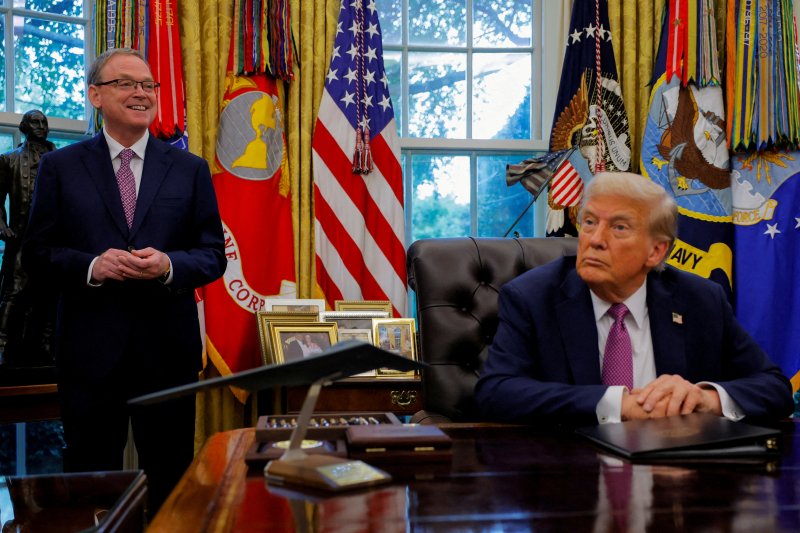
Officials in the Donald Trump administration have said they are still discussing when and how broadly to raise the 10% tariff, imposed this month on all trading partners, to 15%. They also suggested that tariff rates could differ from country to country.
Kevin Allen Hassett, a key economic adviser in the Trump administration and chair of the White House National Economic Council (NEC), told reporters on the 25th (local time) that the timing for applying a 15% rate "is still being discussed, I think." He added, "It depends on the state of the existing negotiations and the existing agreements."
Between February and April last year, the second Trump administration invoked the International Emergency Economic Powers Act (IEEPA) to impose so‐called "Fentanyl" retaliatory tariffs and "reciprocal tariffs" worldwide. On the 20th, the Supreme Court of the United States (SCOTUS) ruled that using IEEPA to levy tariffs was unlawful. That same day, Trump signed a presidential proclamation imposing an additional 10% tariff on all imports under Section 122 of the Trade Act of 1974. Under that provision, the U.S. president may impose tariffs of up to 15% on imports for up to 150 days to address a "serious balance‐of‐payments deficit." The measure took effect at 12:01 a.m. on the 24th and will remain in force until July 24.
On the 21st, Trump announced on the social media platform Truth Social that he would raise the tariff rate to 15%. However, he has not signed any formal order or taken administrative action to do so. Jamieson Greer, head of the Office of the United States Trade Representative (USTR), said on Fox News on the 25th, "We currently have a 10% tariff in place. For some, it will go up to 15%, and then for other countries it could go even higher." By referring to "some" rather than "the entire world," in contrast to Trump’s claim that the tariffs would apply "worldwide," he hinted at differentiated rates by country.
Local media have analyzed that the Trump administration is using the temporary measure under Section 122 of the Trade Act of 1974 to buy time before introducing new tariffs under Section 301 of the Trade Act of 1974 or Section 232 of the Trade Expansion Act of 1962, both of which require an investigation period before they can be invoked. Section 338 of the Tariff Act, which grants the president authority to impose retaliatory tariffs of up to 50%, could in theory be implemented more quickly than other statutes, but it has not been used in the roughly 100 years since it was enacted and is effectively dormant.
Greer said of Section 338 of the Tariff Act, "I think it could be useful in certain circumstances." He also referred to the People's Republic of China (China), with which a trade agreement was reached last October, noting that the U.S. "has been imposing tariffs ranging from 35–40% up to 50%" on Chinese imports. Greer added, "We expect that level to be maintained. We have no intention of raising it further. We really plan to abide by the agreement we previously reached."
According to The Budget Lab at Yale, a research institute under Yale University, the Trump administration’s average effective tariff rate was 16% before the Supreme Court ruling on the 20th. The rate fell to 9.1% immediately after the decision, then climbed back to 13.7% once the measures under Section 122 of the Trade Act of 1974 took effect.
[email protected] Park Jong-won Reporter