From Trump–Chey Tae-won ‘data center + power plant’ push to Korea’s special act: ‘PPA, DR, VPP’ move into the spotlight [fn Market Watch]
- Input
- 2026-02-26 13:56:16
- Updated
- 2026-02-26 13:56:16
[Financial News] The global race for supremacy in artificial intelligence (AI) has recently intensified, shifting from a battle over chips to a battle over energy.
According to foreign media and industry sources on the 26th, U.S. President Donald Trump has been pressing big tech companies to build their own power plants and demanding energy self-sufficiency. In parallel, SK Group Chairman Chey Tae-won has proposed a package solution of “integrated construction of data centers and power plants,” signaling the start of a Korea–U.S. AI energy alliance.
In Korea, discussions on a Special Act on AI Data Centers that would support this trend are also gaining momentum. As a result, a Virtual Power Plant (VPP) model that combines Power Purchase Agreements (PPA) with Demand Response (DR) is emerging as a key concept for future industries.
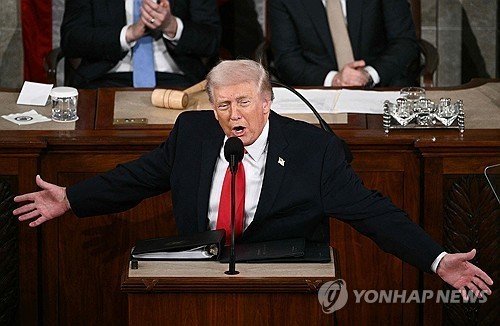
In his recent State of the Union address, Donald Trump stated, “I have secured commitments from big tech companies that they will supply their own power for AI data centers.”
This is a strong message urging companies to build their own power plants instead of relying on an aging national grid, in order to prevent higher electricity bills for households. The stance aligns with Chairman Chey Tae-won’s strategy, which has stressed that “building AI data centers and power plants together as an integrated solution is SK’s survival strategy.” It also suggests that the AI infrastructure market will evolve beyond simple server deployment into “energy self-sufficient hubs.”
In line with this global shift, a Special Act on Support for AI Data Centers has been submitted to a standing committee of the National Assembly and is now under review.
The core of the bill is to designate AI data centers as “national strategic infrastructure” and ease regulations on power supply and demand. The most contentious issue for its effectiveness is whether to allow special exemptions for Power Purchase Agreements (PPA), which would let power producers and companies trade directly without going through Korea Electric Power Corporation (KEPCO). This is essential not only for cutting corporate energy costs but also for increasing the share of renewable energy to meet RE100 (Renewable Energy 100%) commitments.
Major Korean companies are already accelerating efforts to improve energy efficiency using PPA and DR.
Samsung Electronics is securing large-scale renewable energy through a PPA with Korea Water Resources Corporation (K-water) for the Sihwa Lake Tidal Power Station. At the same time, it is expanding a citizen-participation energy ecosystem with an “Auto-DR” (Automated Demand Response) service for apartment complexes.
SK Group is pursuing a group-wide PPA to meet the AI data center demand of SK hynix. It is also the second-largest shareholder in Gridwiz, Korea’s top DR provider and a leading VPP company, with a stake of about 20%.
Hyundai Motor Company has signed the largest-ever annual PPA, totaling 610 GWh, with four partners including Hyundai Engineering and Construction (Hyundai E&C), thereby strengthening demand management within its manufacturing processes.
LG Group, led by LG Energy Solution, is expanding long-term PPAs to raise the share of renewable energy at its domestic and overseas sites. It is also accelerating participation in DR programs based on smart factory operations.
Meanwhile, Small Modular Reactors (SMR), a next-generation energy source, are also being cited as a solution to AI-related power shortages. However, challenges remain regarding the timing of commercialization and securing flexibility in the power grid. Because SMRs provide steady baseload power, handling the highly variable load of AI data centers will ultimately require portfolio diversification through PPAs combined with DR technologies.
In the end, the power issue surrounding AI data centers is expected to lead to an expansion of the Virtual Power Plant (VPP) industry, which uses ICT technologies to centrally control distributed generation and demand-side resources.
An industry insider commented, “Trump’s energy policy and Korea’s legislative moves are aligned in that companies must secure sovereignty over their power supply through PPA and manage it efficiently through DR,” adding, “If the special act passes, AI data centers in Korea will evolve into massive energy hubs and gain global competitiveness.”
kakim@fnnews.com Kim Kyung-a Reporter