Prosecutors Say "No Outside Pressure or Presidential Office Involvement" in Customs Drug Probe...Investigation into Allegations Raised by Baek Hae-ryong Closed
- Input
- 2026-02-26 11:00:00
- Updated
- 2026-02-26 11:00:00
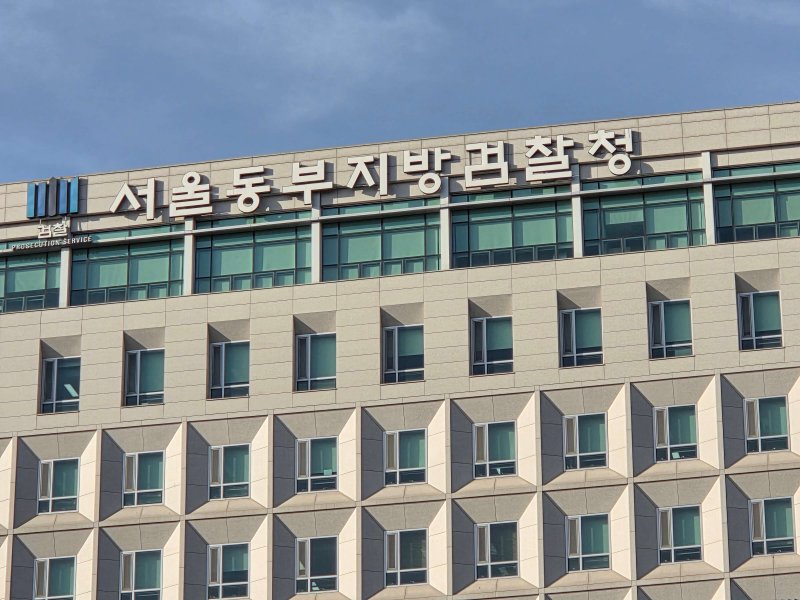
On the 26th, the Joint Investigation Team announced that, after an intensive probe into the alleged involvement of customs officials in drug smuggling and related matters, it had completed all investigative steps, including deciding not to refer 14 people for indictment. Those cleared include former Justice Minister Han Dong-hoon, former Prosecutor General of South Korea Shim Woo-jung, and 11 customs officials, who had been booked on suspicion of abusing personnel authority two years earlier to obstruct customs drug investigations.
Earlier, in December last year, the Joint Investigation Team indicted six members of an international drug smuggling organization based in Malaysia and two domestic drug distributors on charges including participation in a criminal organization and violations of the Act on the Aggravated Punishment of Specific Crimes. It also identified eight additional members of the organization currently abroad, obtained arrest warrants for them, and suspended indictment in their cases. Interpol red notices were issued for these suspects, and authorities ordered that they be flagged upon entry into South Korea.
In the course of this work, the Joint Investigation Team reviewed police on-site interview footage from Incheon International Airport related to the 2023 allegations that customs officials took part in the smuggling scheme. The team said it found scenes in which the smugglers, speaking in Malay without an interpreter, were coaxed into giving false statements. It added that letters exchanged among the smugglers also revealed indications that their statements about customs officials were fabricated.
The team further explained that the smugglers’ statements about customs officials conflicted with objective facts, that key details were repeatedly changed, and that, during questioning by the Joint Investigation Team, all of the smugglers testified that they had not received any assistance from customs officials. On this basis, seven customs officials were cleared of suspicion.
Subsequently, Inspector Baek Hae-ryong’s team booked a total of 11 customs officials, including those seven, as well as one mobile phone dealer. However, an additional police investigation team that was dispatched later decided not to refer any of them for indictment. That police team questioned the credibility of the smugglers’ testimony, noting that although the smugglers initially said they could not remember or had not seen the faces of customs officials, they went on to identify four customs officials during questioning conducted about eight months after the crime.
The police team also compared the smugglers’ statements with duty rosters from the day of the incident, access-card tag records, credit card transaction histories, mobile phone timelines, smartwatch sleep data, and work-computer login logs. It concluded that the statements did not match objective facts and that there was no clear evidence to support the alleged crimes.
A prosecution official stressed, "If customs officials had actually been involved in the crime, it would be difficult to explain how four of the drug smugglers were arrested." In response to claims from Inspector Baek’s side that the Joint Investigation Team gathered the smugglers at the Seoul Dongbu Detention Center to pressure them into retracting their police statements, the official countered, "We took steps to prevent any collusive testimony, under the supervision of correctional authorities."
Allegations that the police and Korea Customs Service leadership exerted improper pressure on the investigation were also not substantiated. Prosecutors determined that orders to postpone a press briefing and revise a press release were issued before the matter was reported to the Office of the President of South Korea, leaving the leadership with no motive or need to interfere. They assessed that these orders were lawful instructions issued under police publicity rules to ensure reporting to higher headquarters and to correct inappropriate content in the press release, and that the directive to consider transferring the case was likewise a procedure in line with internal regulations. Eight people involved in this matter were cleared of suspicion.
As for the probe into alleged prosecutorial cover-up, the Joint Investigation Team decided not to refer former Justice Minister Han Dong-hoon and former Prosecutor General Shim Woo-jung for indictment on accusations that they abused their personnel authority to obstruct the investigation, including by changing the drug-crime division at the Seoul Southern District Prosecutors’ Office. The team noted that personnel transfers and organizational restructuring had already been completed on September 25, 2023, before the allegations were raised, and that only two of the warrants requested by police had been rejected. In light of this, it said it was difficult to claim the investigation had been blocked. The decision by prosecutors not to seek certain warrants was also deemed a lawful exercise of authority, not an abuse of power. However, allegations that, in February 2023, a chief prosecutor and a lead prosecutor neglected their duties by failing to investigate drug accomplices were referred under Article 25 of the Corruption Investigation Office for High-ranking Officials Act (CIO Act).
No additional evidence was found to support claims that the Office of the President of South Korea exerted improper pressure on the investigation. The Joint Investigation Team said it conducted searches and seizures at 30 locations, including the homes of senior police and customs suspects, the headquarters of the Korean National Police Agency (KNPA), the Seoul Metropolitan Police Agency, and Incheon Main Customs, and performed forensic analysis on 46 mobile phones, but found no records of contact with anyone from the presidential office. It added that Inspector Baek, who raised the allegations, also appeared not to have secured any materials indicating involvement by the Office of the President of South Korea.
A prosecution official stated, "Inspector Baek conducted an unlawful investigation by first deciding that customs officials were involved in the drug smuggling case and then excluding any testimony or evidence that contradicted that conclusion." The official went on, "During the Joint Investigation Team’s probe, we confirmed that, in a past case handled at the Seoul Yeongdeungpo Police Station, Inspector Baek failed to file unfavorable investigative materials in the case record and instead prepared and filed false investigative documents. We have notified the Korean National Police Agency of these facts for disciplinary review and other action."
[email protected] Kim Ye-ji Reporter