Jang Dong-hyeok Says, "Multiple Homeowners Should Not Be Demonized"... Proposes Floor Area Ratio Incentives
- Input
- 2026-02-25 18:21:48
- Updated
- 2026-02-25 18:21:48
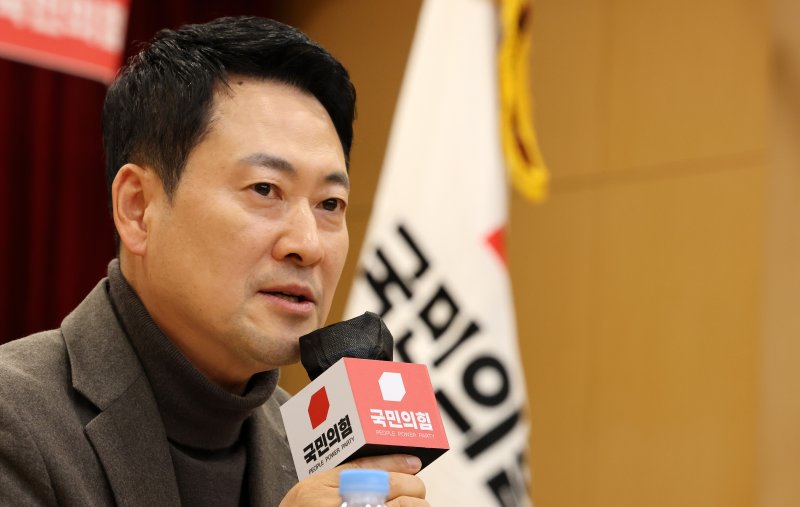
Attending the committee-hosted "Seoul Real Estate On-Site Meeting" at Haenuri Town in Yangcheon District on the 25th, Jang Dong-hyeok stated, "We must not demonize people who want to own a home, those who have worked diligently and own a single house, or those who, for various reasons, have no choice but to own multiple homes." He added, "This issue cannot be solved by intimidating people with rhetoric or by pitting one group against another." He went on, "If the perspective from which we view real estate is wrong, sound policies cannot emerge," and continued, "If this government is turning people with modest dreams of homeownership into devils, I will work to help realize those precious dreams."
Within the committee, members proposed measures such as a "Three-Year Advance Notice System for Real Estate Policy Changes" and stronger floor area ratio incentives. Professor Yang Jung Ho of Sungkyunkwan University (SKKU) suggested, "When major policies related to the college entrance exam change, they are announced three years in advance. Real estate policy should not be constantly reversed; we need a three-year advance notice system here as well." Policy Committee Chairperson Jeong Jeom-sik noted, "The Democratic Party of Korea (Democratic Party) passed a bill that allows the floor area ratio to be raised to 120% of the legal limit only for public development projects," and stressed, "More than 90% of reconstruction and redevelopment projects in Seoul are private sector-led development, so they too should receive floor area ratio incentives."
The People Power Party expects that, since real estate issues were a frequent topic at family tables over the Lunar New Year holiday, they will also become a major theme in the local elections. Party officials believe the situation will work in their favor if housing prices continue to rise or if the government maintains its demand-suppression stance, for example by raising the property holding tax.
Seoul Metropolitan City Mayor Oh Se-hoon also said during administrative policy questions at the Seoul Metropolitan Council that the central government’s tougher real estate regulations are disrupting housing supply efforts at the Seoul Metropolitan Government level. He explained, "Of the 310,000 housing units, only 87,000 are to be supplied as new homes rather than through demolition, and to reach 87,000 units, relocation must begin as planned this year. But because of loan restrictions, residents do not have the money to move," adding, "As a result, relocation is being hindered across the board. This is the most painful part."
haeram@fnnews.com Reporter Lee Hae-ram