Government moves to reach 30 million foreign visitors early with visa easing and regional airport hubs
- Input
- 2026-02-25 15:28:45
- Updated
- 2026-02-25 15:28:45
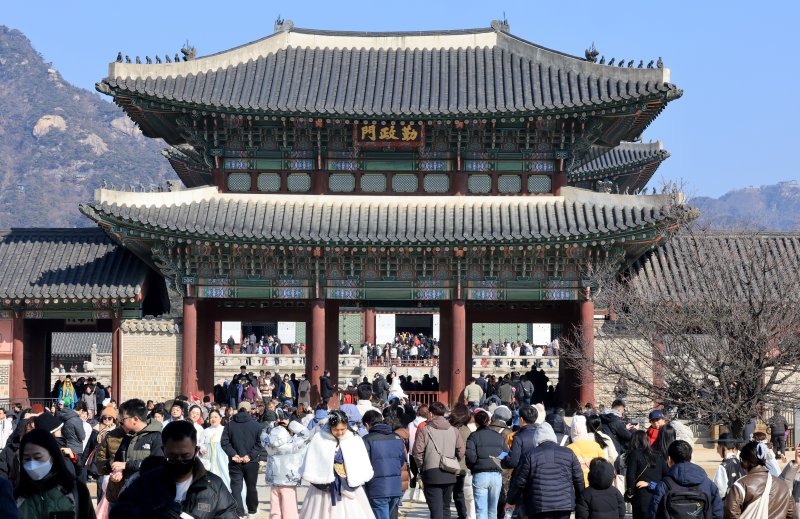
[The Financial News] The government is rolling out wide-ranging measures, including easing visa rules and turning regional airports into inbound hubs, to bring forward the era of 30 million foreign visitors. The plan aims to shift the current tourism structure, which is concentrated in the capital area, toward a region-centered model.
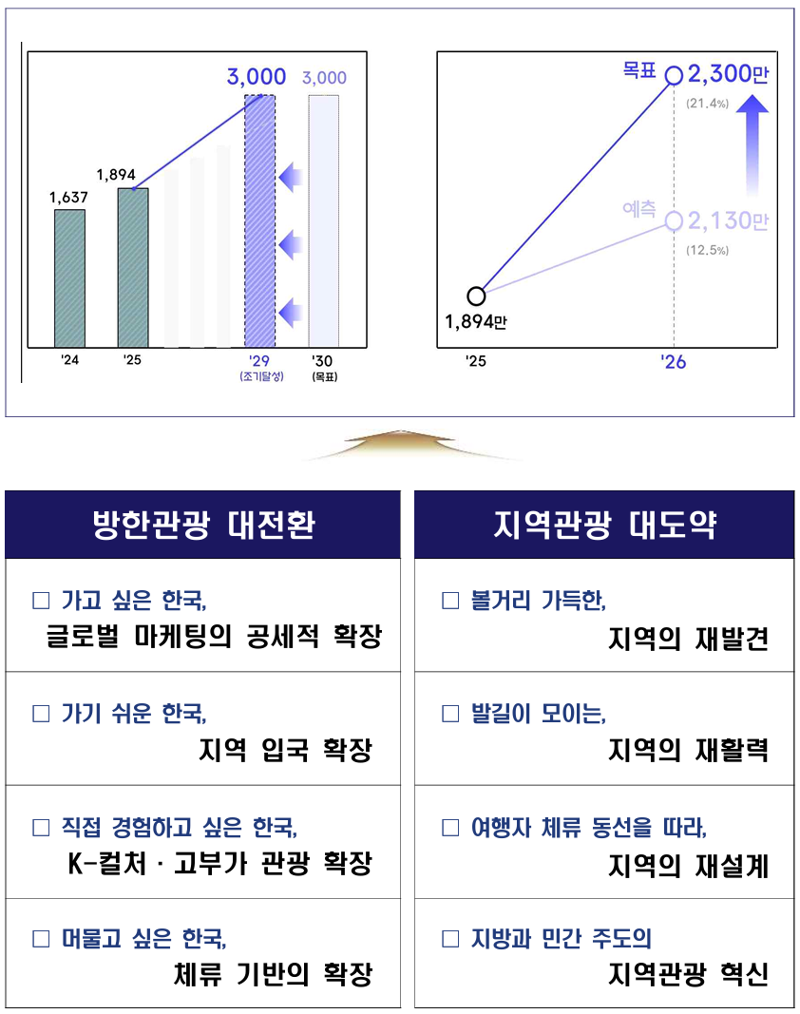
On the 25th, the government held the 11th National Tourism Strategy Meeting and unveiled its strategy titled "Great Transformation of Inbound Tourism and Great Leap in Regional Tourism." It moved up the target of attracting 30 million foreign visitors from 2030 to 2029 and set this year’s goal at 23 million visitors.
First, the government will lower entry barriers. It will pilot visa-free entry for group tourists of three or more people from Indonesia, and relax the requirements for issuing multiple-entry visas to China and 11 countries in Southeast Asia. It also plans to offer 10-year multiple-entry visas to residents of select major cities in China and Vietnam. The list of countries eligible for automated immigration clearance will be expanded from the current 18 to include key partners such as the European Union (EU).
Regional airports will be developed as inbound hubs. The government will support new international routes by designating international traffic rights exclusively for regional airports, increasing available slots, and reducing airport facility fees. It will also increase transfer flights between Incheon International Airport and regional airports, while strengthening connecting transport networks such as airport buses and railways.
Cruise tourism capacity will also be improved. The government will introduce expedited immigration procedures for cruises that call at multiple domestic ports and expand on-board immigration checks for large cruise ships. It is considering building a new Busan North Port Cruise Terminal and will pilot 24-hour terminal operations for overnight cruises to extend visitors’ stays in local areas.
The government will also work to expand content that revitalizes regional tourism. It will launch the "Korea Attractions Discovery Project," which combines expert recommendations with public voting, and carry out regeneration projects for aging attractions in parallel. A pilot "Half-Price Travel Program" will refund part of travel expenses for visits to regions with declining populations, and the "Korea Railway Perimeter Trail" will be created by using outer railway lines nationwide to promote longer regional stays.
The lodging system will be overhauled as well. Policies that have focused on tourism accommodation businesses will be broadened to include general and residential lodging, and lodging-related affairs will be consolidated under the Ministry of Culture, Sports and Tourism (MCST). The government will introduce a "Lodging Quality Certification System" and pursue regulatory improvements, such as adjusting traffic generation coefficients applied to four- and five-star tourist hotels.
In addition, the government will promote "Visit Korea Year" from 2027 to 2029 through public–private cooperation and strengthen data-driven marketing to turn interest in K-culture into actual travel demand. It will also expand high value-added tourism, including medical tourism and MICE, to drive a qualitative transformation of the tourism industry.
[email protected] Jang In-seo Reporter