"U.S. has not agreed to restoring inter-Korean no-fly zone"...U.S. aerial surveillance posture over North Korea under scrutiny
- Input
- 2026-02-24 18:34:12
- Updated
- 2026-02-24 18:34:12
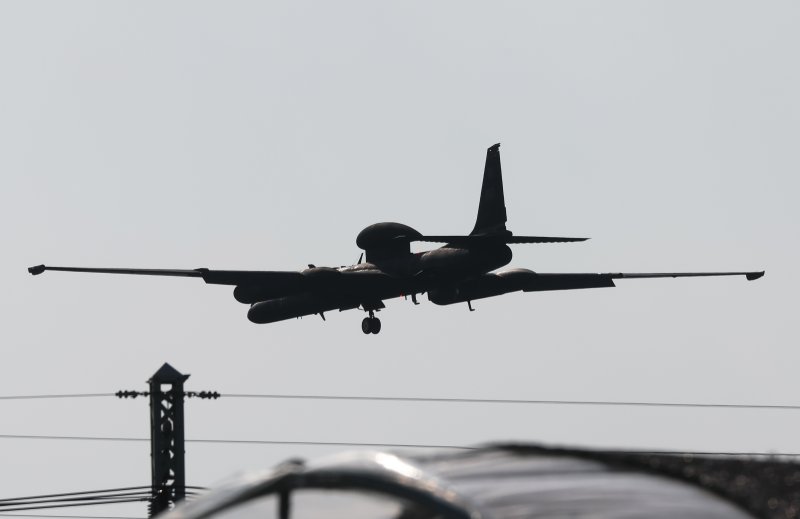
Until now, assets such as the Boeing RC-135 reconnaissance aircraft, the Lockheed U-2S high-altitude reconnaissance aircraft, and the Northrop Grumman RQ-4B Global Hawk high-altitude unmanned reconnaissance aircraft operated by United States Forces Korea (USFK) have reportedly been deployed covertly for surveillance missions against North Korea.
A senior official at the Ministry of Foreign Affairs said on the 24th that, regarding the government's plan to restore the September 19 Inter-Korean Military Agreement and, as a first step, reinstate the "no-fly zone," "the United States has not yet agreed, and consultations are ongoing."
Asked that day about Washington's position on restoring the no-fly zone, the senior official replied, "Our government's firm commitment to restoring the September 19 agreement has been clear from the outset, and we have been consulting closely with the United States throughout the process," adding that discussions are still under way.
The September 19 Inter-Korean Military Agreement, signed in 2018, includes the establishment of a no-fly zone near the Military Demarcation Line (MDL). The no-fly zone is linked to areas under the control of the United Nations Command (UNC). The USFK commander concurrently serves as the Commander-in-Chief, United Nations Command, making consultations with USFK and the UNC unavoidable.
Earlier, on the 18th, Minister of Unification Jeong Dong-young announced the government's plan to preemptively restore elements of the September 19 Inter-Korean Military Agreement, including the no-fly zone. He explained that this plan represents the government's official position, finalized through a meeting of security-related ministers. Following his announcement, the Ministry of National Defense stated that it is reviewing the relevant issues in consultation with other ministries and with the United States.
Meanwhile, the senior Foreign Ministry official stressed that the postponement of a visit to South Korea by the U.S. delegation for security consultations on the U.S.-ROK Joint Fact Sheet was not due to trade-related issues. "It is not a postponement but a scheduling issue," he said, explaining, "It is difficult to predict the U.S. political situation, and with complex matters such as the Iran situation, the war in Ukraine, and the U.S.-China summit, progress has been somewhat slow."
[email protected] Reporter Kim Kyung-soo Reporter