Serious Crimes Agency Drops Dual-Track Structure as Government Unveils Revised Bills
- Input
- 2026-02-24 14:00:00
- Updated
- 2026-02-24 14:00:00
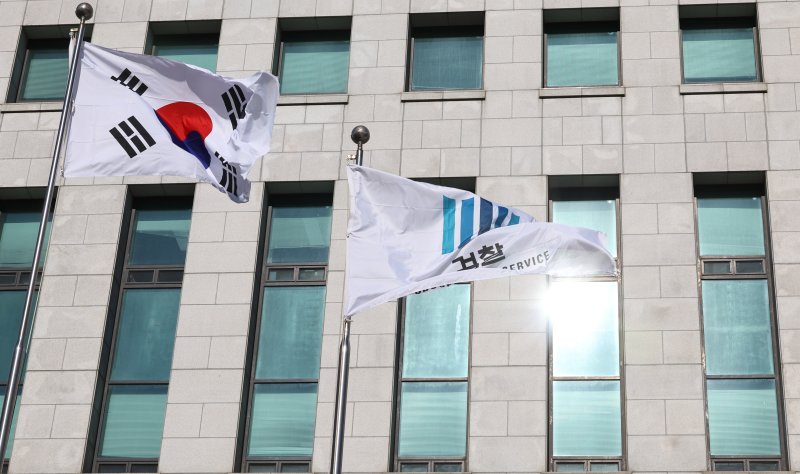
The Office for Government Policy Coordination’s Prosecution Reform Task Force announced on the 24th that it has prepared revised drafts of the Serious Crimes Investigation Agency Act and the Indictment Agency Act, which will be re-posted for public notice for two days until the 26th. The move reflects criticism that the original drafts, released on the 12th of last month, ran counter to the stated goals of “prosecution reform.”
The revised bill first unifies the job categories of judicial police officers at the Serious Crimes Investigation Agency. The original draft divided them into “investigative judicial officers” and “special investigators,” but the revision deletes the category of investigative judicial officers and consolidates the system into a single track of “investigators.” However, ranks and grades within the investigator corps will still differ for purposes such as appointment, retirement age, disqualification, disciplinary measures, fitness reviews, and job security. In addition, for prosecutors who transfer to the new agency in the initial phase, their existing salary levels and retirement age will be guaranteed, and the supplementary provisions stipulate that they may be appointed as investigators of a corresponding rank.
The range of crimes that the Serious Crimes Investigation Agency may investigate will also be reduced from nine categories to six. The excluded categories are crimes involving public officials, election-related crimes, and major disaster cases, for a total of three. As a result, the agency will only be able to initiate investigations into six types of crime: corruption, economic crimes, defense procurement crimes, narcotics offenses, national security offenses such as insurrection and foreign-exchange crimes, and cybercrime.
Finally, the eligibility requirements for the head of the Serious Crimes Investigation Agency have been relaxed. Whereas the original bill required the director to hold a license to practice law, the revised draft allows appointment of a person without a law license, provided that the person has at least 15 years of experience in investigative or legal work.
The Indictment Agency Act has also been revised. First, the list of disciplinary sanctions applicable to prosecutors will now include “dismissal from office,” in line with the sanctions for ordinary public officials, so that prosecutors can be dismissed through disciplinary action. This is a departure from the original draft, under which prosecutors could be removed only through impeachment or upon receiving a sentence of imprisonment or heavier.
Another provision has been amended regarding improper conduct in the performance of duties. Previously, a prosecutor could request that a judicial police officer or similar official be “reappointed” or replaced. The revised text changes “reappointment” to “removal from duty” and narrows the addressee of such requests from the “appointing authority” to the “head of the relevant agency.” The change is intended to clarify that the measure is to “exclude the judicial police officer from the specific investigation.”
Lastly, the bill now explicitly states that no disadvantageous personnel measure or treatment may be imposed on a prosecutor for the sole reason that the prosecutor has raised an objection to the legality or propriety of a superior’s direction or supervision. This aligns with the direction of amendments to the State Public Officials Act, which aim to strengthen public officials’ accountability to the public.
A Prosecution Reform Task Force official stated, "We will work to ensure that the bills, which have been re-posted for public notice, are enacted without delay," adding, "We also plan to push ahead without setbacks in preparing related follow-up measures and amendments to relevant laws so that the Public Prosecution Office and the Serious Crimes Investigation Agency can be launched successfully within the set timeframe."
[email protected] Kim Dong-gyu Reporter