Full-scale clash after tariffs voided: Trump threatens retaliation, Democrats push refund plan
- Input
- 2026-02-24 10:19:31
- Updated
- 2026-02-24 10:19:31
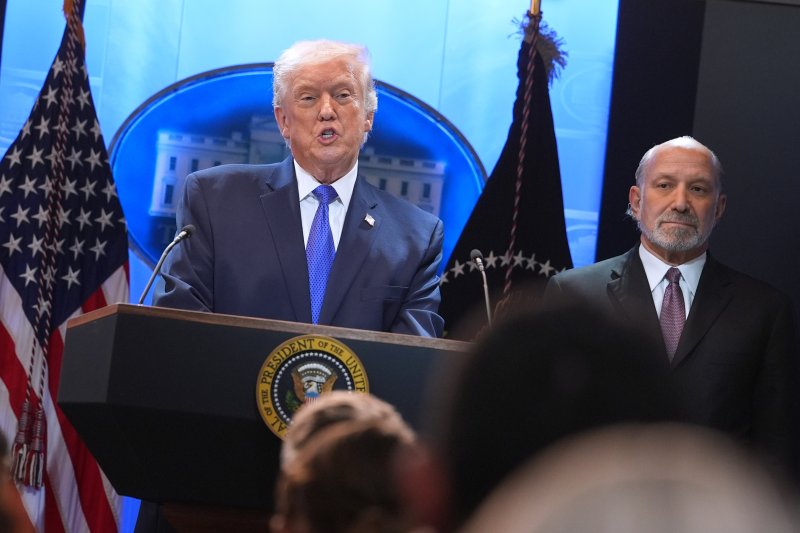
Trump: "Rip up the deal and face higher tariffs"
Donald Trump wrote on Truth Social on the 23rd (local time), "Any country that tries to play games by exploiting this outrageous Supreme Court decision, especially those that have ripped off the US for years, even decades, will face tariffs far higher than what we recently agreed to, and measures that go well beyond that."
His comments are being interpreted as a threat to impose punitive tariffs if countries that signed trade agreements with the US try to overturn those deals by citing the U.S. Supreme Court ruling.
Last year, the US concluded trade agreements with South Korea, Japan, the European Union (EU), and key countries in Southeast Asia. In exchange for lowering previously announced high tariffs, Washington secured commitments to expand direct investment in the US, increase imports of US-made products, cooperate on supply-chain restructuring, and boost investment in strategic industries.
However, on the 20th the U.S. Supreme Court ruled that tariffs imposed on the basis of IEEPA were unlawful, shaking the foundations of the Trump administration’s tariff policy.
As an alternative, Trump signed a proclamation imposing a 10% "global tariff" for 150 days under Section 122 of the Trade Act of 1974, and the next day he announced that the rate would be raised to 15%.
Under Section 122 of the Trade Act of 1974, any extension of the tariff period requires approval from Congress. As a more long-term measure, the administration is therefore preparing to invoke Section 301 of the Trade Act of 1974. But Section 301 can only be used after an investigation into unfair trade practices, a process that typically takes eight to twelve months.
Treasury Secretary Scott Bessent described the 15% global tariff imposed under Section 122 of the Trade Act of 1974 as "a kind of bridge rather than a permanent measure" and explained, "Once the tariff investigations under Section 232 of the Trade Expansion Act of 1962 (Section 232) and Section 301 of the Trade Act of 1974 are completed in about five months, Section 122 of the Trade Act of 1974 may no longer be needed."
EU delays ratification, India postpones visit: even allies wait and see
Despite Trump’s warning, different moves are emerging in some countries.
The EU abruptly postponed ratification of the US–EU trade agreement on the same day. The European Parliament Committee on International Trade (INTA) stated, "Amid tariff turmoil, we cannot hold a vote until there is legal clarity."
Under the agreement signed last year, EU exports are subject to a 15% tariff, while the EU agreed to sharply cut tariffs on US industrial goods and some agricultural products. But after the U.S. Supreme Court ruling, Trump reintroduced a 15% global tariff, prompting concerns that the stability of implementing the deal has been undermined. The EU is consulting with member states and the European Parliament (EP) on how to respond, stressing the need for predictability in investment and trade.
Foreign media also reported that India’s negotiating delegation postponed a three-day visit to the US that had been scheduled to start on the 23rd. Sources said the two countries will reschedule once they have assessed how the tariff situation develops. The Indian delegation had originally planned to finalize the wording of a trade agreement. Through the talks, the Trump administration intended to lower reciprocal tariffs on Indian imports from 25% to 18% and scrap an additional 25% tariff.
Democrats push "full $175 billion refund" as battle shifts to Congress
The Democratic Party has played its legislative card for a "full refund" of the tariffs. Some estimates suggest the total amount eligible for refunds could reach $175 billion (about 230 trillion won).
Twenty-two Senate Democrats have introduced a bill that would require the administration to refund, in full and with interest, within 180 days, all tariff revenues that were imposed under IEEPA by the Trump administration and later ruled unlawful by the U.S. Supreme Court.
The legislation follows the U.S. Supreme Court’s decision to invalidate the IEEPA tariffs while declining to spell out how refunds should be handled, instead sending the case back to a lower trade court. Democrats say they want to prevent any delay or reduction in refunds that could occur if the matter is left to the administration’s discretion.
Senator Ron Wyden declared, "We are going to rein in President Trump’s trade and economic policies that are driving up prices," adding, "The most urgent step is to get money back into the pockets of small businesses and manufacturers."
Scott Bessent said in an interview with Cable News Network (CNN), "We will follow the lower court’s decision," and noted, "It could take several weeks or even several months before there is a conclusion."
Senate Majority Leader Chuck Schumer also vowed to block Donald Trump’s attempt to extend the "global tariff." Posting on X, Schumer declared, "Senate Democrats will stop any attempt this summer to extend Trump’s Section 122 tariffs once they expire."
[email protected] Lee Byung-chul Reporter