"Tariffs Every Time We Wake Up": U.S. Weighs New Section 232 Duties on Six Industries
- Input
- 2026-02-24 09:54:43
- Updated
- 2026-02-24 09:54:43
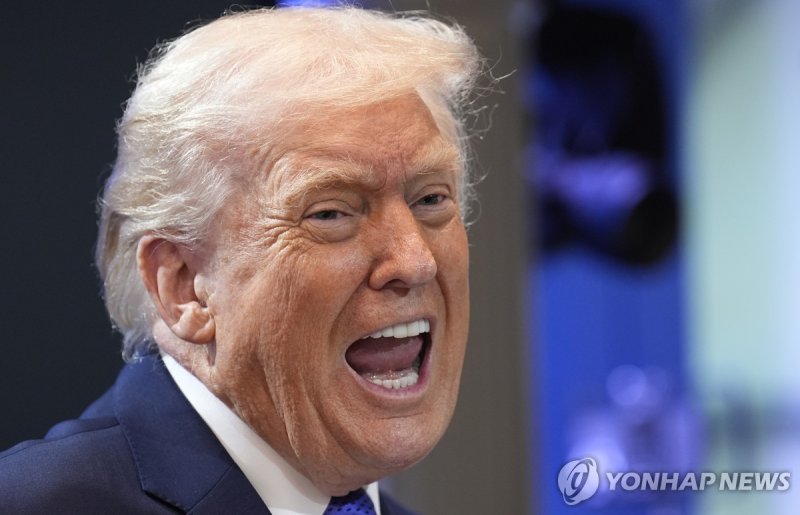
[The Financial News] The Wall Street Journal (WSJ) reported on the 23rd local time that Donald John Trump is considering imposing new tariffs on six industries after the Supreme Court of the United States (U.S. Supreme Court) ruled his previous tariffs unlawful. The decision has invalidated more than half of the revenue from his reciprocal tariffs, and the administration is now moving toward a tariff overhaul built on a dual strategy using both Section 232 and Section 301 of the Trade Act of 1974.
According to WSJ, the Trump administration is reviewing new tariffs on roughly six sectors, including large-scale batteries, cast-iron and steel fittings, plastic piping, industrial chemical products, and power grid and telecommunications equipment, based on Section 232 of the Trade Expansion Act of 1962 (Section 232). Section 232 allows the president to impose broad tariffs on the grounds of national security threats.
This move comes after the U.S. Supreme Court last week struck down most of the second-term reciprocal tariffs that were imposed under the International Emergency Economic Powers Act (IEEPA). In a 6–3 decision, the Court held that Trump had exceeded his authority.
Immediately after the ruling, Trump announced a new 15% global tariff that can remain in place for five months. He has also signaled that additional tariffs will follow under Section 301 of the Trade Act of 1974. The current review under Section 232 is being pursued separately from those measures.
So far, Section 232 tariffs have applied to steel, aluminum, copper, automobiles, truck and automobile parts. These duties are not affected by the latest Supreme Court ruling. Although Section 232 requires a lengthy investigation by the Department of Commerce, once tariffs are imposed, the president can adjust them unilaterally.
The White House stated, "Protecting America’s national and economic security is a top priority, and we will use all lawful authorities available to us."
The Trump administration is also reportedly conducting Section 232 investigations into nine additional industries, including the semiconductor industry, pharmaceutical products, drone technology, industrial robots, and polysilicon for solar panels. Some of these probes began about a year ago, and observers say they could accelerate in the wake of the Court’s decision.
In addition, the administration is working on a revamp of the existing steel and aluminum tariff regime. Analysts note that even if headline tariff rates are lowered, shifting to a system that applies tariffs to the total price of a product could actually increase the burden on companies.
Jamieson Greer of the Office of the United States Trade Representative (USTR) said in a recent interview with Consumer News and Business Channel (CNBC), "We may adjust how some tariffs are applied."
#TrumpTariffs #Section232 #Global15PercentTariffs #Section301 #USTradePolicy
[email protected] Kim Kyung-min Reporter