"AI Big Tech Firms May Have Tens of Trillions of Won More in Real Debt" Moody's Warns, Signaling Credit Rating Review
- Input
- 2026-02-24 04:25:58
- Updated
- 2026-02-24 04:25:58
Moody's Corporation warned on the 23rd (local time) that loopholes in U.S. accounting rules may be allowing AI Big Tech companies to conceal tens of trillions of won in liabilities.
According to the Financial Times (FT), Moody's Corporation argued in an analysis report that day that AI Big Tech firms are cleverly hiding de facto debt because of the "limitations" of U.S. Generally Accepted Accounting Principles (GAAP).
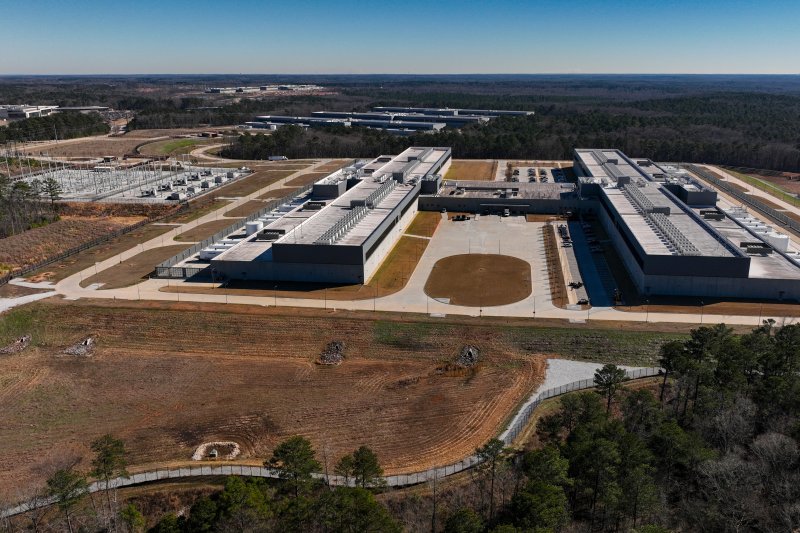
Rules governing AI data center leases, which require enormous spending, are at the core of this loophole.
Big Tech companies are not required to record on their books the costs of renewing data center leases, or the costs they would incur if they choose not to renew.
Moody's Corporation cautioned, "Disclosures may not show the full picture," adding, "Accounting liabilities are likely to fall short of capturing all reasonably possible future scenarios." In other words, tens of trillions of won in potential risk do not appear in the financial statements that investors see.
Under Generally Accepted Accounting Principles (GAAP), lease renewals must be "reasonably certain" before they are recorded on the balance sheet. In practice, this usually means a probability of 70% or more.
In addition, costs arising from a residual value guarantee when a lease is not renewed only have to be recorded when the likelihood of occurrence is deemed "probable." A probability above 50% is generally considered probable.
Some companies sign relatively short-term lease contracts and, in return, provide a guarantee that they will compensate for any drop in the data center’s value if the lease is not renewed. This is known as a residual value guarantee (RVG).
Many firms, including Meta Platforms and Oracle, are also building data centers through Special Purpose Companies (SPC) funded by outside investors. From the perspective of credit rating agencies and investors, the long-term lease costs of these special purpose vehicle (SPV) data centers are effectively debt, but they do not appear as liabilities on the balance sheet.
Moody's Corporation noted that the key components in data centers typically have a lifespan of about four to six years. Because lease extensions depend on whether the hyperscaler intends to make additional investments in hardware, Big Tech firms can argue that renewals are not "reasonably certain" and therefore omit them from their books. A hyperscaler is a company that operates large-scale data centers to provide cloud services.
The fact that the risks associated with massive AI investments are not fully reflected in the accounts could heighten investor anxiety.
Companies are currently pouring astronomical sums into AI, and a significant portion of that spending is hidden off the balance sheet. This can create the illusion that Big Tech firms are financially much healthier than they really are.
If the AI bubble bursts or profitability falls short of expectations, the tens of trillions of won in hidden debt could suddenly surface all at once, potentially triggering a sharp plunge in share prices.
Moody's Corporation has signaled that it will reassess credit ratings. It plans to factor in the hidden liabilities and then re-rate technology companies’ creditworthiness.
If credit ratings are downgraded, companies will have to pay higher interest rates when borrowing money, which will in turn hurt their earnings.
On this day, technology stocks on the New York Stock Exchange (NYSE) were hit hard as former President Donald Trump's tariff offensive coincided with Moody's Corporation's warning.
[email protected] Song Kyung-jae Reporter