Trump warns: "Any country that tries to play games using the Supreme Court ruling will face much higher tariffs and more"
- Input
- 2026-02-24 01:39:11
- Updated
- 2026-02-24 01:39:11
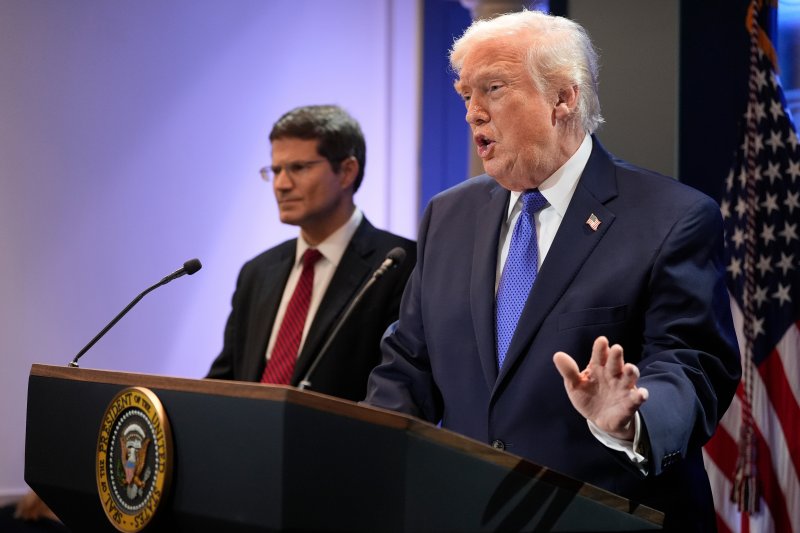
On the 23rd (local time), President Trump wrote on the social media platform Truth Social, "Any country that tries to play games using the ridiculous Supreme Court ruling, especially those that have been ripping off the United States for many years, even decades, will face tariffs far higher than those recently agreed, and measures that go beyond that."
His remarks are being interpreted as a warning that countries which have concluded trade deals with the US but attempt to walk away from those agreements by citing the Supreme Court decision will be hit with punitive tariffs. On the 20th, the US Supreme Court ruled that the tariffs President Trump imposed under the International Emergency Economic Powers Act (IEEPA), enacted in 1977, were unlawful. In response, President Trump signed a proclamation imposing a 10% global tariff for 150 days based on Section 122 of the Trade Act of 1974, and the following day announced that he would raise that rate to 15%.
Some countries, however, are moving in a direction that runs counter to President Trump’s warning. The EU abruptly postponed ratification of the US–EU trade agreement on the day. The European Parliament Committee on International Trade (INTA) stated that it was "impossible to hold a vote until legal clarity is secured amid the tariff turmoil." Under the agreement reached last year, EU exports were to be subject to a 15% tariff, while the EU would sharply reduce tariffs on US industrial goods and certain agricultural products. But after the Supreme Court ruling, President Trump reintroduced a 15% global tariff under a different legal basis, raising doubts about the stability of implementing the deal. The EU is demanding predictability for investment and trade, and is consulting with member states and the European Parliament (EP) on how to respond.
India’s negotiating delegation had also been scheduled to visit the US for three days starting on the 23rd, but has postponed the trip, according to foreign media reports. Sources said the US and India will reschedule the visit after they have assessed how the tariff situation develops.
The Indian delegation had originally planned to meet with US negotiators to finalize the wording of the trade agreement. The Trump administration had earlier intended, through the negotiations, to lower reciprocal tariffs on Indian imports from 25% to 18% and to eliminate an additional 25% tariff.
[email protected] Reporter Lee Byung-chul Reporter