Four Years of the Russia–Ukraine War: 2 Million Casualties and Peace Still a Mirage
- Input
- 2026-02-23 13:01:48
- Updated
- 2026-02-23 13:01:48
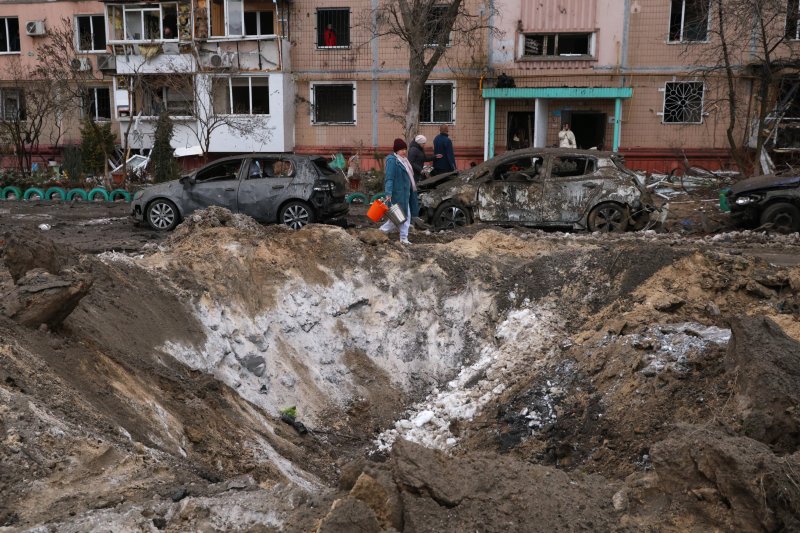
According to The Financial News, the war triggered by Russia’s full-scale invasion of Ukraine reaches its fourth anniversary on the 24th (local time). Contrary to early expectations that it would end as a short campaign, it has escalated into the worst war of attrition of the 21st century, with total casualties on both sides approaching 2 million. Ukraine’s economic losses have surpassed 1 trillion dollars (about 1,450 trillion won). Along a 1,000-kilometer front line, the fighting has settled into a stalemate with no clear breakthrough, while Western “Ukraine fatigue” and the deployment of the Korean People’s Army have emerged as new variables. International attention is shifting away from the prospect of a complete end to the war toward a 1953-style “Korean-style armistice” scenario.
Two Million Casualties and Europe’s Breadbasket in Ruins
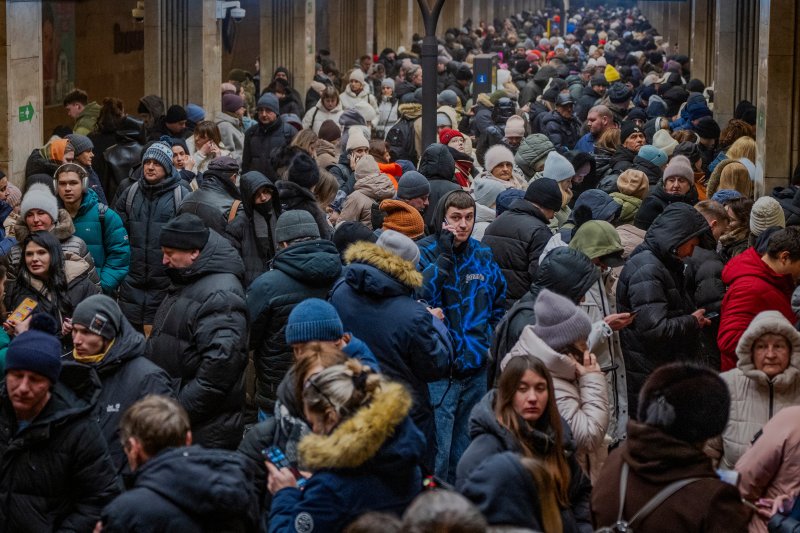
The tragedy that began in the early hours of February 24, 2022, with the wail of air-raid sirens during Russia’s surprise bombardment has continued into a fourth year. Behind the fog of war, the human toll has reached horrific levels. Major Western think tanks and intelligence agencies, including the Center for Strategic and International Studies (CSIS), estimate that combined military casualties on both sides over the past four years may total around 2 million. The Government of Ukraine recently disclosed, with caution, that more than 55,000 of its own soldiers have been killed in action. The United Nations (UN) has officially confirmed at least 15,000 civilian deaths, but when unrecorded victims in Russian-occupied areas such as Mariupol are included, the real figure is believed to be far higher.
The economic damage has reached a level that threatens the country’s very survival. A joint assessment by the World Bank and the Government of Ukraine found that the cost of rebuilding destroyed roads, housing and industrial infrastructure has already far exceeded 1 trillion dollars. Russia’s deliberate targeting of energy facilities has been especially devastating, destroying more than 60% of Ukraine’s power grid and forcing millions of people to endure harsh winters in almost total darkness. The 15 million domestic and overseas refugees created since the war began represent the largest population displacement in Europe since World War II.
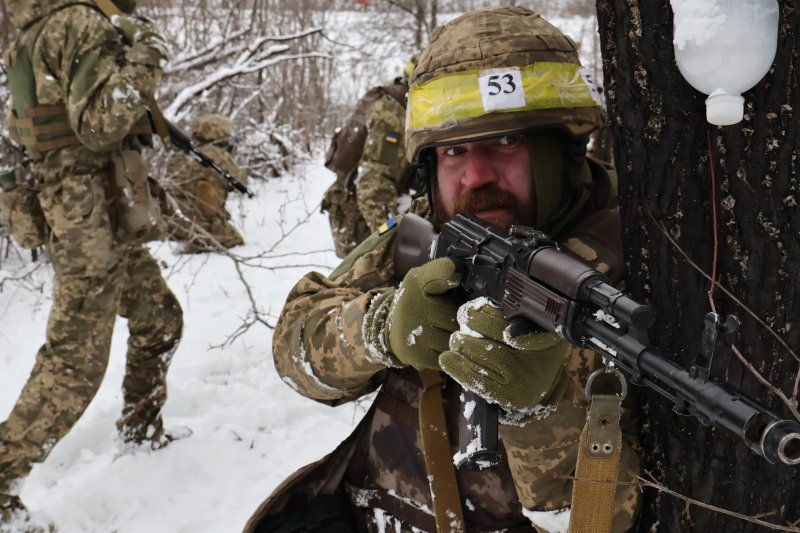
Today, the roughly 1,000-kilometer front stretching across eastern and southern Ukraine has hardened into a distorted form of warfare that combines World War I–style trench fighting with artificial intelligence (AI)–guided suicide drones. Russia is leveraging its overwhelming artillery production and manpower in what has been likened to a “meat grinder,” pushing forward bit by bit in the eastern Donbas region through mass assaults. Ukraine, by contrast, is holding a tense and fragile defensive line by using Western-supplied precision-strike weapons and domestically developed long-range drones to disrupt Russia’s rear logistics lines and oil refineries on Russian territory.
Deepening Fatigue: Is an Armistice the Answer?
As the war drags on, the most lethal threat facing Ukraine may no longer be artillery on the front line but “Ukraine fatigue” within the Western camp. The once-solid transatlantic pledge to support Ukraine “for as long as it takes to win” has visibly weakened. With the launch of Donald Trump’s second administration and a stronger “America First” stance, unconditional arms deliveries have been curtailed, and the political momentum behind aid to Ukraine is rapidly fading. Within the European Union (EU), mounting economic hardship and the rise of right-wing populism are amplifying calls that “Ukraine must pursue a realistic compromise, even if it means giving up some territory.”
On top of artillery support, the actual deployment of the Korean People’s Army has become a dangerous trigger, transforming what began as a localized conflict in Ukraine into a proxy war between global blocs. The presence of Korean People’s Army troops on the battlefield is shaking the security landscape not only in Europe but also on the Korean Peninsula. The question of how to repatriate North Korean prisoners of war recently captured at the front foreshadows complex diplomatic friction within the South Korea–North Korea–Russia trilateral framework. This issue is expected to emerge as a key point of contention tied to human rights during any future peace negotiations.
The international community’s peace agenda is shifting rapidly from “restoring territory” to “reaching a realistic compromise.” Mid-month, U.S.-Russia-Ukraine three-way talks held behind closed doors in Geneva ended without results, serving only to confirm deep disagreements over whether to recognize occupied territories. Among diplomats and military experts, there is growing discussion that, with neither side able to secure a decisive victory, the only viable exit strategy may be a 1953-style “Korean-style armistice” that freezes the current front line as a military demarcation line.
Mark Cancian, a senior adviser at the Center for Strategic and International Studies (CSIS), said, “The United States, Ukraine and Europe may be able to find common ground for peace, but Russia has no intention of making concessions,” adding, “For now, both sides believe that continuing the war is the way to secure a better position at the future negotiating table, so the war of attrition and the stalemate are likely to persist.”
[email protected] Kim Kyung-min Reporter