North Korea reshuffles even second-generation partisan elite: Move to elevate Kim Jong Un and Kim Ju Ae?
- Input
- 2026-02-23 12:00:19
- Updated
- 2026-02-23 12:00:19
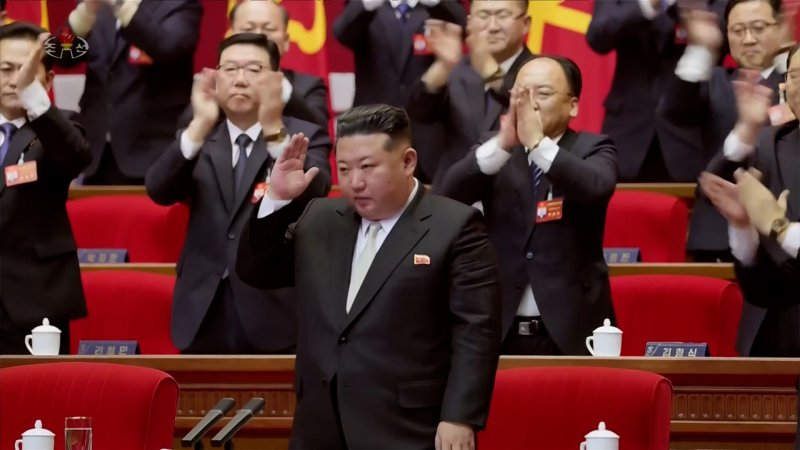
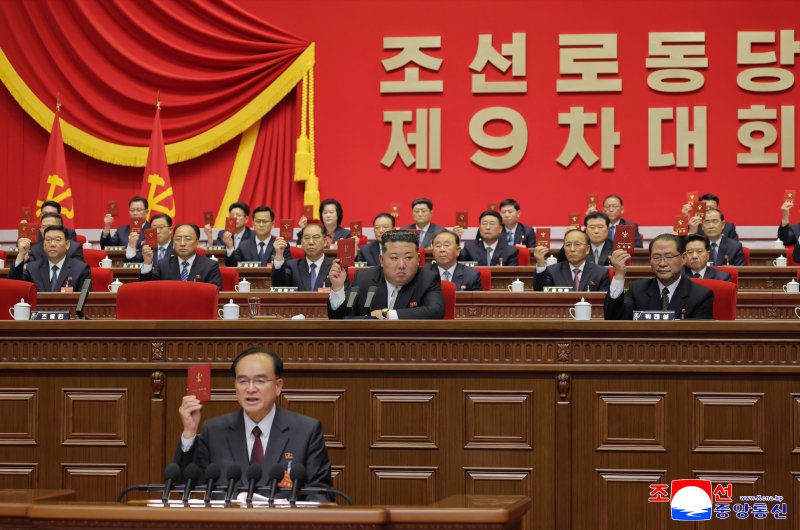
According to Korean Central News Agency (KCNA) on the 23rd, the fourth-day session of the 9th Party Congress held the previous day adopted a resolution to maintain Kim Jong Un’s position as General Secretary. At the same time, a large number of veteran members of the Party Central Committee were additionally replaced.
Yang Moo-jin, a professor at the University of North Korean Studies, said, "It is likely that Kim Jong Un’s elevation to the position of state president and the designation and formalization of a successor will take place around the 10th Party Congress." He added, "It appears that inserting the notion of two hostile states between North and South Korea has been put on hold."
Regarding personnel changes in the North Korean leadership, the most striking feature is that symbolic veteran figures such as Choe Ryong-hae, Ri Pyong-chol and Pak Jong-chon were left out of the list of Central Committee members. As the leader of the second-generation partisan elite, Choe Ryong-hae played a key role in stabilizing the regime in the early years of Kim Jong Un’s rule. His exclusion is interpreted as a declaration that Kim Jong Un can now stand on his own, without relying on the halo of his predecessors or the backing of the old partisan guard.
Ri Pyong-chol, a central figure in North Korea’s nuclear and missile development, and Pak Jong-chon, known for his role in artillery and operations, have symbolized the strengthening of national defense under Kim Jong Un. Their omission suggests that the physical targets of the "five-year plan for strengthening national defense" declared at the 8th Congress have largely been achieved. As North Korea shifts from an era of development to one of deployment and operational use, it appears to have carried out a generational change. The Ministry of Unification (MOU) has also identified that key figures on the South Korea policy line, such as Kim Yong-chol and Ri Song-gwon, are no longer on the list. In their place, a more practical, work-level power structure is taking shape, bringing to the forefront economic and construction technocrats such as Kim Jeong-gwan, Yun Jeong-ho and Jeon Seung-guk.
Eul-Chul Lim, a professor at the Institute for Far Eastern Studies at Kyungnam University, noted, "By erasing the shadows of the old guard, this indicates that the generation brought up and handpicked by Kim Jong Un for the 9th Congress has taken control of the Party Central Committee." He added, "A pragmatic personnel policy has been applied, under which officials are replaced if, despite their past contributions, they lack the drive to carry out current policy goals such as regional development and improving people’s livelihoods, or if they are too old." The 9th Party Congress, which began on the 19th, is expected to continue for another two to three days. Attention is focused on whether statements on South Korea and the United States, as well as references to North Korea’s nuclear program, will follow. An MOU official said that day, "We are closely monitoring the sharp reduction in external statements at this Party Congress."
[email protected] Kim Kyung-soo Reporter