K-culture-Themed Musicals ‘Dreaming of Paradise’ and ‘The Man in Hanbok’... “Multinational Audiences Are the Barometer for K-musicals”
- Input
- 2026-02-23 14:01:50
- Updated
- 2026-02-23 14:01:50
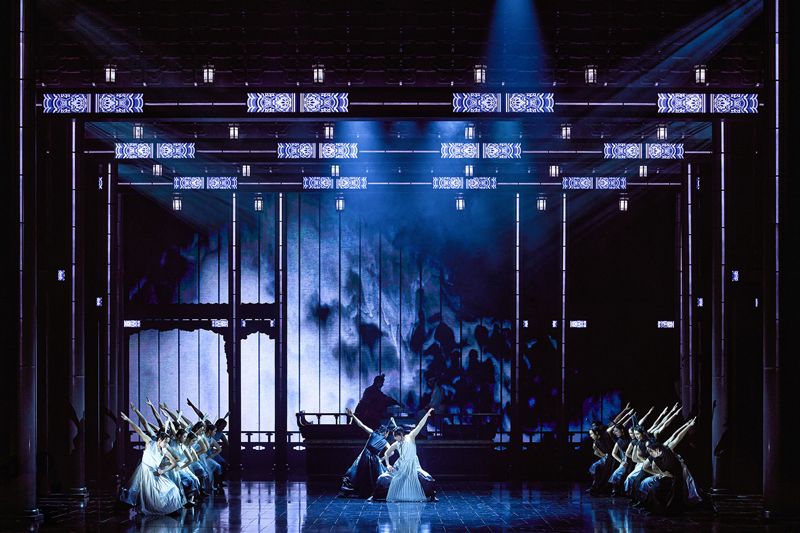
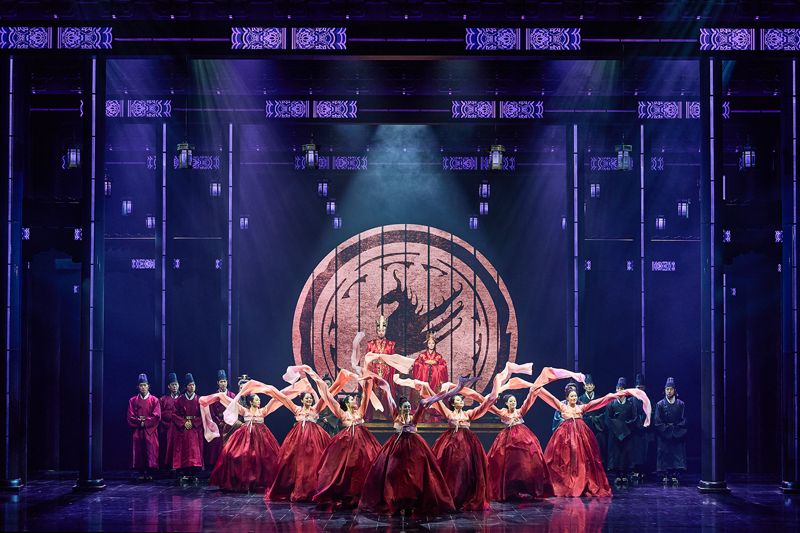
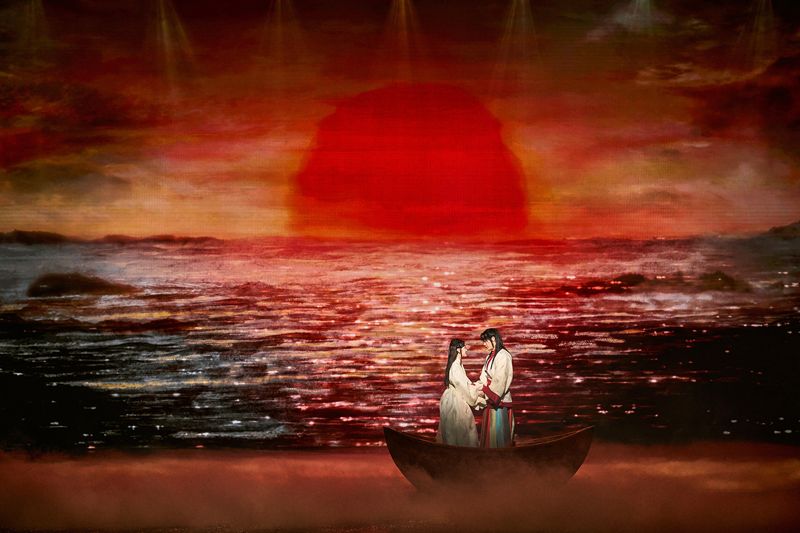
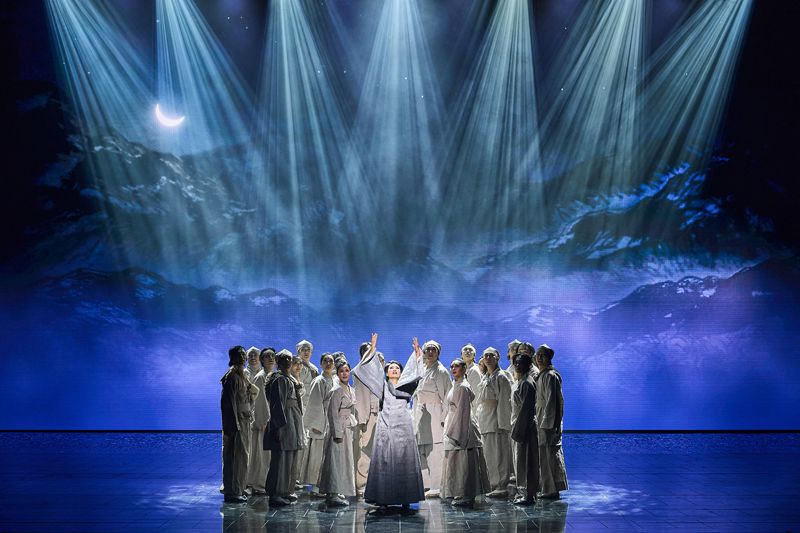
Financial News – The K-culture-themed musicals Dreaming of Paradise and The Man in Hanbok are broadening the spectrum of the musical theater industry. In particular, Dreaming of Paradise is drawing attention as a potential export, as it is being praised as the culmination of 30 years of expertise at production company Acom, which has already proven the potential of original Korean musicals with The Last Empress and Hero: The Musical.■ ‘Dreaming of Paradise’ Brings the Legend of the Wife of Domi to the StageDreaming of Paradise adapts Choe Inho’s novel Mongyudowondo, which is based on The Legend of the Wife of Domi from the Samguk Sagi, into the language of the stage. First premiered in 2002 and now revived after 24 years, the work was conceived from the outset with the global stage in mind. While it foregrounds East Asian aesthetics, it also tells a universal love story that transcends time and borders, earning it the reputation of being “the most Korean and at the same time global.”
The work’s first impression is that of an ink-and-wash painting brought to life on stage. Some video elements and musical numbers could still be refined, but its three-dimensional characters, solid storytelling, the blend of Western orchestration with traditional Korean sounds, and stagecraft reminiscent of a single monochrome landscape painting more than make up for those shortcomings.
In the original legend, Gaero of Baekje covets Domi’s wife Arang under the pretext of testing her chastity. In this musical, he is reimagined as Yeogyeong (played by Min Woo-hyuk and Kim Ju-taek), who ascends the throne after his father is killed in a coup by the nobility and vows never to love any woman in order to protect his crown. Tormented by constant anxiety, he falls asleep at his desk and wakes from nightmares. One day, he finds solace in a dream from a beautiful woman named Arang (Ha Yoon-ju and Yoo Ri-ah) and begins searching for her in the real world. Meanwhile, Domi (Lee Chung-joo and Kim Sung-sik), a descendant of Mokjiguk whose entire tribe has been reduced to slavery on charges of treason, becomes their leader and marries his beloved Arang.
On paper, the setup might evoke what people would call a sensational soap opera. Yet this East Asian fantasy, infused with the philosophical depth and lyricism of the original novel, layers themes of the violence of power, human desire, responsibility and sacrifice, and a love that refuses to break, leaving a lingering resonance.
Yeogyeong is not a simple villain, but a foolish man consumed by futile desire, which elicits a sense of pity. The two protagonists, whose everyday lives are shattered overnight by unforeseen catastrophe, endure countless trials before reaching an ideal realm that touches on the essence of life. At the same time, the work is a story of common people standing up to unjust power. In the Act 1 finale, the image of Domi, blinded and drifting down the river, overlaps with the audience’s loneliest and most despairing moments, heightening the emotional impact.
The stage is filled not with literal reproductions of tradition, but with symbols and metaphors. Musically, grand Western orchestral sounds are interwoven with traditional Korean melodies to create harmony. The cast brings together performers from diverse musical backgrounds: opera-trained Kim Ju-taek, traditional vocal specialist Ha Yoon-ju, and musical theater actors Min Woo-hyuk, Yoo Ri-ah, and Kim Sung-sik share the same stage. Master singer Jung Eun-hye, who plays the Mokjiguk priestess Bia, imprints the work’s Korean identity with her distinctive voice.
Costumes and choreography also embody Korean aesthetics. One particularly striking scene turns the stage into a giant Go board, where an ensemble in black-and-white costumes performs razor-sharp group choreography that visually realizes the line, “Go is war.” The sound of Domi’s flute taps into the uniquely Korean sentiment of han, a deep, unresolved sorrow. Songs such as “The Shepherd’s Old Song,” which incorporates the melody of Arirang, and “Back to Paradise” expand the story from individual tragedy to communal pain, leaving a profound echo.
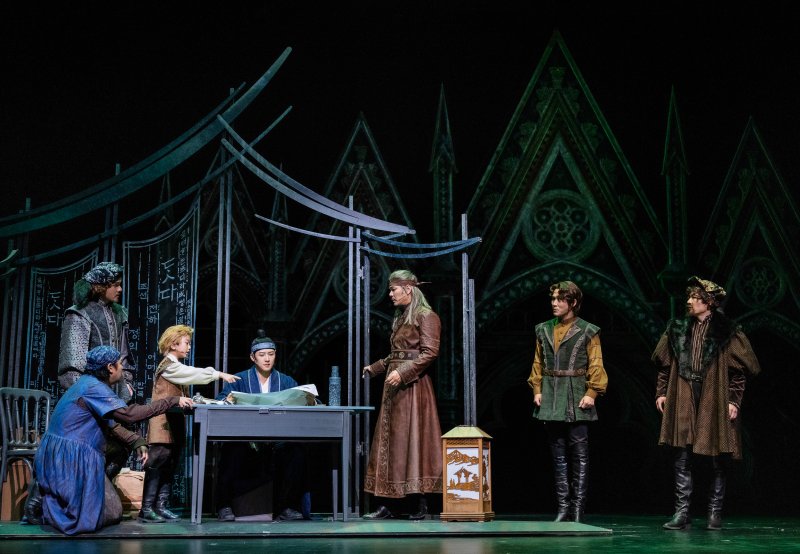
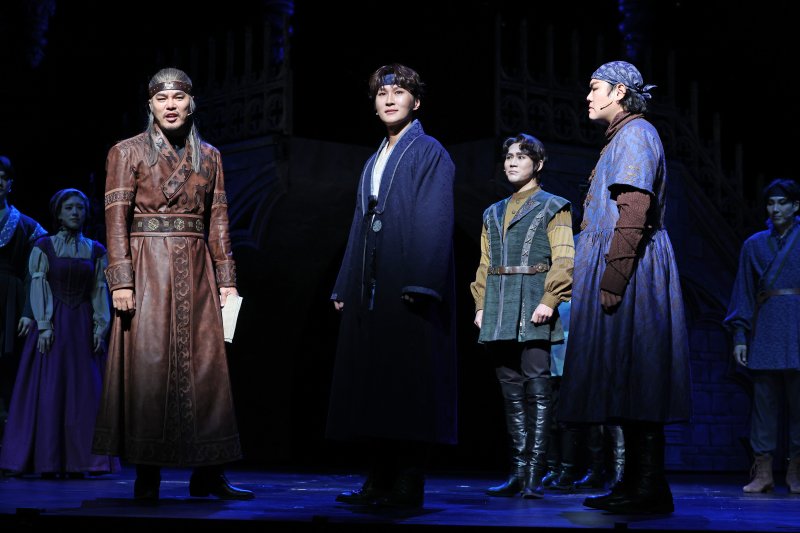
If The Last Empress opened the door for original Korean musicals through a historical tragedy, Dreaming of Paradise takes a step further with mythic imagination and East Asian aesthetics. Following its run at the National Theater of Korea, it will move to the Charlotte Theater in Songpa-gu, Seoul, from April 11.■ Jang Yeong-sil Travels to Italy in The Man in HanbokThe Man in Hanbok, running at the Chungmu Arts Center through March 1, is the first original Korean musical from EMK Musical Company, which has established itself as a specialist producer of European licensed works such as Elisabeth and The Man Who Laughs.
Based on the novel of the same name by Lee Sang-hoon, the musical follows a TV producer making a documentary about The Man in Hanbok, a painting by Peter Paul Rubens from the 17th century. In the process, the producer delves into the mystery surrounding Jang Yeong-sil, a scientist of slave origin favored by Sejong the Great in the Joseon era, and the story moves back and forth between Joseon and Renaissance Europe. Despite mixed reactions to its historical fantasy, the show is enjoying a strong run, having won the grand prize at the 10th Korea Musical Awards.
Culture columnist Juyoung Lee described it as “a work that centers on the globally rare historical fact that, around the 15th century, a king and a scientist trusted and acknowledged each other and worked to improve the lives of ordinary people.” Lee added, “By faithfully recreating early Joseon hanbok and bringing to life on stage inventions closely tied to the lives of commoners, it offers a rare kind of production. It is a large-scale musical for a proscenium theater that combines popular appeal and artistic value, where three generations can revisit our history and traditions together and share their dreams.”
Lee also noted that, at a time of heightened global interest in K-culture, “the very fact that two large-scale works based on Korean legends and history, using the lines and negative space of traditional costume as mise-en-scène, have been developed with contemporary interpretations and art technology and are being staged to enthusiastic responses from Korean audiences, demonstrates the stature of Korea’s musical theater industry,” adding, “The multinational audiences we frequently encounter in the seats are the barometer of that status.”

[email protected] Jina Shin Reporter