‘De Facto Four-Tier System’ Constitutional Complaint Against Court Rulings... Legal Profession Braces for an ‘Uncomfortably Good’ Boom
- Input
- 2026-02-22 18:47:40
- Updated
- 2026-02-22 18:47:40
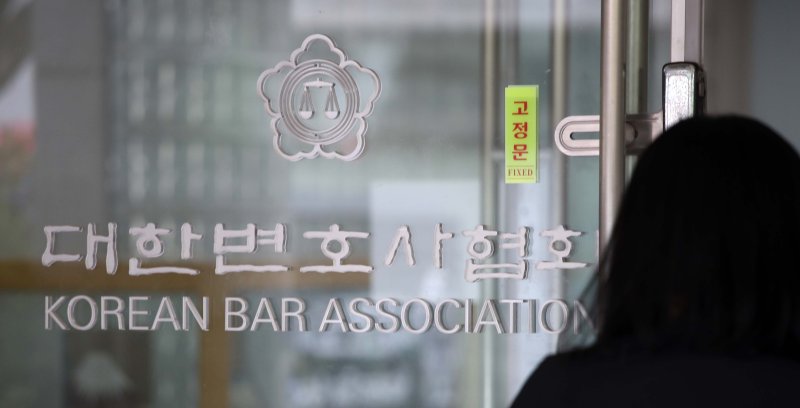
According to the legal community on the 22nd, the amendment to the Constitutional Court Act that passed the National Assembly Legislation and Judiciary Committee on the 11th would allow a constitutional complaint even against a final ruling by the Supreme Court of Korea. The key is that this would apply when the ruling conflicts with a prior decision of the Constitutional Court of Korea or when it allegedly violates fundamental rights. In effect, it would create a de facto four-tier court system. A complaint could be filed within 30 days of the date the judgment becomes final, and once it is accepted, the effect of the Supreme Court of Korea’s ruling would be suspended until the Constitutional Court of Korea hands down its decision.
On the surface, the legal profession is keeping a low profile, but beneath that, many appear to welcome the change. If a fourth stage is opened up—“the Constitutional Court of Korea after the Supreme Court of Korea”—tens of thousands of new cases could flow into the legal market each year, which is seen as a positive factor.
Another favorable aspect for lawyers is that a constitutional complaint generally requires greater expertise and involves more complex procedures than ordinary civil or criminal trials. As a result, legal fees for such cases tend to be set at a higher level.
Demand for legal services is declining with the introduction of artificial intelligence (AI), yet around 1,700 new lawyers enter the market every year, creating an era of “infinite competition” with 31,874 practicing lawyers expected in 2025. Against this backdrop, some optimistically view constitutional complaints against court rulings as a niche or even a blue ocean. The legal community also anticipates that “specialist lawyers for constitutional complaints against court rulings” may soon emerge.
A lawyer based in Seocho-dong remarked, “If procedures increase, the number of cases lawyers can take on inevitably rises, which can only be good for us,” adding, “A new market is opening up, and the legal profession has absolutely no reason to oppose it.”
However, some warn that the benefits will likely be concentrated among certain groups. Lawyers who previously served as research judges or justices at the Constitutional Court of Korea, and large law firms that employ many of them, are seen as having a strong chance of dominating this new market.
On the other hand, there is serious concern that adding another layer of procedure and higher legal fees will increase the burden on ordinary clients. An Yeongrim, a former prosecutor and now a lawyer at Seonseung Law Firm, pointed out, “In the end, we also have to think about victims, not just defendants,” and continued, “Victims can only file civil suits or start benefit-claim procedures after the criminal trial ends. If we move to a de facto four-tier system, they will be forced to remain in limbo, and recovery of damages will inevitably be delayed.”
Another lawyer criticized the proposal, saying, “Additional procedures will increase social costs,” and added, “Clients who seek to assert their rights or obtain relief will remain in a state of non-finality until the very end, which raises serious doubts about whether this can really be considered positive.”
[email protected] Reporter Jeong Gyeong-su Reporter