"Global tariffs raised from 10% to 15%" Trump doubles down [Trump to raise tariffs to 15%]
- Input
- 2026-02-22 18:05:43
- Updated
- 2026-02-22 18:05:43
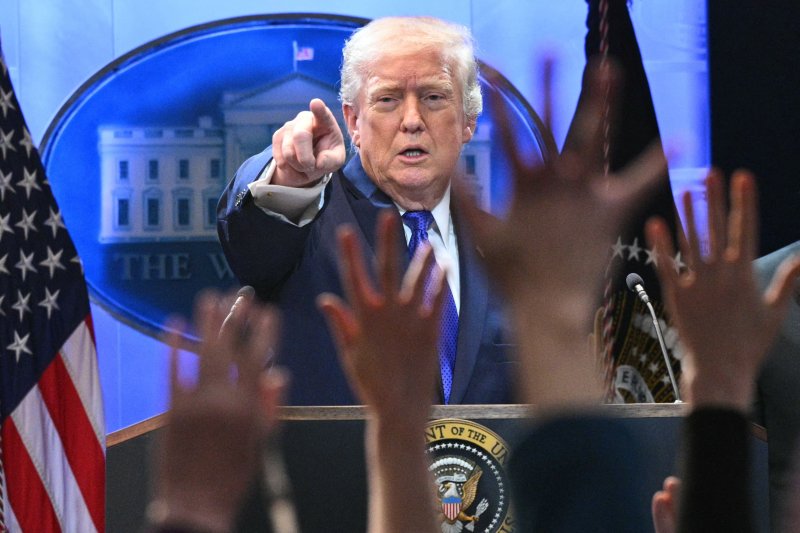
He went on to say, "In the coming months, I will determine and announce new, legally permissible tariffs." This is being interpreted as an intention to impose additional tariffs on top of the 15% rate. The 15% tariff will take effect after Trump signs the relevant executive order and related procedures are completed.
Earlier, after the U.S. Supreme Court invalidated his reciprocal tariff measures, Trump signed an executive order on the 20th imposing a 10% tariff on all imports. Immediately afterward, the White House announced that "the temporary tariffs will take effect from 12:01 a.m. Eastern Time on the 24th (1:01 p.m. the same day in South Korea)." As a result, the 10% tariff is expected to apply to countries around the world starting that day.
Section 122 of the Trade Act of 1974 does not allow tariffs to be adjusted by country or by product. Accordingly, most products imported into the USA will be subject to a uniform 15% tariff. However, tariffs imposed on national security–related items such as steel and aluminum under Section 232 of the Trade Expansion Act of 1962 are excluded from this measure.
Major U.S. trading partners and allies such as South Korea, Japan, and the European Union (EU) will now face the same 15% tariff level. As tariff gaps between countries narrow, some nations that had been subject to relatively higher tariffs, including China and Republic of India (India), may gain a price-competitiveness edge in the U.S. market. Chinese products have been subject to a combined 20% tariff, consisting of a general 10% tariff and an additional 10% tariff imposed in response to fentanyl. Canada and Mexico, which are engaged in trade negotiations with the USA, may also see an effective reduction in their tariff burden.
Tariffs imposed under Section 122 of the Trade Act of 1974 can remain in place for only 150 days, and any extension beyond that period requires congressional approval. With Trump’s approval ratings falling and criticism of his tariff policy mounting even within the ruling Republican Party (GOP), it is unclear whether the tariffs can be maintained beyond the 150-day window. This has further heightened uncertainty.
To reinforce its position, the Trump administration has launched an investigation to invoke Section 301 of the Trade Act of 1974. Enacted in 1974, Section 301 authorizes the USA to impose tariffs in response to unfair, unreasonable, or discriminatory trade practices by foreign governments. Such investigations typically take about nine to twelve months. In this context, the South Korean government has decided to maintain its current investment stance despite the rising uncertainty, judging that moves such as demanding changes to investment plans in the USA would not serve the national interest. The Korea International Trade Association (KITA) also noted that "the competitiveness of South Korean products in the U.S. market could be strengthened, given that South Korea has a Free Trade Agreement (FTA) with the United States."
[email protected] Reporter