U.S. Supreme Court Curbs Tariffs: "A New Wild Card Before the U.S.–China Summit"
- Input
- 2026-02-22 13:54:17
- Updated
- 2026-02-22 13:54:17
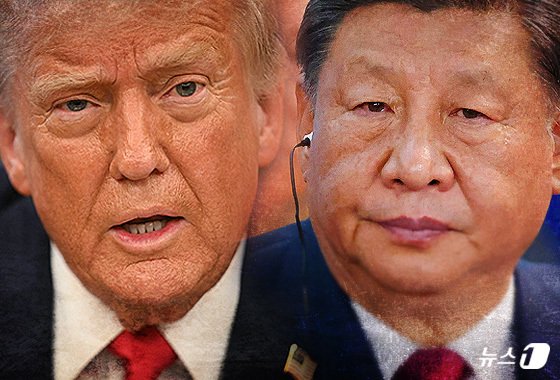
[Financial News] The Supreme Court of the United States (SCOTUS) has struck down President Donald Trump’s sweeping tariff measures, adding another wild card to U.S.–China relations. Analysts say this ruling could also reshape the negotiating dynamics, as the two countries try to maintain a delicate balance to avoid a full-scale trade war.
According to the Associated Press (AP) on the 22nd, the decision is seen as partly strengthening China’s bargaining position. However, experts believe Beijing is unlikely to overplay this advantage, since Trump still retains other legal tools he can use to impose tariffs.
Yun Sun, director of the China program at the Washington, D.C.–based think tank Stimson Center, said, "This ruling may give China some moral high ground ahead of the summit, but Beijing is also mindful that nothing may change in practice." Trump is scheduled to visit China from March 31 to April 2 for talks with President Xi Jinping.
Immediately after the ruling, Trump announced that he would temporarily impose a blanket 10% tariff and then raise it to 15%. Citing China’s trade surplus with the United States, he argued the tariffs were justified, saying, "China has run a surplus of hundreds of billions of dollars, and in the process we rebuilt China."
Beijing is taking a cautious stance. Liu Pengyu, spokesperson for the Chinese Embassy, stated, "Tariffs and a trade war are not in the interests of either country," adding, "We should work together to provide greater certainty and stability for U.S.–China economic and trade cooperation and for the global economy."
Experts expect Xi Jinping to focus less on publicly touting the SCOTUS ruling and more on building personal trust at the summit. Ali Wyne, a senior adviser at the International Crisis Group (ICG), assessed that if the fragile trade truce between Washington and Beijing becomes more firmly established, Trump might be willing to make certain concessions in the security realm.
Trump has previously used emergency powers to slap a 20% tariff on Chinese goods and later expanded reciprocal tariffs. After their summit last October, the two countries agreed to a one-year truce that kept the baseline tariff rate at 10%, and the so‐called Fentanyl tariffs were also reduced to 10%.
Wendy Cutler, vice president of the Asia Society Policy Institute (ASPI), noted, "The Office of the United States Trade Representative (USTR) is reviewing whether China is complying with the agreement," and predicted that "alternative scenarios could be activated quickly." Ro Khanna, the Democratic ranking member of the House Select Committee on the Strategic Competition between the United States and the Chinese Communist Party, also urged Washington to work with allies to counter China’s unfair trade practices.
Gabriel Wildau, managing director at the political risk consultancy Teneo, said, "China likely assumes that Trump can reimpose tariffs by invoking other legal authorities," but added, "Beijing also hopes there is room to persuade Washington to lower tariffs in exchange for certain purchase commitments or concessions."
#USChinaTrade #TrumpTariffs #SCOTUS #USChinaSummit #USTR #ChinaTrade
[email protected] Reporter Kim Kyung-min Reporter