Preview of the Appeal in the 'Yoon Ringleader of Insurrection' Case: Notebook and Long-Term Dictatorship Allegations Likely to Be Key Issues [Legal Insight]
- Input
- 2026-02-22 14:39:29
- Updated
- 2026-02-22 14:39:29
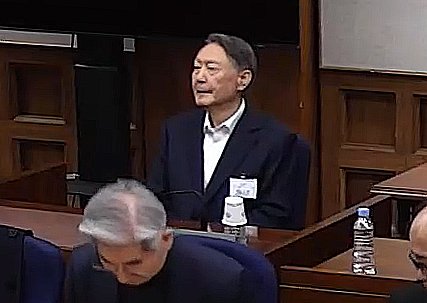
[Financial News] After former President Yoon Suk Yeol was sentenced to life imprisonment at the trial court on charges of being the ringleader of an insurrection, attention is now turning to the appeal. If an appellate trial is convened following challenges to the first-instance ruling, fierce disputes are expected over the purpose and timing of the martial law decision and the admissibility of key evidence. In particular, whether to admit the "notebook of former Commander of the Defense Intelligence Command Roh Sang-won," which was excluded at first instance, and whether the martial law was aimed at entrenching long-term authoritarian rule are being cited as core issues.
According to the legal community on the 22nd, Yoon’s side, which has effectively decided to appeal, is expected to focus its firepower in the appellate court on overturning the first-instance finding that "the act of deploying military forces to the National Assembly itself constitutes insurrection." In a statement released on the 20th, Yoon said it was "a small relief" that the court did not accept the special prosecutor’s claim that he declared martial law after failing to create conditions for long-term rule. However, he squarely challenged the ruling’s reasoning, arguing that it is legally untenable to recognize the crime of insurrection solely on the basis that troops entered the National Assembly building.
Yoon’s defense team is also expected to reiterate that the troop deployment at the time was intended as a temporary measure to maintain order and issue a warning, rather than to "overthrow the state" or "paralyze constitutional functions." They are likely to refine their existing argument that the situation did not reach the level of a "riot," which is an element of the crime of insurrection, by stressing that the actual use of force was limited and no casualties occurred. On sentencing, they are expected to argue for mitigation by pointing out that the martial law was lifted in a short period and that key plans remained at the attempted stage. The legal community also anticipates that they will again raise the claim that the Corruption Investigation Office for High-ranking Officials (CIO) lacked investigative authority over the case.
By contrast, the Special Prosecutor Team for Insurrection and Treason, led by special prosecutor Cho Eun-seok, which plans to soon hold a meeting to decide whether to appeal, is expected to stake everything on restoring the evidentiary value of "former Commander of the Defense Intelligence Command Roh Sang-won’s notebook," which was not admitted at first instance, in order to prove the "meticulous preparation" behind the martial law.
The trial court had excluded the notebook on the grounds that the time of its creation was unclear and its chain of custody was poorly managed. As a result, it rejected the special prosecutor’s theory that the plot began in October 2023 and instead accepted the view that the decision was made on December 1, 2024. In the appeal, the special prosecutor team plans to meticulously demonstrate the consistency between the notebook’s entries and the actual timing of personnel appointments, in an effort to re-establish that the martial law was a long-planned insurrection.
The special prosecutor is also expected to argue for an earlier starting point of the preparations for martial law, based on the fact that "emergency powers" were mentioned at meetings with military generals in May and October 2024. A precedent from the trial of former Prime Minister of the Republic of Korea Han Duck-soo, in which the long-term power-consolidation purpose of the December 3 emergency martial law was partially recognized, is also expected to serve as a powerful weapon for the prosecution. In addition, they are likely to emphasize that the early termination of martial law was due not to the defendants’ own will but to the refusal of frontline troops to comply and to citizens’ resistance, and on that basis to again press the argument that the death penalty, rather than life imprisonment, is warranted.
Once the appeal begins, the case is expected to be assigned to either Criminal Division 1 or Criminal Division 12 of the Seoul High Court, both of which specialize in insurrection cases, for intensive hearings. A legal source commented, "Because the trial court recognized the 'insurrectionary nature' of the martial law while rejecting the idea of 'meticulous prior planning,' the appellate court is likely to see renewed factual disputes over the evidentiary value of the notebook and the ultimate purpose of the martial law."
[email protected] Choi Eun-sol Reporter