Across-the-board tariff hike from 10% to 15% in a single day: China and India gain, UK and Australia lose
- Input
- 2026-02-22 11:16:58
- Updated
- 2026-02-22 11:16:58
However, as tariff gaps between countries narrow, some nations that had faced relatively higher tariffs, such as China and India, could gain a price-competitiveness edge in the US market.
IEEPA struck down, emergency shift to Section 122
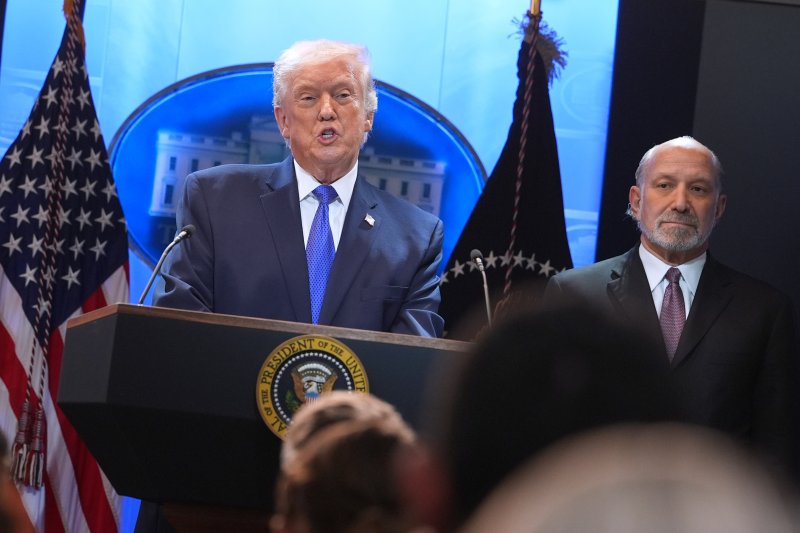
On the 21st (local time), Trump announced on his social media platform Truth Social that, based on Section 122 of the Trade Act of 1974, he would raise tariffs on all imports from the previously announced 10% to 15%. He said, "As president of the United States, with immediate effect, I will raise the 10% worldwide tariff on many countries that have 'exploited' the United States for decades without any sanctions to 15%, which is the maximum allowed and has been legally tested."
He went on to say, "In the coming months, the Trump administration will determine and announce new tariffs that are legally permissible," adding, "This will allow us to continue our incredibly successful process of making America great again."
On the 20th, the Supreme Court of the United States (SCOTUS) issued a final ruling that the International Emergency Economic Powers Act (IEEPA), which Trump had used as the legal basis for imposing tariffs on major countries, does not grant authority to levy tariffs. IEEPA is a powerful economic sanctions tool that can be invoked on the premise of a "national emergency," and the Trump administration had relied on it as a key legal foundation for its tariff measures.
After the Court blocked that approach, Trump the same day signed an executive order imposing a 10% tariff on all imports under Section 122 of the Trade Act of 1974. Section 122 allows tariffs of up to 15% for a period of 150 days, and maintaining them beyond that requires approval from Congress.
To reinforce this, the Trump administration has also launched an investigation to invoke Section 301 of the Trade Act of 1974. Section 301 authorizes the United States to impose tariffs in response to unfair, unreasonable or discriminatory trade practices by foreign governments. However, such investigations typically take about nine to twelve months. Trump said on the 20th that the Section 301 probe would be completed within five months. This is interpreted as a plan to temporarily restore tariffs under Section 122 and then shift to Section 301 in order to apply differentiated rates by country.
Global 15% tariff brings mixed fortunes by country
Section 122 of the Trade Act of 1974 does not allow tariffs to be adjusted by country or by product category. As a result, a 15% tariff will be applied across the board to most products imported into the United States. Tariffs imposed under Section 232 of the Trade Expansion Act of 1962 on national-security-related items such as steel and aluminum are excluded from this measure.
For major US trading partners and allies such as South Korea, Japan and the EU, the new rate effectively matches the existing 15% tariff level. By contrast, countries like China, India and Brazil will actually see their tariff rates fall.
For example, the United States has been imposing a total tariff of 20% on Chinese products by combining a 10% general tariff with an additional 10% fentanyl-response tariff. Under the new measure, if a flat 15% rate is applied, the tariff burden on Chinese goods will be reduced.
Canada and Mexico, which are in trade talks with the United States, may also benefit from lower tariffs. Under the United States–Mexico–Canada Agreement (USMCA), products that meet the agreement’s rules qualify for zero tariffs. However, products outside the scope of the agreement have faced tariffs of 25% and 35%, respectively.
Tariffs on Brazilian products will drop from the current 50% to 15%, and India is likewise expected to see its rate fall from the previous 18%.
The situation is different for the United Kingdom and Australia. Both countries had agreed with the United States on a 10% tariff level, but the new global 15% rate means their tariffs will actually increase.
However, Jamieson Greer of the Office of the United States Trade Representative (USTR) said in a Fox News interview on the 20th, "Countries that have agreed to tariff levels higher than those under Section 122 must abide by those terms." His remark is being interpreted as suggesting that countries which previously agreed to rates above 15% could be treated separately under the new regime.
[email protected] Reporter Lee Byung-chul Reporter