Despite Ruling Against Tariffs, Japan Pushes Ahead With $550 Billion Investment in U.S.
- Input
- 2026-02-22 08:39:58
- Updated
- 2026-02-22 08:39:58
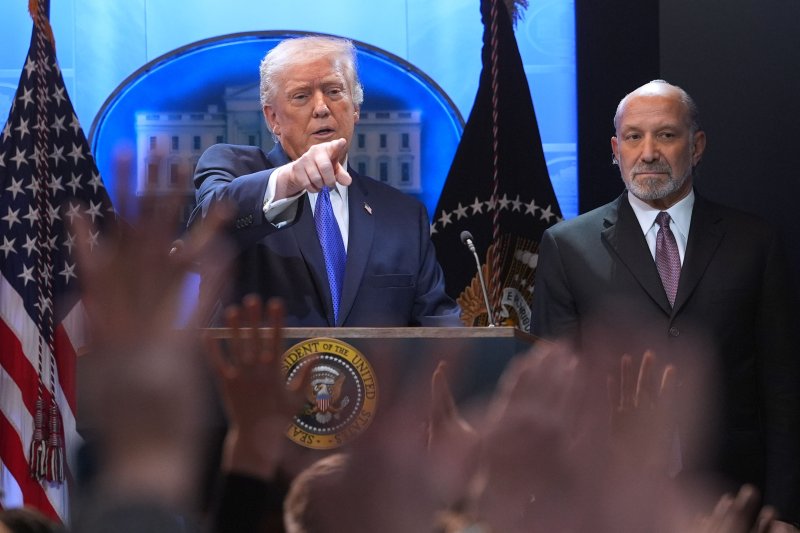
Financial News Tokyo correspondent Seo Hye-jin reports that the Government of Japan plans to continue investing in the United States despite a ruling by the Supreme Court of the United States (SCOTUS) that reciprocal tariffs are unlawful, according to a June 22 article in Nihon Keizai Shimbun (Nikkei). Although the legal basis of the U.S.-Japan tariff agreement has been shaken, Tokyo still classifies these investments as essential for economic growth and economic security and intends to prioritize strengthening its relationship with Washington.
A senior Japanese government official said the previous day, "The SCOTUS ruling will not change Japan's investment plans in the United States."
He explained that Japan will move forward with three projects announced on June 17 as the first phase of its investment in the United States: gas-fired power generation, crude oil export infrastructure development, and synthetic diamond production. He added that discussions on a second round of projects will also continue.
Earlier, the Trump administration agreed to reduce auto tariffs and reciprocal tariffs in return for Japan's pledge to invest a total of $550 billion in the United States.
Subsequently, the U.S. and Japanese governments announced on June 17 that they had selected three projects for the first phase of this investment: gas-fired power generation, crude oil export infrastructure development, and synthetic diamond production. The total investment for these projects amounts to $36 billion.
Following the announcement of the first-phase projects, the Government of Japan has begun work on selecting a second round of projects. It is reportedly conducting detailed reviews of initiatives such as the construction of next-generation nuclear reactors.
A key Japanese government official argued that the investment in the United States is "less a quid pro quo for tariff cuts and more something that benefits Japan." The view in Tokyo is that, even if the assumptions underlying U.S. tariff policy change, projects that serve the mutual interests of both countries should still go ahead.
Japanese Prime Minister Sanae Takaichi is preparing for a U.S.-Japan summit with President Trump scheduled for July 19 in the United States. Keiichi Ichikawa, head of the National Security Secretariat, who is currently visiting Washington, held talks with U.S. Secretary of State Marco Rubio on June 20 to coordinate positions ahead of the summit.
The U.S.-Japan summit is expected to take place just before Trump's visit to China, scheduled from July 31 to August 2. Nikkei reported, "Japan is seeking to maintain U.S. engagement in Asian security in order to curb China's military activities," adding that Tokyo "has poured effort into drawing up its investment plans in the United States to underscore its willingness to cooperate with President Trump."
Nikkei noted that, despite the ruling that reciprocal tariffs are unconstitutional, it will be difficult for the Government of Japan to push for a renegotiation of the U.S.-Japan tariff agreement. One reason is that sector-specific tariffs, such as those on automobiles, rest on different legal grounds and remain in place. Another is that President Trump has already announced plans to impose new tariffs.
On June 21, following the ruling against reciprocal tariffs, Trump declared that he would raise the "global tariff"—referred to as the "Worldwide Tariff"—from 10% to 15%.
Posting on Truth Social that day, Trump said, "As a measure that takes effect immediately, I will raise the Worldwide Tariff from 10% to 15%, which is the maximum allowed and has been legally validated."
He continued, "In the coming months, the Trump administration will determine and announce new tariffs that are legally permissible," adding, "This will allow us to continue our remarkably successful effort to make America great again."
David Bolling, a former senior official at the Office of the United States Trade Representative (USTR) and now with The Asia Group, commented, "If the Government of Japan asks for renegotiation, President Trump will almost certainly bring up an increase in auto tariffs."
Arata Kuno, a professor at Asia University, predicted, "Many Japanese companies have already factored in the Trump administration's unstable tariff policy, so we are unlikely to see major disruption."
[email protected] Seo Hye-jin Reporter