Will Trump Tariff Uncertainty Deepen Despite Supreme Court Ruling?
- Input
- 2026-02-22 04:36:23
- Updated
- 2026-02-22 04:36:23
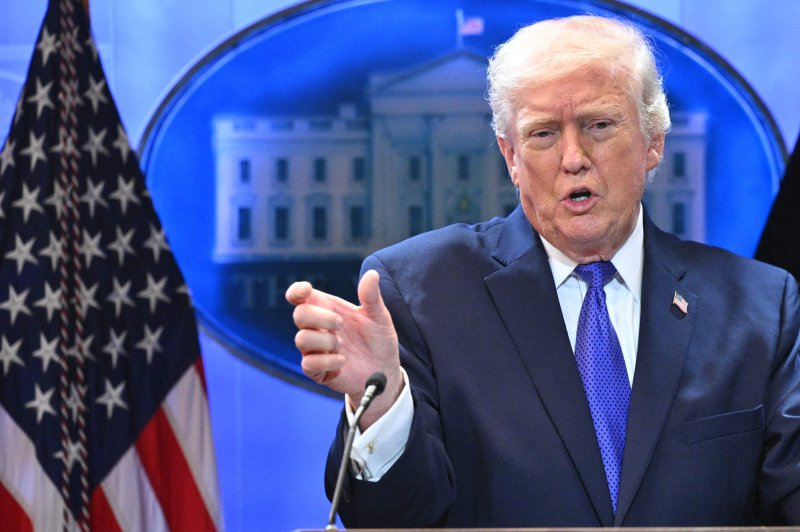
On the 20th (local time), the U.S. Supreme Court struck down President Trump’s sweeping tariffs that were imposed under the International Emergency Economic Powers Act (IEEPA). Yet tariffs are quickly re-emerging as a threat.
On the 20th, Trump introduced a so-called “global tariff,” imposing a 10% duty on all imports based on U.S. trade law and the Trade Expansion Act. Just one day later, on the 21st, he abruptly raised that rate to 15%.
The decision to hike the global tariff rate to 15% in just one day appears to underscore his intent to push straight through the Supreme Court’s ruling.
There is also a possibility that on the night of the 25th, during his State of the Union Address (SOTU) to Congress, Trump will unveil a sweeping new tariff agenda.
Intent to Arbitrarily Proliferate Tariffs and Buy Time
Initially, markets had expected that the Supreme Court’s intervention would rein in Trump’s arbitrary use of tariffs. Developments so far, however, are moving in the opposite direction.
Instead of the tariffs that were invalidated under IEEPA, Trump has turned to Section 122 of the 1974 U.S. trade law. This provision allows the president, in a balance of payments (BOP) crisis, to impose tariffs of up to 15% for as long as 150 days. Raising the rate to 15% on the 21st signals his intention to extract as much tariff revenue as possible.
After 150 days, any 15% tariff imposed under Section 122 would require congressional approval to continue.
Trump, however, appears determined to circumvent that requirement.
By first applying the 15% global tariff, he can buy time. During that window, he may seek to introduce permanent tariffs using Section 232 of the U.S. Trade Expansion Act, which can be invoked on national security grounds, and Section 301 of the Trade Act of 1974, which can be used to respond to unfair trade practices.
If he proceeds this way, he could levy tariffs unilaterally, without needing congressional approval.
Rising Uncertainty
Markets initially breathed a sigh of relief after the Supreme Court’s ruling. Many had hoped that the era of arbitrary tariff policy was coming to an end.
Investors expected that easing tariff burdens would slow inflation in the U.S. economy and give additional momentum to interest rate cuts by the Federal Reserve System (Fed). They also anticipated that this year, economic growth would accelerate as the One Big Beautiful Bill Act (OBBBA), Trump’s flagship stimulus package, went into effect.
Those expectations, however, are fading in the face of Trump’s rapid countermeasures.
A decision to raise tariff rates by 5 percentage points overnight makes it virtually impossible for companies to calculate import costs or design stable supply chain strategies.
Even after the Supreme Court ruling, Trump’s impulsive and discretionary use of tariff powers is unlikely to disappear. As a result, anxiety over an unrestrained tariff environment could intensify.
Tariff Refunds
The process for companies to reclaim tariffs they paid under IEEPA is also unclear, adding to the confusion.
While the Supreme Court declared those tariffs invalid, it left the issue of refunds unaddressed.
Trump has declared that companies will have to pursue individual lawsuits if they want their money back quickly. He has also signaled his intent to neutralize the refunds altogether by imposing new tariffs.
In effect, the new tariffs would be used to offset the refund amounts.
The likelihood that market uncertainty will intensify has therefore increased.
[email protected] Song Kyung-jae Reporter