New York – Financial News correspondent Lee Byung-chul reports."In reality, walking away from the recent agreements reached with the United States is not being considered as an option. Everyone understands very well that such a move could further damage relations with the White House."
Wendy Cutler, vice president at the Asia Society Policy Institute (ASPI) and a former deputy at the Office of the United States Trade Representative (USTR), offered this assessment on the 20th (local time) after the Supreme Court of the United States (SCOTUS) struck down the Trump administration’s tariff measures.
SCOTUS ruled that the broad tariffs imposed under the International Emergency Economic Powers Act (IEEPA) exceeded the president’s legal authority.
Cutler noted, "From now on, Washington will have no choice but to rely on provisions such as Section 301, Section 232 and Section 122, where Congress has clearly delegated tariff authority."
She added, "Major trading partners have already entered talks on the assumption that the US will keep tariffs in place by using other statutes."
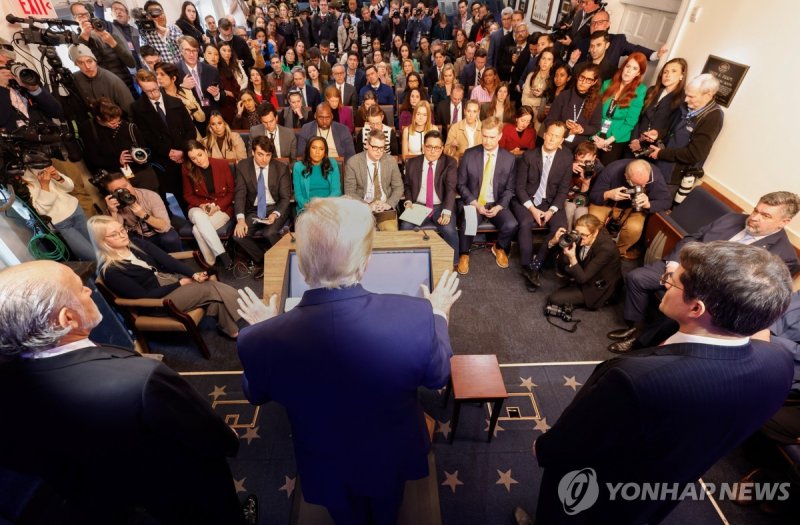
US President Donald Trump also stressed at a White House press conference the same day that "most of the trade agreements remain in force."
Even if some deals are affected, he indicated they would be replaced with other agreements.
Analysts say that mutual tariff removal will likely benefit the US economy in the short term but could become a burden over the longer run.
If refunded tariffs return to companies that had paid them, it would effectively act as fiscal stimulus, supporting corporate earnings and stock prices.
However, experts warn this could be accompanied by lower tax revenues, a deterioration in public finances and rising Treasury yields.
Jose Torres, chief economist at Interactive Brokers, predicted, "As the likelihood of tariff refunds increases, corporate net profits will improve in the short term."
Ohsung Kwon, chief equity strategist at Wells Fargo, also estimated that eliminating the tariffs would lift S&P 500 Index companies’ pre-tax earnings by 2.4% year-on-year.
James St Aubin, chief investment officer at Ocean Park Asset Management, likewise assessed that the move "could be a factor that triggers a modest rebound in the stock market."
The main beneficiaries are expected to be consumer-goods companies that rely heavily on imports.
The main beneficiaries are expected to be consumer-goods companies that rely heavily on imports.
[email protected] Reporter Lee Byung-chul Reporter