U.S. Supreme Court Tariff Ruling Imminent: S&P 500 Seen Moving Up to ±2%
- Input
- 2026-02-20 15:47:31
- Updated
- 2026-02-20 15:47:31
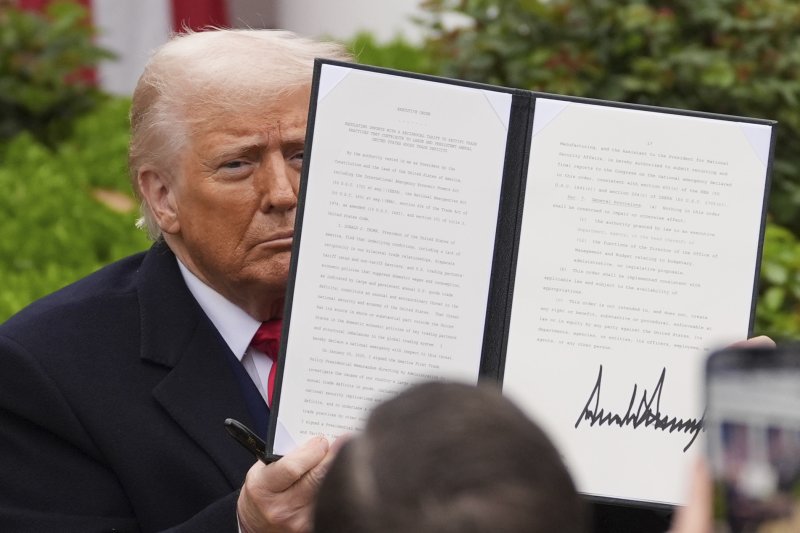
The Supreme Court of the United States (SCOTUS) will resume public sessions at 10 a.m. on the 20th (Eastern Time), which is midnight on the 21st in Korea. Markets are on edge, watching to see whether a decision on tariffs will be handed down.
A broad range of policies could be affected, from the so-called “Liberation Day” tariffs that President Trump imposed on countries around the world to his repeated tariff threats targeting specific nations.
Over the past 14 months, Trump has imposed a series of sweeping tariffs, citing the International Emergency Economic Powers Act (IEEPA), enacted in 1977, as his legal basis. The core issue in the current case is whether the economic emergency declared by the president under that law extends far enough to authorize the imposition of tariffs.
However, some observers say the Court’s decision is unlikely to be the final word on the broader tariff debate. In a report released on the 19th (local time), JPMorgan Chase & Co. outlined three possible scenarios.
The first scenario is that Trump prevails and the current tariff regime remains in place. The second is that he loses and the tariffs are struck down. The third envisions the tariffs being reversed after the midterm elections.
Depending on which outcome materializes, the report said, the Standard & Poor’s 500 Index (S&P 500) could see an immediate short-term move ranging from a 1% decline to a 2% gain.
Tobin Marcus of Wolfe Research raised the possibility of a limited ruling. He predicted, "The Court could conclude that the White House does not have the authority to impose tariffs under IEEPA, but stop short of ordering refunds of tariffs that have already been collected." In that case, he explained, equities could rally, particularly among major importers, while bond prices might fall in an initial short-term reaction, but markets would likely not view those moves as sustainable.
Terry Haines of Pangea Policy similarly wrote in a separate note that "investors should be prepared for a quick reversal after any initial overreaction," adding that regardless of the headlines, "the most likely outcome is that tariffs ultimately remain in place."
The ruling is expected to serve as a major test of the scope of the president’s trade authority and the principle of separation of powers. At the same time, financial markets appear more focused on whether the decision will ensure policy continuity and reduce uncertainty than on the legal reasoning itself.
#SCOTUS #tariffs #IEEPA #Trump #SP500
[email protected] Kim Kyung-min Reporter