U.S. and Chinese fighter jets face off near Yellow Sea ADIZs: "No incursions into each other's zones"
- Input
- 2026-02-20 14:08:10
- Updated
- 2026-02-20 14:08:10
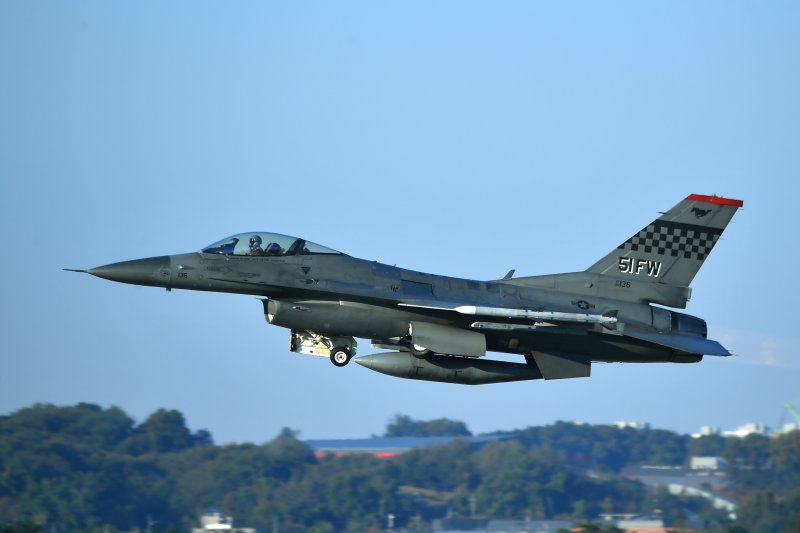
On the 20th, military sources said that on the 18th, U.S. and Chinese air assets were briefly in a standoff over the Yellow Sea. They added, however, that there were no instances of either side entering the other's Air Defense Identification Zone.
According to these accounts, the situation arose when about ten USFK F-16 Fighting Falcons took off from Osan Air Base in Pyeongtaek, Gyeonggi Province, and conducted patrol flights in non-overlapping airspace between the Korea Air Defense Identification Zone (KADIZ) and the China Air Defense Identification Zone (CADIZ). China then scrambled its own fighter jets, leading to the standoff.
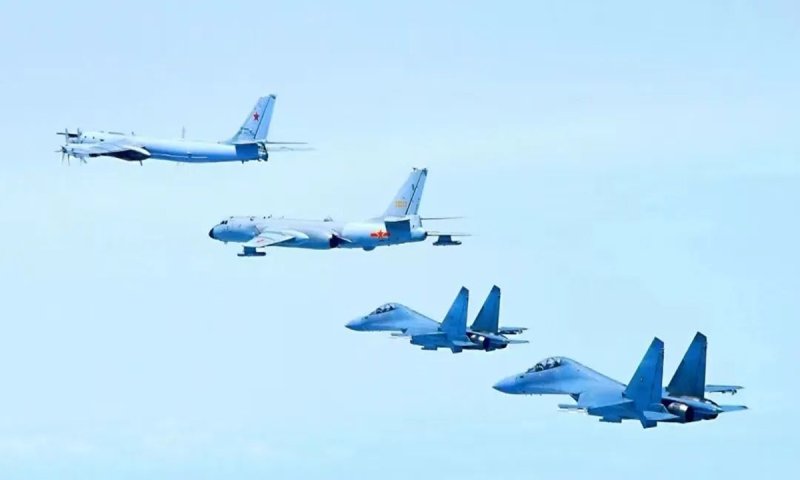
KADIZ was established by the United States in March 1951, while China did not declare its East China Sea CADIZ until November 2013. On December 9 last year, Chinese and Russian military aircraft entered the KADIZ over the East Sea and the South Sea, prompting the Ministry of National Defense of the Republic of Korea to lodge a stern protest.
An Air Defense Identification Zone (ADIZ) is an arbitrarily designated area in which a state seeks to identify foreign aircraft before they enter its sovereign airspace, enabling early detection and communication. It is distinct from territorial airspace, where sovereignty applies, but as a rule foreign aircraft are expected to obtain prior approval from the relevant state before entering its ADIZ.
This exercise was conducted solely by USFK, which is said to have notified the South Korean military in advance. However, because the Republic of Korea Air Force did not participate, USFK reportedly did not provide detailed explanations of the exercise plan or its objectives. After learning of the drill, South Korean military authorities are said to have conveyed their concerns to the U.S. side.
In response to questions such as "What discussions took place with the United States, and was this exercise conducted in a routine area?", an official from the Ministry of National Defense of the Republic of Korea replied, "We cannot confirm that."
General Xavier T. Brunson, the Commander of United States Forces Korea (USFK), said in November last year that "Korea can impose costs on the Russian Northern Fleet, the Northern Theater Command of the Chinese military, and the Korean People's Army (KPA) alike," repeatedly suggesting that USFK could also move to deter China and Russia. For this reason, some observers view the somewhat unusual decision for USFK air power to conduct an independent exercise over the Yellow Sea as a move aimed at China.
According to materials submitted by the Republic of Korea Air Force to the National Assembly inspection and other documents, over the past five years Chinese and Russian military aircraft have entered KADIZ without prior notification, citing solo or joint training, an average of roughly 80 to 90 times per year for China and 10 to 20 times for Russia. In particular, the number of Chinese entries last year—provisionally tallied at more than 140, with about 20 by Russia, reflecting an increase in both joint and solo flights—appears to have exceeded the previous record set in 2023, when there were 133 such Chinese incursions.
[email protected] Lee Jong-yoon Reporter