U.S. and Indonesia Sign Final Trade Deal, Keep 19% Reciprocal Tariffs
- Input
- 2026-02-20 13:57:51
- Updated
- 2026-02-20 13:57:51
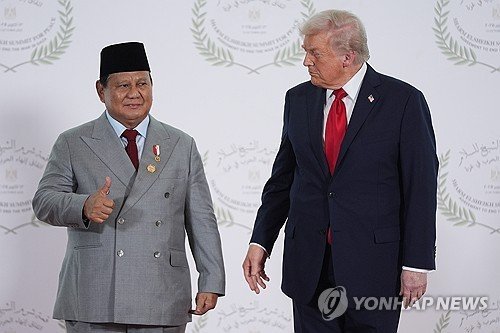
[Financial News] The United States and Indonesia have signed a final trade agreement that they have been negotiating since last year. The deal keeps reciprocal tariffs at 19% but grants duty-free treatment to certain products, including palm oil.
According to the Associated Press (AP) on the 20th (local time), Indonesian President Prabowo Subianto held a summit with U.S. President Donald Trump in Washington, D.C., where the two leaders signed the mutual trade agreement. Prabowo visited the United States to attend the inaugural board meeting of a new international body called the Peace Council.
The White House said the agreement will strengthen the two countries’ economic security, promote sustainable growth, and lead to greater prosperity. It added that the leaders reaffirmed their commitment to implementing the deal and instructed their ministers and other officials to take follow-up measures.
Under the agreement, the United States will maintain country-specific tariffs on Indonesian products at 19%, as previously agreed. In return, Indonesia will refrain from imposing tariffs on virtually all U.S. products exported to its market. The two sides also agreed to remove non-tariff barriers on U.S. goods and lift restrictions on exports to the United States of critical minerals and industrial raw materials.
The Office of the United States Trade Representative (USTR) stated that Indonesia will allow and support U.S. companies to invest in its critical minerals and energy resources on terms comparable to those offered to domestic investors.
The Indonesian government explained that U.S. tariffs on Indonesian coffee, chocolate, natural rubber, and spices will be eliminated. It added that more than 1,700 items, including palm oil, one of Indonesia’s key exports, will benefit from duty-free access.
Airlangga Hartarto, Indonesia’s Coordinating Minister for Economic Affairs, said, "This agreement respects the sovereignty of both countries" and "will be a win-win for both sides." He explained that Indonesian textile products will be subject to a 0% tariff under a tariff-rate quota (TRQ) system to be negotiated after the signing. A TRQ is a mechanism under which a low or zero tariff is applied up to a certain import volume, with higher tariffs imposed on quantities above that threshold.
Companies from the two countries also signed 11 investment agreements worth a total of $38.4 billion. Indonesian firms agreed to purchase 1 million tons of U.S. soybeans, 1.6 million tons of corn, and 93,000 tons of cotton, and pledged to buy up to 5 million tons of U.S. wheat by 2030.
Cooperation on critical minerals is also part of the deal, although detailed terms were not disclosed. AP reported that Washington has been courting Indonesia as part of its strategy to diversify critical mineral supply chains in response to China’s export controls on rare earths.
The United States had previously imposed a 32% reciprocal tariff on Indonesia in April last year. The rate was reduced to 19% through negotiations in July, after which the two sides worked to finalize the detailed conditions.
President Prabowo has recently stated that Indonesia "can serve as a bridge between major powers," signaling his intention to pursue a balanced foreign policy amid U.S.-China rivalry.
#USIndonesia #TradeAgreement #ReciprocalTariffs #CriticalMinerals #PalmOil
[email protected] Kim Kyung-min Reporter