Test run of long-awaited tram excites Wirye residents: "It will wipe out the undervaluation"
- Input
- 2026-02-22 12:52:37
- Updated
- 2026-02-22 12:52:37
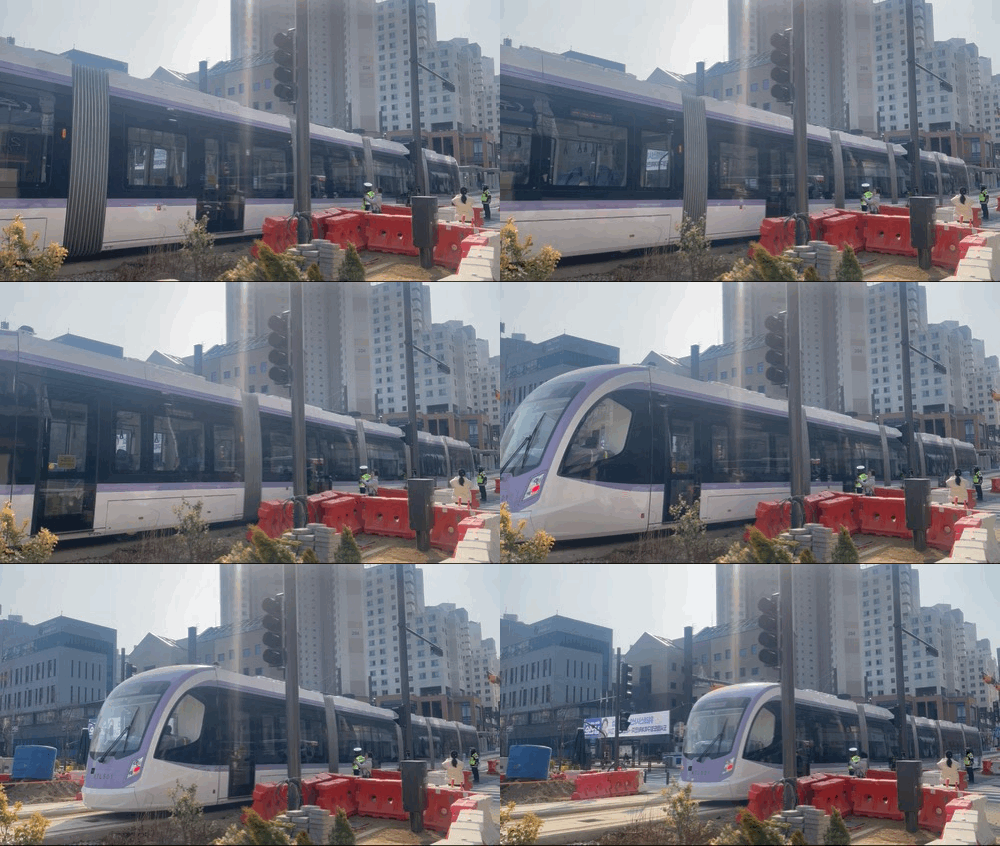
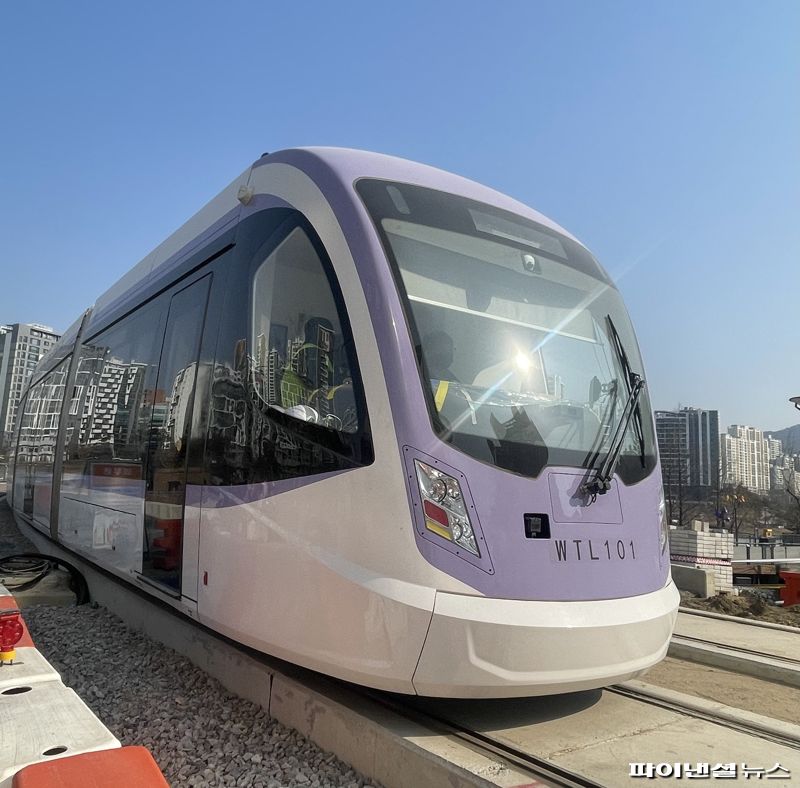
Reflecting the high expectations among Songpa residents, more than 100 people came out onto the streets on the first day of the test run. On the opposite side of the traffic lights, a line formed that resembled people waiting to enter a luxury boutique. A resident identified only as A, who said they live in Wirye, explained, "I came out because I was curious to see how the tram will actually operate," and added, "Once the traffic problems ease, real end-user demand for homes in Wirye will increase."
In fact, the local property market is already starting to heat up. Actual transaction prices are rising, especially in complexes along the tram route such as Songpa Wirye 24 Complex Dream in Green, Wirye Central Xi, Wirye Songpa PRUGIO, and Wirye Centroel.
Songpa Wirye 24 Complex Dream in Green, a large complex with more than 1,800 households, currently has market prices for 82-square-meter units in the 1.8 to 2 billion won range. After setting a record high of 1.63 billion won in an actual transaction on October 18 last year, prices have climbed by about 200 million won in just four months. At Wirye Central Xi, an 84-square-meter unit changed hands for 1.648 billion won on the 26th of last month, marking a new record. Asking prices for units of the same size are now as high as 2 billion won. Prices at Wirye Songpa PRUGIO and Wirye Centroel, which had been flat for a long time, have also recently turned upward.
Market watchers expect an even larger price premium once the Wirye–Sinsa Line is built. A licensed real estate agent in Wirye, identified as B, said, "The tram matters, of course, but the Wirye–Sinsa Line has a much bigger impact on home prices," adding, "If the tram is just the trailer, the Wirye–Sinsa Line is the main feature."
In this context, the Ministry of Land, Infrastructure and Transport on the 13th gave final approval and public notice to the revised "Second Seoul Metropolitan Urban Rail Network Construction Plan." The key change is converting the Wirye–Sinsa Line urban rail project into a government-funded project and adding it to the second-phase construction plan. As a result, the total network length will increase from 71.05 kilometers to 85.89 kilometers, and total project costs will rise from 7.26 trillion won to 9.1913 trillion won.
[email protected] Reporter Kwon Jun-ho Reporter