Six-Year Flour Price Cartel: KFTC Begins Review of Seven Firms, Includes Order to Reset Prices
- Input
- 2026-02-20 12:00:00
- Updated
- 2026-02-20 12:00:00
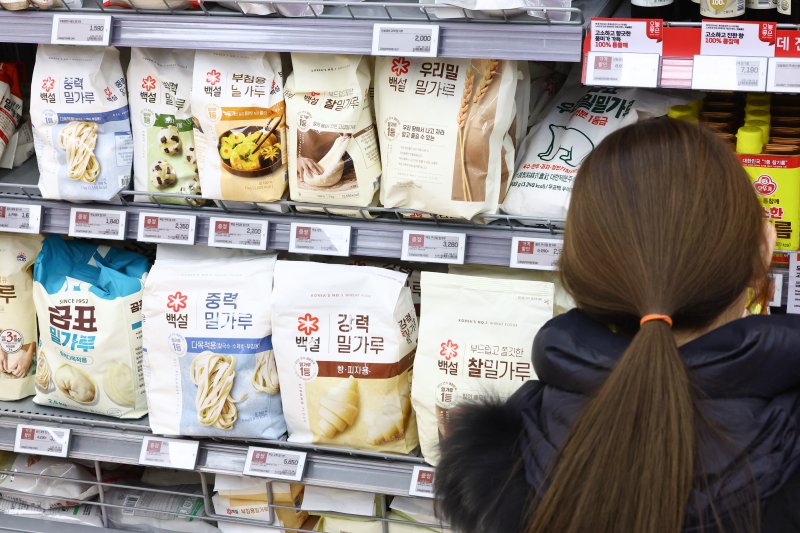
[Financial News] The Korea Fair Trade Commission (KFTC) has completed its investigation into major flour milling companies suspected of colluding on flour prices and has now begun a full review of the case. The collusion is estimated to have affected sales of about 5.8 trillion won, and the proposed sanctions reportedly include both administrative fines and an order to reset prices.
On the 20th, the KFTC Secretariat announced that it had sent an examination report on the flour price-fixing case to seven flour manufacturing and sales companies the previous day and had submitted the case to the Commission on the same day. The companies involved are Daesun Flour Mills, Daehan Flour Mills, Sajo DongA One, Samyang Corporation, Samhwa Flour Mills, CJ CheilJedang, and Hantop.
The examination report is a document that sets out the facts identified during the investigation, the assessment of illegality, and the investigator’s views on sanctions. However, it reflects only the examiner’s opinion; a final decision will be made after an independent review by the Commission.
As part of efforts to eradicate cartels and stabilize the cost of living, the examiner conducted the investigation over roughly four and a half months, from October 2025 to February 2026. Considering that cartel cases typically take around 300 days to process, the procedures in this case moved unusually quickly.
The investigation concluded that, from November 2019 to October 2025, these companies repeatedly colluded in the domestic business-to-business (B2B) flour market by agreeing in advance on the timing and scale of price increases and on supply volumes. The affected market includes not only direct transactions with large buyers but also indirect sales through distributors to small and mid-sized customers.
According to the KFTC, the seven companies together held an 88% share of the market as of 2024. The sales affected by the cartel are estimated at about 5.8 trillion won.
The examiner determined that these practices constitute serious violations of Article 40(1), subparagraph 1 (price-fixing) and subparagraph 3 (market allocation by volume) of the Monopoly Regulation and Fair Trade Act, and therefore proposed corrective orders and administrative fines. The corrective measures reportedly include an order to reset prices in order to restore competitive conditions. Under the Act, the Commission may impose administrative fines of up to 20% of the sales affected by the collusion.
Yoo Sung-wook, Director General for Investigation Management at the KFTC, said, "In particular, for items closely tied to people’s daily lives, we concluded that measures are needed to restore real competition," adding, "For this case as well, we included an order to reset prices as an active measure to restore competition."
The respondent companies may submit written opinions within eight weeks of receiving the examination report and may exercise their right to defense by requesting access to and copies of the evidence. Taking into account that the flour cartel case is directly linked to consumer prices, the KFTC plans to convene the Commission and issue a final decision as soon as the procedures to guarantee the respondents’ rights of defense under the law are completed.
Yoo stated, "We will ensure that strict law enforcement based on the law and principles is carried out swiftly, without exception, against unfair practices that harm people’s livelihoods," and added, "In future cases where it is deemed necessary in the public interest, considering the impact on people’s daily lives and the level of public concern, we plan to disclose relevant details to the extent that doing so does not infringe on the respondents’ right to defense."
[email protected] Kim Chan-mi Reporter