"There Is a Gene for Nurturing Fathers"...The Surprising Condition That Activates It in Only 5% [Health Talk]
- Input
- 2026-02-20 07:19:27
- Updated
- 2026-02-20 07:19:27
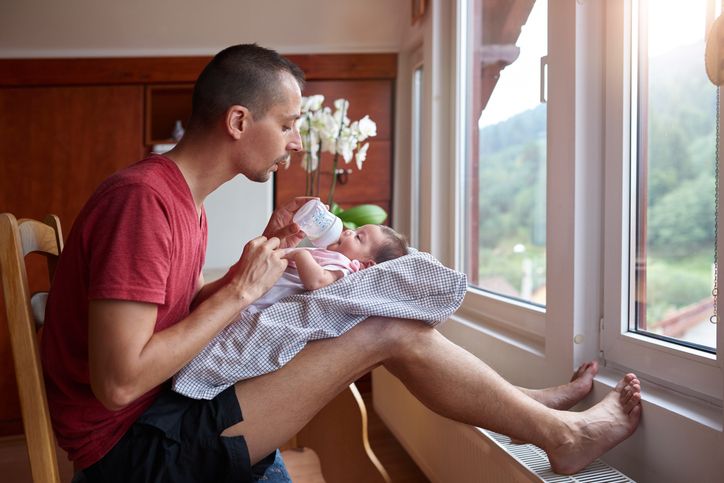
[Financial News] Researchers have discovered that whether a male becomes a "nurturing father" or not is determined by the action of a specific gene in the brain.
A research team at Princeton University reported on the 20th that they have identified the brain mechanism that regulates paternal care in the African striped mouse.
According to their study, published in the journal Nature, the agouti gene—previously known for determining coat color and obesity in African striped mice—was identified for the first time as the key factor controlling paternal behavior.
In nature, it is very rare for male mammals to care for their offspring; such behavior is seen in less than 5% of species. The African striped mouse, however, shows unusually wide variation in paternal caregiving among males.
Some fathers devotedly lick and cuddle their pups, while others ignore them or even attack them.
The team found that this difference arises in a brain region called the medial preoptic area (MPOA). In mice with strong paternal instincts, this area is particularly active.
The study showed that in the brains of males that carefully tend their young, expression of the agouti gene was markedly low. By contrast, males that attacked or neglected their pups had high levels of agouti expression.
When the researchers used gene therapy to artificially raise agouti levels in nurturing father mice, the animals suddenly became indifferent or even aggressive toward their pups. Their behavior was completely reversed by changing gene expression levels.
The team also discovered that this gene expression level is shaped by the "social environment." When male mice were housed alone in single cages, their agouti levels fell and they turned into nurturing fathers.
In contrast, when several males were forced to live together and compete in a cramped space, agouti levels surged and they abandoned parental care.
“Even a bachelor mouse that has never experienced pregnancy or birth can become an excellent father if the brain environment changes,” the researchers explained, adding, “The agouti gene acts as a switch in the brain that suppresses parental behavior.”
They went on to say, “This suggests that animals integrate external environmental information—such as population density and competition for food—to strike a balance between focusing on their own survival and investing in raising offspring.”
In environments where food is scarce and competition is intense, it is more advantageous, from a genetic standpoint, to prioritize one’s own survival. In stable environments, investing in the next generation becomes the more rational choice.
However, the team noted that although humans also possess the agouti gene, it remains unclear whether the same mechanism operates in people. Human parenting is influenced by far more complex social, cultural, and psychological factors.
moon@fnnews.com Moon Young-jin Reporter