[Editorial] Yoon’s Life Sentence: Both Ruling and Opposition Parties Must Humbly Accept the Verdict
- Input
- 2026-02-19 19:11:08
- Updated
- 2026-02-19 19:11:08
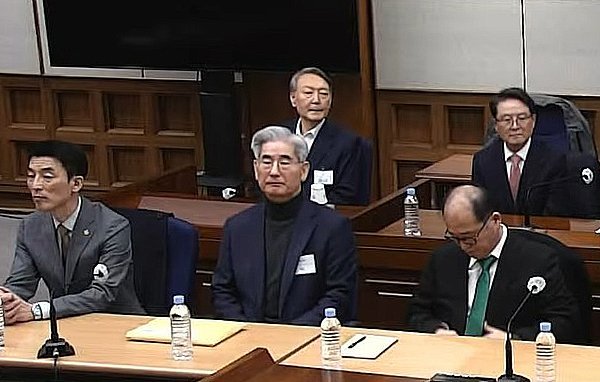
The court did not accept the special prosecutor’s claim that Yoon had been preparing for martial law for a year with the aim of establishing long-term dictatorship. However, it found that there was an intent to send troops to the National Assembly under martial law in order to block and paralyze the legislature for a considerable period of time. It therefore ruled that the declaration of martial law infringed on the powers of the National Assembly and constituted insurrection.
The court also recognized that former President Yoon and former Minister of National Defense Kim Yong-hyun had instigated a violent uprising with the aim of subverting the constitutional order. Actions such as sealing off the National Assembly and proclaiming emergency decrees were deemed acts of rebellion, and the court concluded that Yoon’s role as the ringleader of the insurrection was established.
Although higher-court review remains, we view the first-instance ruling that treated Yoon’s declaration of martial law as insurrection as a commonsense judgment grounded in legal principles. Yoon’s side argued that martial law is an inherent governing authority of the president stipulated in the Constitution and therefore cannot amount to insurrection, but the requirements were not met. The Constitution allows the declaration of martial law only in the event of "war, armed conflict, or a comparable national emergency in which social order is so disturbed that public security cannot be maintained."
Even if the opposition at the time had obstructed presidential authority and government administration through legislative overreach, it is difficult to regard that situation as a national emergency. Thus, if martial law was declared without satisfying the constitutional requirements in order to seize control of the National Assembly, the court’s legal reasoning that this constitutes insurrection cannot be said to be wrong. The court was also right to hold that, even if something is an inherent constitutional power of the president, using it in a way that disrupts the constitutional order can still amount to insurrection.
Yoon’s defense team, which has said it cannot accept the verdict, will appeal. It is of course possible that the higher courts may not fully uphold the first-instance ruling. However, given that Yoon has now been handed the heavy sentence of life imprisonment, both Yoon himself and the opposition People Power Party must take the judgment seriously and bow their heads before the public with humility.
The ruling Democratic Party of Korea must also refrain from exerting political pressure over a case that is still in progress until a final judgment is rendered. Supporters on both sides should avoid physical clashes over the outcome and must not engage in threats or acts of violence against the court.
Since Yoon’s declaration of martial law, the division of public opinion over the past year has been more intense than ever. Now the question of Yoon’s insurrection charges should be left to the judiciary, while both politicians and citizens turn their attention back to the economy and people’s livelihoods. The opposition’s proper course is to watch the rulings, accept them, and seek a new path forward. Clinging to the past out of concern for Yoon’s supporters will only invite criticism that it is revealing its true colors as a reactionary party.
The ruling party, for its part, must stop using the insurrection trial as a political weapon to attack the opposition. If anyone is thinking of stoking division for political gain, they should abandon that idea. There is a mountain of work awaiting the political class in the service of the nation and its people.