National Assembly Stalled by 'Judiciary Committee Risk'... Key Bills Including Special Act on Investment in the U.S. Face Delays
- Input
- 2026-02-19 14:11:13
- Updated
- 2026-02-19 14:11:13
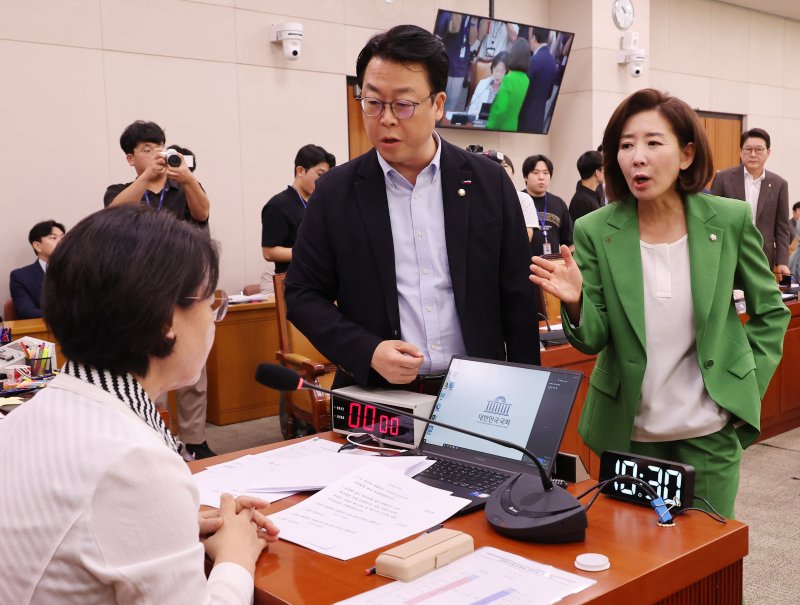
[Financial News] The legislative engine of the National Assembly has ground to a halt after the People Power Party declared a boycott of the entire parliamentary schedule over what it calls the Democratic Party of Korea–driven 'Judiciary Committee risk.' In response to the conservative party’s backlash, the Democratic Party has signaled a hard-line stance, floating the idea of again pushing a 'filibuster-limiting bill' to amend the National Assembly Act and curb unlimited debate used to block proceedings.
According to political sources on the 19th, the fallout from the Legislation and Judiciary Committee of the National Assembly passing, under Democratic Party leadership just before the Lunar New Year holiday, amendments to the Court Organization Act to increase the number of Supreme Court justices and to the Constitutional Court Act to introduce a new form of constitutional complaint has continued even after the holiday. Democratic Party leader Jung Cheong-rae personally vowed to pass the judicial reform package within this month, and Democratic Party members on the Judiciary Committee pushed the bills through accordingly.
Since then, the Democratic Party has continued to stress that the judicial reform bills are necessary tools to restore public trust in a judiciary whose credibility has collapsed, and it has not backed away from its drive. At a policy coordination meeting on the 19th, Floor Leader Han Byung-do stated, "We can no longer delay the judicial reform bills," and announced plans to place them on the agenda of the plenary session on the 24th. With the People Power Party expected to resort to a filibuster to delay the legislation, the Democratic Party is considering reviving a second attempt to amend the National Assembly Act to block such tactics from the outset.
The People Power Party, for its part, has branded the Democratic Party’s judicial reform package as 'judicial regression' and is fiercely opposing it. At a supreme council meeting on the 19th, People Power Party Floor Leader Song Eon-seok said, "They have declared that they will open a plenary session on the 24th and methodically push through these judicially destructive evil bills, including creating a new offense of distorting the law, introducing a four-tier court system, increasing the number of Supreme Court justices, and establishing a Public Prosecution Office and a Serious Crimes Investigation Agency," and he challenged, "How can these bills possibly be called livelihood reform legislation?"
After the judicial reform bills were passed in the Judiciary Committee under Democratic Party leadership, the People Power Party launched a boycott of the entire National Assembly schedule. By highlighting what it calls the Democratic Party–made Judiciary Committee risk, the conservative party has been ramping up its offensive against the ruling party both inside and outside the legislature.
On the day after the Democratic Party forced the judicial reform bills through the Judiciary Committee, on the 12th, party leader Jang Dong-hyuk announced he would not attend a previously scheduled luncheon between President Lee Jae-myung and party leaders at the presidential office. As a result, the luncheon between the president and the leaders of both ruling and opposition parties was ultimately canceled. The Judiciary Committee risk thus spilled beyond the National Assembly and reached the presidential office.
At the plenary session on the 12th, the ruling and opposition parties had originally agreed to pass about 80 bills. However, as tensions over the Judiciary Committee risk peaked, they ended up passing only 66. Consequently, a number of non-controversial bills that had already been agreed upon at the standing committee level remain pending in the National Assembly.
The first full meeting of the Special Committee on Investment in the United States, held the same day, also collapsed without any meaningful outcome. The committee had been launched by bipartisan agreement, but its founding purpose was overshadowed as it failed to overcome partisan strife.
The concern is that if the Judiciary Committee risk drags on, it could disrupt not only livelihood-related legislation but also the handling of urgent issues such as the Special Act on Investment in the United States.
The Special Committee on Investment in the United States has not even completed the government ministry briefings that were supposed to take place at its first full meeting. Given that the committee’s mandate expires on March 9, leaving it with fewer than 20 days, some are warning that a proper review of the special act will be difficult and that the passage of the bill itself could be significantly delayed.
In response, the Democratic Party has said it intends to convene full meetings of the special committee on the 24th and 25th in succession. However, because the committee chair is from the People Power Party and the conservative party is using the Judiciary Committee risk to justify continued confrontation with the ruling party, it remains uncertain whether the People Power Party will agree to the Democratic Party’s request.
[email protected] Kim Hyeong-gu Reporter