Timeline: Yoon receives first-instance verdict 14 months after declaring martial law, amid ongoing controversy over a 'first in constitutional history'
- Input
- 2026-02-19 15:41:50
- Updated
- 2026-02-19 15:41:50
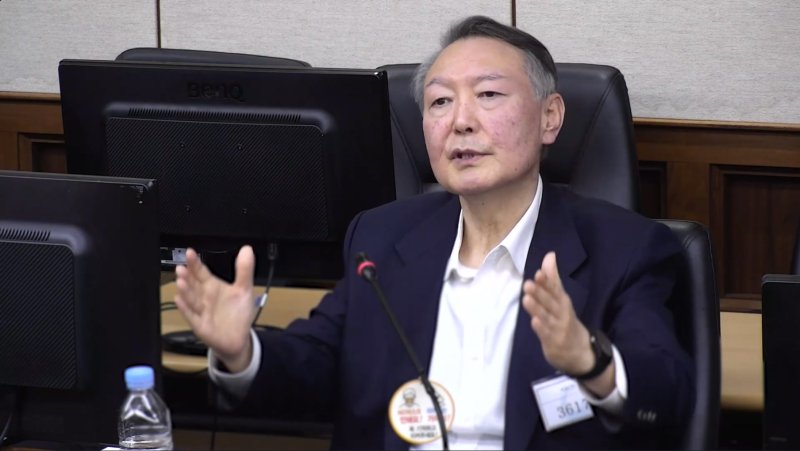
[Financial News] The first-instance trial of former President Yoon Suk Yeol on charges of being the ringleader of an insurrection concluded 14 months after he declared martial law. From investigation to trial, a series of "firsts in constitutional history" were recorded, ensuring the case will stand as a major event in Korea’s constitutional history.
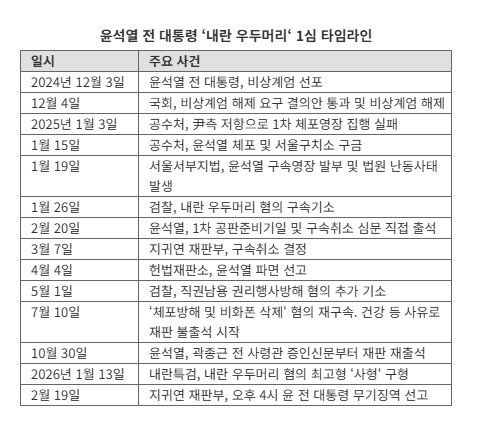
On the night of December 3, 2024, Yoon declared emergency martial law, but the situation ended at dawn the following day when the National Assembly voted to lift it. The move was followed by an impeachment motion in the National Assembly, and on April 4 last year the Constitutional Court of Korea ruled to remove him from office, after which he stood criminal trial as a private citizen.
Immediately after the declaration of martial law, wide-ranging investigations were launched by the police, the prosecution service, and the Corruption Investigation Office for High-ranking Officials (CIO). Authorities proceeded with compulsory investigations into the insurrection charges, which are not covered by presidential immunity from criminal prosecution. Yoon refused to comply with summonses and resisted the execution of an arrest warrant, but he was arrested on January 15 last year, and a detention warrant was issued on January 19.
After being indicted in January that year, Yoon began appearing in person from the first preparatory hearing in February. From the first substantive hearing on April 14 through to the closing arguments this January, a total of 43 hearings were held. Including related co-defendant cases, around 160 witnesses took the stand, offering sharply conflicting accounts of the circumstances before and after the declaration of martial law.
On March 7 last year, Criminal Division 25 of the Seoul Central District Court, presided over by Chief Judge Ji Gui-yeon, ruled that Yoon’s detention period must be calculated in hours, not days, and ordered his release from detention. The decision overturned the long-standing practice of counting detention in days, sparking political controversy and even debate over creating a dedicated court division for insurrection cases.
In July last year, the Special Prosecutor Team for Insurrection and Treason, led by Special Prosecutor Cho Eun-seok, obtained an additional detention warrant on charges including obstruction of arrest and deletion of data from secure phones, and Yoon was taken back into custody. After being re-detained, he refused to appear in court for about four months, but he resumed attendance in October that year when former Special Warfare Commander Gwak Jong-geun was called to testify.
After that, Yoon personally cross-examined witnesses as part of his defense and continued to argue that what he had declared was "messaging martial law" right up to his 89-minute final statement at last month’s closing hearing.
[email protected] Choi Eun-sol Reporter